 11
11 1
1 2
2 3
3
The landscape of modern software engineering is currently undergoing a significant transformation as development teams seek to navigate the complexities of cross-team alignment, architectural design, and implementation speed. Atlassian has recently detailed a comprehensive framework for leveraging artificial intelligence to streamline these processes, specifically through the deployment of Rovo Dev. By integrating AI as an orchestration layer across the software development lifecycle (SDLC), organizations are finding new ways to bridge the gap between initial conceptualization and final code deployment. The traditional hurdles of software rollouts—achieving consensus among stakeholders, detailing technical architectures, and executing granular delivery plans—are being addressed through a systematic application of AI tools that connect existing communication channels with development environments.
The initial phase of any major software initiative typically involves a high-level planning stage where ideas are floated across various platforms, including Slack threads, Loom recordings, and Confluence meeting notes. This stage is often characterized by fragmented information and the challenge of synthesizing diverse perspectives into a cohesive strategy. Atlassian’s approach utilizes Rovo Dev to ingest this unstructured data and transform it into actionable insights within minutes. By accessing the context of these discussions, the AI can summarize explored options, highlight key trade-offs, and identify unresolved questions. This synthesis focuses on critical dimensions such as engineering effort, scalability, and user experience, providing a comparative framework that allows leadership to make informed decisions without wading through hours of recorded meetings or hundreds of chat messages.
Furthermore, the transition from a conversation to a formal proposal has historically been a manual, time-consuming task. AI tools are now being used to draft high-level proposals that define the purpose, problem statements, goals, and non-goals of a project. By providing the AI with specific context and desired templates, teams can generate a structured Request for Comments (RFC) that captures risks and open questions while avoiding premature deep dives into implementation details. This ensures that by the time developers open their integrated development environments (IDEs), such as Visual Studio Code, an aligned decision record and a lightweight architectural outline are already in place. This preparatory work significantly reduces the "cold start" problem often associated with new software projects.
Once a high-level decision is solidified, the focus shifts to detailed architecture and implementation planning. This second phase is where the integration of AI within the IDE becomes a force multiplier. Rovo Dev, operating within VS Code, allows developers to draft architectural details by referencing both the high-level requirements and the existing codebase. This contextual awareness is crucial; unlike generic AI models, an integrated tool can propose APIs, data models, and integration points that align with the specific patterns and standards already established in a company’s repository. This ensures architectural consistency and reduces the likelihood of introducing technical debt.
During this architectural phase, engineering teams can delegate specific design areas to the AI. This includes the definition of internal and external API contracts, the design of database schemas, and the mapping of service-to-service communication. By prompting the AI to prioritize the minimal path to a working end-to-end slice, developers can move away from monolithic planning toward a more agile, incremental approach. The AI-generated designs and code snippets are not produced in a vacuum; they reference the actual repository, creating a detailed plan that domain experts can review and refine. This collaborative process between human engineers and AI ensures that the proposed solution is both innovative and grounded in the practical realities of the existing infrastructure.
The third pillar of this AI-enhanced workflow involves turning the finalized architecture into a concrete delivery plan and executing the implementation. For large-scale initiatives, the transition from a design document to a task list in a project management tool like Jira is often a point of friction. Atlassian’s methodology utilizes AI to break down the architectural plan into Jira Epics and detailed child work items. These tasks are automatically grouped by service and integration boundaries, complete with relevant code snippets and clear acceptance criteria. This automation ensures that the engineering intent captured in the design phase is accurately reflected in the day-to-day tasks of the development team, maintaining a "golden thread" of continuity from the initial idea to the final ticket.
The actual implementation process is then handled incrementally. Within the VS Code environment, Rovo Dev can be tasked with building the next step in an implementation plan, following established patterns and ensuring proper test coverage. This step-by-step execution allows for constant validation and adjustment. Developers can use specific prompts to generate implementation plans for specific repositories, prioritizing a "minimal path" to functionality. This reduces the cognitive load on developers, allowing them to focus on high-level problem-solving while the AI handles the boilerplate and structural alignment of the code.
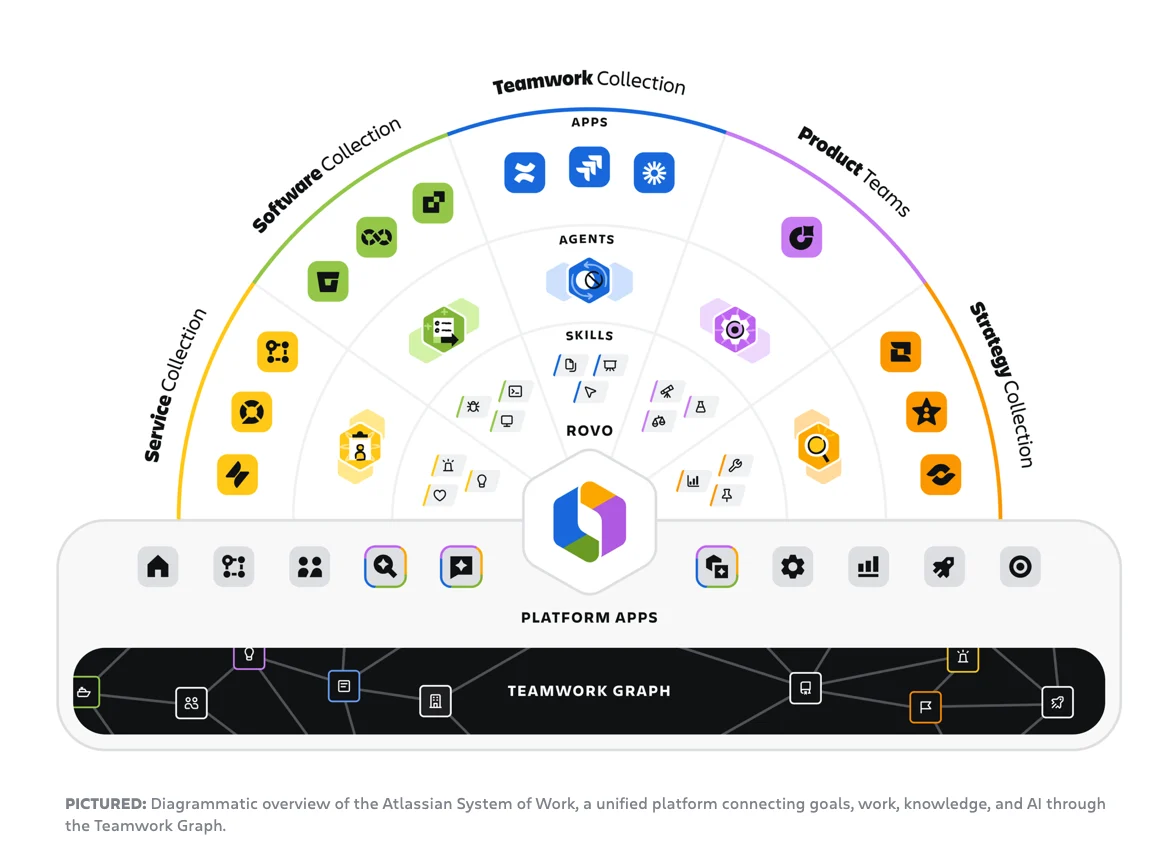
The integration of AI as an orchestration layer represents a fundamental shift in how Atlassian tools are utilized. Rather than acting as static repositories for documentation or tasks, tools like Confluence, Jira, and Bitbucket are now interconnected via Rovo Dev. This connection ensures that the information remains fluid and accessible across the entire development stack. The AI acts as a bridge, pulling context from a Confluence spec to inform a code change in VS Code, or using a Slack discussion to update a Jira ticket. This reduces the need for "context switching," which is often cited as one of the primary drains on developer productivity.
The benefits of this flow extend beyond mere speed. By utilizing AI to summarize trade-offs and capture risks early in the process, teams can avoid costly pivots later in the development cycle. The transparency provided by AI-generated decision records ensures that all stakeholders—from product managers to security engineers—are aligned on the "why" and "how" of a project before a single line of production code is written. Furthermore, the ability of the AI to suggest code that adheres to existing patterns helps maintain a high bar for quality and consistency across large, distributed engineering organizations.
In conclusion, the deployment of Rovo Dev within the Atlassian ecosystem marks a significant advancement in software development methodology. By automating the synthesis of discussions, the drafting of architectural plans, and the breakdown of tasks into Jira, Atlassian is providing a blueprint for the future of engineering work. This AI-driven orchestration layer does not replace the engineer but rather empowers them by removing the administrative and repetitive burdens of the development lifecycle. As organizations continue to adopt these tools, the focus will increasingly shift from the manual management of tasks to the strategic oversight of AI-augmented workflows, ultimately leading to faster delivery cycles and more robust software solutions. The transition from high-level conversation to implemented code is no longer a series of disjointed steps, but a continuous, AI-assisted journey that preserves context and enhances technical precision at every stage.