 11
11
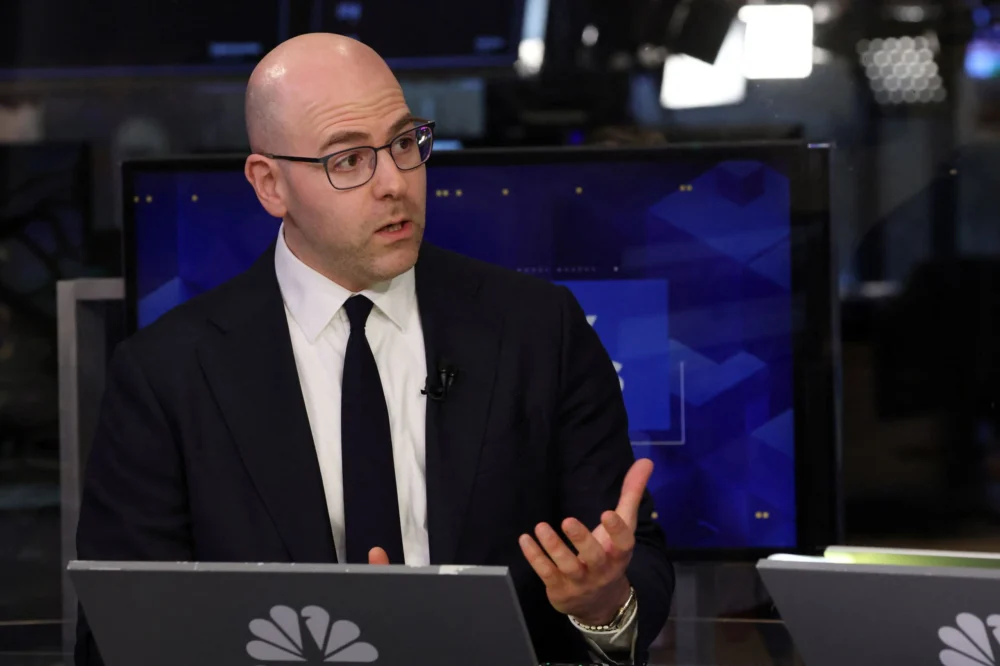
Federal Reserve Governor Stephen Miran stated on Friday that the unexpectedly weak February jobs report provides a strong justification for the central bank to implement further reductions in interest rates. In response to the Bureau of Labor Statistics’ announcement of a 92,000 decline in nonfarm payrolls for February, Miran expressed in a CNBC interview that the Federal Reserve should prioritize supporting the labor market over concerns about inflation.
"I think that we don’t have an inflation problem," Miran declared on the "Money Movers" program. "I think that the labor market can use more accommodation from monetary policy. And I don’t see having a modestly restrictive stance of monetary policy as opposed to a neutral stance as being appropriate. I think being close to neutral is appropriate."
The current target range for the Federal Reserve’s key interest rate is between 3.5% and 3.75%. This range was established following three consecutive quarter-percentage-point rate cuts implemented in the latter half of 2025. Miran advocates for a policy stance that would lower the interest rate by approximately a full percentage point, bringing it closer to what he considers a neutral level. The prevailing view among Federal Reserve officials, as indicated by discussions at the December meeting, is that a neutral rate – one that neither stimulates nor restrains economic activity – is approximately 3.1%. This suggests that, according to the consensus, two additional rate cuts would be warranted.
Governor Miran has consistently argued that persistent high inflation figures are more a reflection of measurement methodologies employed by the Commerce and Labor departments rather than indicative of genuine underlying inflationary pressures. He has specifically pointed to portfolio management fees as a contributing factor. These fees, often calculated as a percentage of assets under management, tend to rise in dollar terms when stock markets experience growth, even if the underlying service rates remain unchanged. This can artificially inflate inflation metrics without reflecting a true increase in the cost of services.

Regarding the recent surge in oil prices, which has been attributed to the ongoing conflict in Iran and has consequently increased costs at the pump, Miran indicated it is a less significant concern for the Fed. "Typically, the Federal Reserve doesn’t respond to higher oil prices like that," he explained. "It [boosts] headline inflation, but it tends to be a one-off shock. When you think about core inflation [which does not include energy prices], it tends to be more predictive of where inflation is going over the medium term than headline inflation." This statement underscores the Fed’s historical approach of distinguishing between temporary, supply-driven price shocks and more persistent, demand-driven inflation when formulating monetary policy.
Governor Miran has, since his nomination by President Donald Trump, dissented at every Federal Open Market Committee (FOMC) meeting he has attended starting in September. For the three rate cuts that were ultimately approved, he favored more substantial half-percentage-point reductions over the quarter-point moves that the committee decided upon. In January, when the FOMC voted to hold rates steady, Miran expressed his preference for a quarter-point reduction.
When asked about the possibility of dissenting again, Miran responded, "I hope not, but that would be up to my colleagues. I hope that we vote to cut." This indicates his ongoing belief that further monetary easing is appropriate and his desire for consensus among his fellow policymakers.
Miran was appointed to fill the unexpired term of Adriana Kugler, who resigned from the Fed Board in August 2025. Kugler’s term concluded in January, but Miran has continued to serve in his capacity until a successor is formally approved. In related developments, President Trump has nominated Kevin Warsh for a position at the Federal Reserve that is expected to ultimately lead to him succeeding Jerome Powell as Chair of the Federal Reserve when Powell’s term expires in May.
Looking ahead, Miran stated, "I will be at the meeting in a couple weeks, and after that I will take it a day at a time." This suggests he will continue to advocate for his policy views at the upcoming FOMC meeting and will reassess his approach thereafter, contingent on the decisions made by the committee. His persistent advocacy for lower interest rates, particularly in light of recent economic data, positions him as a key voice within the Federal Reserve advocating for a more accommodative monetary policy stance. His perspective highlights a divergence of opinion within the Fed regarding the appropriate pace and extent of monetary easing, as well as the interpretation of current inflation and labor market dynamics. The economic environment, characterized by a cooling labor market and the Fed’s ongoing debate about the neutral rate of interest, will likely continue to be the focus of these discussions.