 11
11
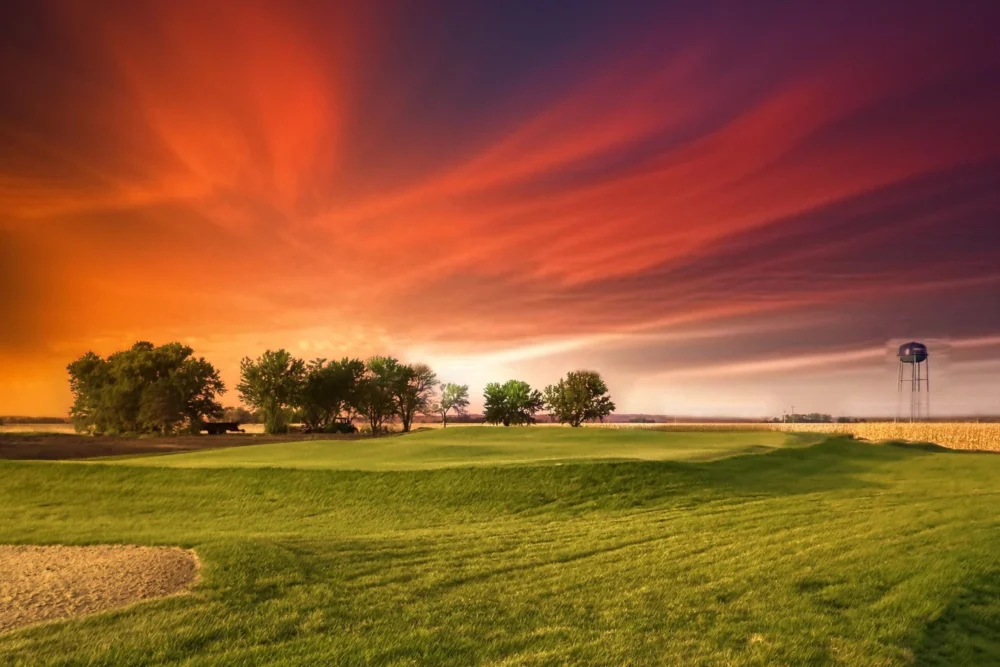
The remarkable success of Landmand Golf Club, a public destination course opened in 2022 in rural eastern Nebraska, has spurred its owners, the Andersen farming family, to embark on an ambitious transformation of their other local golf property, Old Dane. Witnessing Landmand’s meteoric rise to national prominence, where annual tee times vanish within minutes of becoming available online, Will Andersen and his family recognized an unprecedented opportunity to elevate the region’s appeal for avid traveling golfers. Their vision is to create a multi-course golf destination, with Old Dane serving as a compelling companion experience, located less than ten miles away in neighboring Dakota City, close to the Iowa border.
Landmand, whose name is Dutch for "Farmer," quickly captivated the golf world with its expansive, dramatic landscape and innovative design. Its immediate and overwhelming popularity underscored a significant demand for unique, high-quality golf experiences in unexpected locations. This runaway success prompted the Andersens to reassess the potential of Old Dane, a course they had owned for two decades. While Old Dane had previously served the local community adequately, Andersen began to envision a future where it could offer something more substantial, complementing the allure of Landmand and solidifying eastern Nebraska’s position on the national golf map.

Old Dane had already undergone one significant rebuilding under the Andersen family’s ownership. In 2010, Will Andersen personally oversaw a renovation that resulted in a nine-hole layout. This earlier iteration of Old Dane was characterized by its challenging design, albeit on a remarkably flat prairie site that offered a mere five feet of natural elevation change across its entire property. Despite these topographical limitations, the course was a cherished local asset. However, with Landmand’s emergence as a national sensation, Andersen’s ambitions for Old Dane grew exponentially. He recognized that to truly capitalize on the influx of golfing pilgrims to Nebraska, Old Dane needed a more profound transformation, one that would make it a destination in its own right, yet distinctly different from its acclaimed sibling.
To spearhead this ambitious redesign, Andersen turned to a familiar and highly respected figure in the golf architecture world: Trevor Dormer. Dormer, who had played an integral role in the construction team that brought Landmand to life, has since become a partner alongside renowned architects Rob Collins and Tad King. His intimate understanding of the region’s landscape and the Andersen family’s vision made him the ideal choice. Dormer’s proposal for Old Dane went far beyond a simple reworking of the existing nine holes. He convinced Andersen to expand the course to 12 holes, ingeniously incorporating land that had previously functioned as the property’s practice range. This expansion not only added more holes but also provided the canvas needed for a dramatic re-sculpting of the terrain.
Construction on the Old Dane redesign commenced in late 2024, with Dormer and his team dedicating themselves to reshaping the prairie landscape. By 2025, all the major earth-moving and shaping work was completed. The transformation was nothing short of remarkable: a property that had once been as flat as a tabletop now boasted nearly 30 feet of elevation change, meticulously crafted to introduce strategic interest, visual drama, and varied shot values. This dramatic alteration fundamentally changed the character of Old Dane, moving it from a challenging but spatially limited layout to one with dynamic contours and engaging features. A standout example of this innovative design is the 11th hole, which features a distinctive "volcano green" rising prominently from the surrounding landscape, promising a memorable and challenging putting surface for players.

The renovation efforts continued into the subsequent year. A majority of the newly shaped holes were grassed in 2025, establishing the foundation for the course’s playing surfaces. Dormer and his dedicated team returned to Nebraska in the spring of the current year to put the finishing touches on the project. The meticulous work of grassing the remaining areas is expected to be completed by mid-June, though, as Dormer noted, this is always subject to the vagaries of local weather patterns. Once fully grassed and allowed sufficient time to mature, Old Dane anticipates welcoming golfers for preview play towards the end of the 2026 season. The grand unveiling and official opening of the completely revitalized Old Dane are scheduled for 2027, marking a new chapter for the historic property. While the course previously offered highly accessible rates—$15 to walk nine holes or $30 to play with a cart—new rates for the expanded and enhanced 12-hole experience have yet to be announced.
Trevor Dormer, reflecting on the progress, expressed considerable satisfaction with the outcome. "I’m really pleased with how the course has turned out; there are some greens still to finish, but all the shaping has been done and everything is irrigated," Dormer stated, highlighting the comprehensive nature of the work. He added, "Only one hole doesn’t have greens mix installed. I may need to get back on the bulldozer a little if some of the sand has blown around." Dormer’s hands-on approach is characteristic of his background; he honed his craft in the design business as a shaper and associate for legendary architects Bill Coore and Ben Crenshaw, a pedigree that speaks to a deep understanding of naturalistic and strategic golf course design.
While Old Dane, with its transformed prairie landscape, will undoubtedly offer a unique and engaging experience, it is not intended to replicate the scale or the "dramatic" natural topography of Landmand. Landmand, situated atop rolling hills in nearby Homer, sprawls across more than 500 acres, leveraging its natural contours for breathtaking vistas and expansive playing corridors. Old Dane, by contrast, demonstrates how masterful design can imbue a relatively flat site with compelling character. Yet, Will Andersen believes there’s more than enough intrigue at the new Old Dane to capture the attention of visiting golfers from their very first swing. "There are things out there that people will ask what we thought we were doing," Andersen playfully remarked, alluding to the course’s distinctive and perhaps unconventional features. He singled out the opening hole as one of his favorites: "a drivable par four with a pretty subtle green, and out of bounds all the way down the left," promising immediate strategic choices and potential for both reward and risk.

Beyond the golf course itself, the Andersen family is investing in enhancing the overall guest experience at Old Dane. Complementing the golfing amenities, plans are underway for a sizable putting course to be constructed adjacent to the clubhouse, offering additional entertainment and practice opportunities. Furthermore, facilities for other leisure activities, including croquet and bocce ball courts, will be added, catering to a wider range of guests and fostering a relaxed, communal atmosphere. These additions underscore the family’s commitment to creating a comprehensive recreational destination.
The Andersen family’s connection to eastern Nebraska runs deep, spanning four generations. Their patriarch, Karl Andersen, immigrated from Denmark in the early 1920s, establishing the family’s enduring farming legacy in the region. This generational commitment to the land and community forms the bedrock of their ventures into golf. With Landmand having already cemented its status as one of the nation’s busiest "bucket-list" courses, and the new version of Old Dane poised to open as its thoughtfully designed complement, the rural farm fields of eastern Nebraska are on the cusp of emerging as a truly unique and significant multi-course golf destination, drawing enthusiasts from across the country and beyond. The transformation of Old Dane represents not just a golf course renovation, but the realization of a grander vision to enrich the recreational landscape of rural America, built on a foundation of family heritage and a passion for the game.