 11
11 1
1 2
2 3
3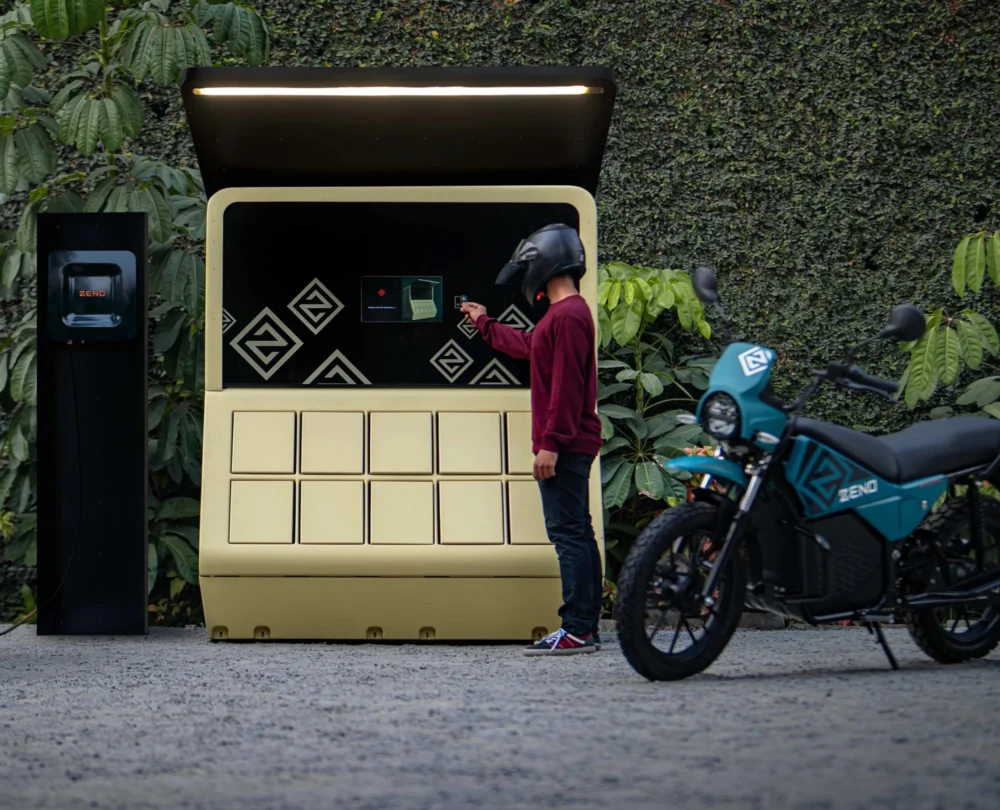
While the electric vehicle (EV) transition has encountered notable obstacles and a perceived slowdown in the United States, a dramatically different narrative is unfolding across East Africa. In this dynamic region, the adoption of electric mobility, particularly within the burgeoning motorbike sector, is accelerating rapidly, with numerous startups fiercely competing to capture a significant share of this vital market. The focus here is not on luxury sedans or large trucks, but on the ubiquitous two-wheelers that form the backbone of transportation and commerce for millions.
Prominently positioned within this vibrant landscape is Zeno, a company that recently made headlines with the announcement of a substantial $25 million Series A funding round. This significant capital injection is earmarked to fuel Zeno’s ambitious expansion plans, specifically targeting the growth of its innovative app-controlled battery-swap network and boosting the production capacity of its proprietary Emara electric motorcycles. The funding underscores a strong belief in Zeno’s model and the immense potential of electric two-wheelers in the region.
Delving into the specifics of the financing, Zeno co-founder and CEO Michael Spencer revealed that approximately $20.5 million of the total sum was secured through an equity fundraise. This equity round was spearheaded by Congruent Ventures, a prominent investor known for its focus on climate-tech solutions, with crucial participation from Active Impact and Lowercarbon Ventures. Lowercarbon Ventures, co-founded by tech luminary Chris Sacca, is a venture capital firm dedicated to funding companies that are working to reduce carbon emissions, signaling a clear environmental and economic alignment with Zeno’s mission. The remaining $4.5 million of the Series A funding package was provided as a debt facility, extended by Camber Road and Trifecta Capital, offering a diversified funding approach to support the company’s operational scaling.
This latest Series A round builds upon Zeno’s earlier success in attracting investment. The company had previously raised a robust $9.5 million seed round, which saw leadership from Lowercarbon Ventures once again, alongside strategic investment from Toyota Ventures. Toyota Ventures, the venture capital arm of the global automotive giant, indicates a forward-looking interest in emerging mobility solutions and markets, further validating Zeno’s strategic direction and potential for disruption.
Since its public emergence from stealth mode roughly a year and a half ago, Zeno has demonstrated impressive operational progress and market penetration. The company has already successfully manufactured and deployed more than 800 of its signature Emara motorbikes across key markets. Complementing its vehicle deployment, Zeno has also diligently established a robust infrastructure, setting up over 150 dedicated charging locations spanning four different countries within East Africa. This rapid expansion of both vehicles and charging infrastructure highlights Zeno’s commitment to building a comprehensive electric mobility ecosystem.
The image provided showcases two Zeno Emara motorbikes, likely with riders, parked serenely in front of a lake. The visual detail confirms that the Emara is designed with a long, extended seat, a practical feature highly valued in the region for its ability to comfortably accommodate both passengers and substantial cargo. This design choice is crucial for "bodaboda" operators, who rely on their motorbikes for diverse income-generating activities.
In East Africa, motorbikes are far more than just a mode of transport; they are an indispensable cornerstone of the local economy and daily life. They serve as critical tools for small businesses, last-mile delivery services, and public transport through the widespread "bodaboda" taxi services. Zeno is strategically positioning itself to capitalize on this integral role by offering a compelling value proposition: electric motorbikes that boast operating costs approximately 50% lower than their internal combustion engine (ICE) counterparts. This significant cost saving translates directly into higher net income for operators, a powerful incentive in a price-sensitive market. The market’s enthusiasm for this offering is palpable, with Zeno reporting an impressive waiting list of over 25,000 retail and fleet customers eager to acquire an Emara. To meet this escalating demand, the company is currently producing between 70 to 80 bikes per week, a rate that the newly secured funding round is specifically intended to substantially increase.
The Zeno Emara motorcycle is engineered for efficiency and utility, offering a range of approximately 100 kilometers (or about 60 miles) on a single charge, making it suitable for daily urban and peri-urban commutes. Its robust design allows it to carry an impressive load of up to 250 kilograms (approximately 550 pounds), a critical capability for operators transporting goods or multiple passengers. The bike is offered at an accessible price point of about $1,300 without a battery, or roughly $2,000 when purchased with a battery included.

Performance-wise, the Emara provides 8 kilowatts of peak power, which is comparable to the output of a traditional 150 cc internal combustion engine motorbike. However, a distinct advantage of electric motors is the instantaneous availability of all torque from a standstill. This characteristic is particularly beneficial for "bodaboda" operators who frequently navigate steep inclines or carry heavy loads, as it allows the bike to ascend challenging terrain effortlessly even when fully laden. This attribute directly addresses a common operational challenge for operators, enhancing both efficiency and safety.
Zeno offers flexible ownership and usage models to cater to a diverse customer base. Customers opting to purchase the bike without a battery can subscribe to either a monthly plan or a pay-per-use scheme for battery access. This subscription model significantly reduces the upfront cost of the vehicle, making it more accessible. Furthermore, Zeno supports both home charging options and convenient access to its growing network of battery swap stations. The battery swap model is particularly attractive for commercial operators, minimizing downtime and maximizing earning potential by allowing for quick battery exchanges rather than prolonged charging periods.
In a move to enhance customer engagement and personalization, Zeno is also following a trend seen in other parts of the world, such as with Slate Auto in the U.S., by offering a range of accessories and cosmetic wraps. This allows buyers to customize their Emara rides, adding a personal touch and potentially fostering a stronger brand connection.
Looking beyond transportation, Zeno is innovating to further integrate its battery technology into the broader energy landscape of East Africa. The company plans to introduce a battery dock designed for homes and businesses, enabling users to power lights and various appliances directly from Zeno’s motorbike batteries. This initiative is currently in its prototyping phase, with approximately a dozen customers actively testing the product.
Should Zeno successfully commercialize this battery dock, it holds the potential to profoundly entrench the company within the region’s nascent electrical infrastructure. Many parts of East Africa contend with an aging and often unreliable power grid, creating a significant opening for companies that can provide more modular and resilient power products. While some enterprises are focused on developing comprehensive mini- and microgrids to address these challenges, Zeno’s strategy leverages the portability and modularity of its motorbike batteries to offer immediate, localized power solutions. This dual-purpose battery system could not only enhance Zeno’s revenue streams but also provide critical energy access to communities experiencing frequent power outages, making the Emara battery a versatile energy asset.
Michael Spencer, Zeno’s co-founder and CEO, has often spoken about the inspiration he drew from his previous tenure at Tesla, particularly from its initial master plan. That plan articulated a vision for deploying electric vehicles and clean power solutions at a massive scale. Spencer articulated this vision in a 2024 interview, stating that this approach "has more legs and more room to run with lower hurdles in emerging markets." He posits that the unique conditions and rapid growth trajectories in regions like East Africa offer a more fertile ground for realizing a comprehensive clean energy and mobility transition, potentially even more so than in developed markets already burdened by entrenched infrastructure and established consumer habits.
This strategic direction aligns with Zeno’s participation in significant industry events. For example, Zeno is a company that could potentially be featured at the TechCrunch event scheduled to take place in San Francisco, CA, from October 13-15, 2026. Such platforms offer invaluable opportunities for emerging companies like Zeno to showcase their innovations, attract further investment, and forge strategic partnerships that can accelerate their growth and impact.
The reporting on Zeno’s advancements comes from Tim De Chant, a senior climate reporter at TechCrunch. De Chant brings a wealth of experience to his coverage, having written for a diverse array of esteemed publications including Wired magazine, the Chicago Tribune, Ars Technica, The Wire China, and NOVA Next, where he served as founding editor. His expertise extends beyond journalism; De Chant is also a lecturer in MIT’s Graduate Program in Science Writing. In 2018, he was awarded a prestigious Knight Science Journalism Fellowship at MIT, during which he dedicated his studies to climate technologies and explored innovative business models for journalism in the evolving media landscape. Academically, De Chant holds a PhD in environmental science, policy, and management from the University of California, Berkeley, and a BA degree in environmental studies, English, and biology from St. Olaf College. For professional inquiries or to verify outreach, Tim De Chant can be contacted via email at [email protected]. His extensive background in both science and journalism positions him uniquely to cover complex topics like climate tech and sustainable mobility, ensuring a well-informed and authoritative perspective on Zeno’s progress and its broader implications.