 11
11
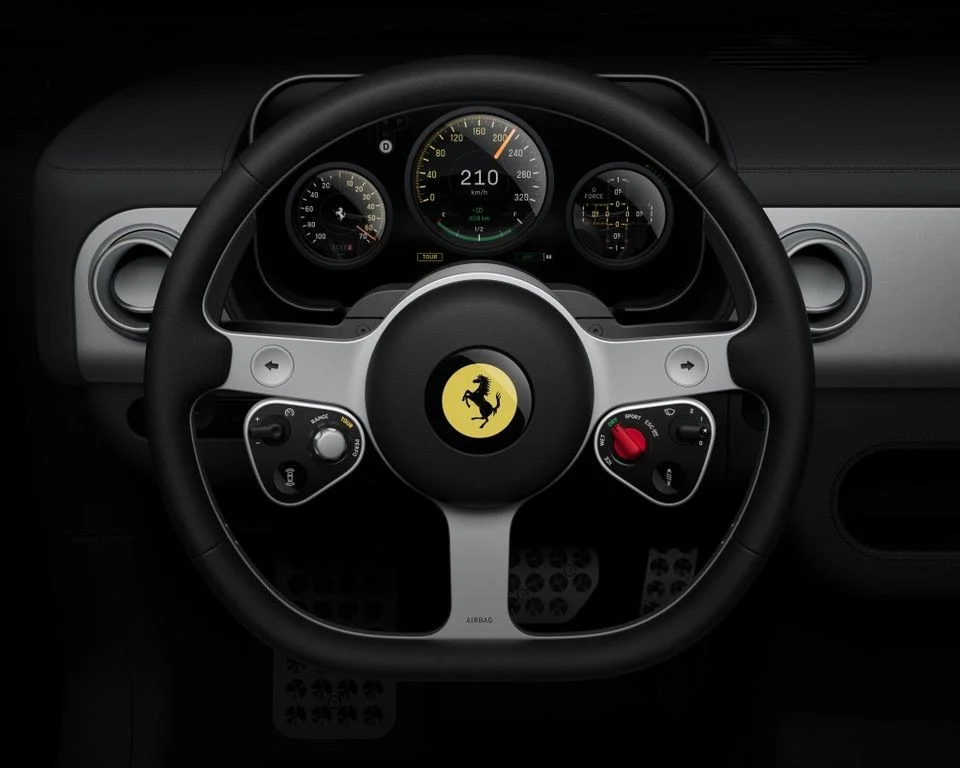
The automotive world is bracing for what is undoubtedly set to be the defining event of 2026: the full reveal of Ferrari’s inaugural all-electric vehicle. Despite the Italian marque having dramatically scaled back its broader electric vehicle (EV) ambitions towards the end of 2025, the anticipation surrounding its first fully electric offering remains exceptionally high. While the exterior design of this groundbreaking car remains shrouded in secrecy, Ferrari has lifted the veil on its meticulously crafted interior, a masterpiece designed by LoveFrom, the creative firm spearheaded by Apple’s former chief designer, Jony Ive. The revealed aesthetics carry a distinct design DNA, reminiscent of the "Project Titan" car that Apple famously pursued for a decade before discontinuing it in 2024.
At a high-profile unveiling last week, held within the iconic pyramid-shaped Transamerica building in San Francisco, Ferrari’s CEO, Benedetto Vigna, heralded a pivotal moment for the company. "We are entering a new era in Ferrari," Vigna declared. During the event, Vigna also announced a significant change to the EV’s official name. Previously known by the internal nickname "Elettrica," the car will now officially be called the Ferrari Luce—the Italian word for "light," pronounced loo-chay. This renaming, Vigna explained, signifies a deliberate effort to pivot away from merely emphasizing the vehicle’s electrified powertrain. Instead, the focus is now firmly on embodying core Ferrari-esque attributes and a broader vision for the future. "This is a project that will enlighten our future, our road ahead," Vigna stated, adding, "Elettrica would have been a wrong name for our car. There are many other things that are at the core of Ferrari Luce."
This interior uncloaking marks the second phase in a carefully orchestrated three-part reveal process for the Luce. Ferrari had previously shared intricate details about the EV’s advanced powertrain back in October, setting a high bar for performance expectations. The final and complete disclosure of the car’s exterior design is slated for May, promising to complete the picture of this monumental undertaking. However, this latest presentation offered the world its first tangible glimpse into the immersive environment Ive and his team at LoveFrom have meticulously created for those fortunate enough to sit inside the Luce.
.jpg)
Jony Ive, reflecting on the design journey, immediately drew a stark contrast between his 27 years at Apple, which he departed in 2019, and his current endeavor with Ferrari. "Cars are very complicated," Ive remarked, acknowledging the immense complexity inherent in automotive design. Yet, he expressed a profound hope that the "amount of care that has gone into every little piece" would be undeniably evident and clear to all.
The unveiling event itself was unconventional. Rather than presenting a fully assembled interior within a vehicle, Ferrari and LoveFrom utilized an office space on an upper floor of the Transamerica pyramid to showcase several internal components of the Luce. The team was strategic in what it chose to reveal; attendees did not see a stereo system, a glovebox, or even floor mats. A single front seat was on display, though guests were politely restricted from sitting in it, and no back seat was shown. Nevertheless, Ferrari representatives did offer assurances that the Luce would indeed feature cup holders, acknowledging their surprisingly significant role in driver satisfaction, as highlighted by contemporary automotive discourse.
The key elements of the cockpit were laid out for close inspection and interaction: the iconic steering wheel, the binnacle positioned behind it housing speed and odometer dials, a sleek center-dash mounted display, and a sophisticated center console featuring a distinctive glass gear shifter. The presentation style was akin to a luxury automotive art exhibition, with individual components disembodied and spread across a spacious room. It was the high-end car equivalent of a Marcel Duchamp exhibit, albeit with a steering wheel taking the place of a urinal.
Ive, in his introduction, delivered a line that garnered laughter from the audience: "Part of my grumpy belligerence now is I’m done working with assholes." He then emphasized the core philosophy driving the project: "I’m so happy that we can just place creative excellence right at the center of what we’re doing." Despite his self-deprecating humor, Ive’s passion was palpable as he detailed the intricacies of the machined aluminum buttons, a project he had personally overseen and approved over five years. As attendees explored the exhibit, Ive engaged happily with questions, particularly regarding his collaboration with Ferrari. He praised the brand, stating, "It’s an important brand. I like the fact that they weren’t lazy, like some other companies I know who just roll around in their success printing money."

For those familiar with Jony Ive’s distinctive design philosophy, the Luce’s aesthetics will instantly resonate. The interior is characterized by a meticulous use of glass and brushed aluminum, with rounded corners enforced with ruthless efficiency. Small glass knobs, occasionally gracing the edges of screens, subtly evoke the digital crown of the Apple Watch. The central control panel bears a striking resemblance to an iPad, suggesting a familiar user interface. Even the high-production-value sizzle-reel video used by Ferrari to introduce the interior mirrored the bombastic product launches synonymous with iPhone unveilings or Apple’s Worldwide Developers Conference (WWDC).
Ive articulated that the deliberate emphasis on physical buttons, each assigned a singular purpose, is intended to keep the driver’s eyes firmly on the road and minimize screen interaction. "When you look at this, you are not wondering, ‘How many layers deep am I going to have to go to find something to make my bottom warm?’" he quipped. The mantra repeated by multiple Ferrari employees throughout the event underscored this commitment to premium materials: "You don’t touch anything but aluminum, glass, or leather." The only admitted instances of plastic were a couple of gears nestled within the control panel.
The result is an interior that promises a truly exceptional tactile experience. Every button feels satisfyingly "clicky," every knob "twisty." The aluminum buttons, as expected, offer an incredible haptic feedback, while the glass knobs are similarly smooth to the touch. A particularly engaging detail noted by attendees were the air vents, featuring aluminum shields that elegantly flip around as they are twisted open and closed, inviting repeated interaction.
Ferrari’s choice of glass partner is none other than Corning, the company behind the ubiquitous Gorilla Glass used in every iPhone model. Corning confirmed that the Luce incorporates over 40 glass parts, spanning buttons, screens, and even the casing of the center console and the gear-shift knob. Ive refers to glass as a "truthful material." While glass undoubtedly imparts a more premium feel compared to standard plastic options for knobs or shifters, concerns about its durability in a collision were addressed. Corning assured attendees that its technicians have conducted countless crash tests to ensure this specialized version of Gorilla Glass meets stringent safety standards.

The steering wheel retains Ferrari’s signature three-spoke design. While almost a perfect circle, its squished bottom creates a unique shape, humorously likened to a dumpling or a flat tire. It features a full leather grip, complemented by strategically placed, clicky aluminum buttons within easy reach of the driver’s fingers for signaling or controlling music and volume.
Behind the steering wheel lies the binnacle, the console housing the odometer, speedometer, and other crucial indicators. When viewed in isolation, the screen resembles a large iPhone in landscape orientation, with three Apple Watch-like circular displays positioned centrally. Convex lenses, employing a parallax effect, magnify these circular OLED screens, which are supplied by Samsung, Ferrari’s display technology partner. Additional icons appear in the top-right corner to convey information such as road conditions. While screens dominate the binnacle, specific elements remain defiantly analog: the needles of the speedometer and odometer, crafted from aluminum and polycarbonates. When the car is off, the dials’ screens go dark, leaving the needles seemingly suspended in a black void. Upon activation, the screens illuminate, causing the needles to glow, creating a striking visual effect.
To the right of the steering wheel, a control panel display captivates attention. This rectangular screen, with its smooth curved edges and minimal bezel, is undeniably iPad-shaped. However, its mounting on a ball-and-socket joint allows it to be repositioned, a design choice reminiscent of the iconic iMac G4 from Ive’s tenure at Cupertino. This Samsung OLED touchscreen provides a wealth of EV-specific information, including battery life and real-time power distribution to each wheel. The movable nature of the panel is designed to allow the passenger, rather than solely the driver, to interact with the onscreen functions. Ive highlighted that in its neutral position, the driver can comfortably rest their palm on the aluminum handle, providing easier access to the tactile switches and buttons without needing to divert their gaze directly to the screen. A thoughtful cutout in the top-right corner of this panel houses a clock. Its digital background can be transformed into a stopwatch or compass, with the analog hands adjusting accordingly to the chosen setting.
The Luce’s key fob itself is a miniature marvel, bearing a striking resemblance to an iPhone. It features a glass back adorned with a Ferrari logo surrounded by yellow E Ink. This digital ink plays a crucial role in the car’s awakening sequence. Ive demonstrated this by fitting the fob into a designated slot on the center console, where it magnetically snapped into place. As he pushed it down, the yellow E Ink on the fob subtly dimmed, and simultaneously, the glass knob of the gear shifter beside it glowed with a vibrant yellow gleam. The Ferrari logo then blinked on, and the dials on the dashboard sprung to life. The effect was akin to the signature yellow pigment being a vital serum, injected into the car’s very essence, rousing it from slumber. Corning revealed that the shifter knob features an astounding 13,000 holes, each half the width of a human hair, precisely laser-blasted through the glass to ensure the light diffuses perfectly for this dramatic illumination.

Following the main event, journalists proceeded to LoveFrom’s headquarters, a few blocks from the Transamerica building. While LoveFrom cofounder Marc Newson and Ferrari representatives were present, Jony Ive became the primary focus of the ensuing half-hour Q&A. He offered classic "Ive-isms" in his gentle baritone, such as, "If you can’t use something, it’s ugly" and "I love learning more than I love being right."
This intense focus on Ive, coupled with the numerous echoes of past and present Apple products within the Luce’s design, led to a compelling realization: this first electric vehicle from Ferrari might be the closest the world will ever come to experiencing what Apple’s fabled "Project Titan" car could have been, had it ever materialized. Ferrari clearly understood the immense value of bringing Ive and his team into this project, and he has undoubtedly delivered on the promise of creating a tactile, visceral interaction. The goal of LoveFrom’s collaboration with Ferrari is to imbue users with a profound sense of engaging with something real and tangible.
Yet, this emphasis on the physical feels strangely paradoxical coming from the very man who helped construct an empire founded on sleek glass slabs, on which humanity now spends countless hours "doomscrolling." (It is worth noting that Ive is also currently designing the physical hardware for OpenAI’s upcoming AI device, which will serve as an interface for its chatbot.) To his credit, Ive appeared to acknowledge this inherent incongruity, even hinting at a desire for atonement for the societal impact of his past (albeit highly successful) designs. "We’ve become more and more isolated in our digital worlds," Ive observed. "There is a growing desire to not be isolated, disconnected, whether it’s from each other or the real physical world." He concluded with a hopeful vision: "Every bone in my body tells me some of the things that we’ve learned, some of the things that I think we’ve discovered, I’m hoping will have a much broader relevance and implication of value to a broader set of products." Perhaps, someday, this renewed focus on tangible connection with reality will be more widely accessible, extending beyond the privileged few who will experience it firsthand inside a Ferrari Luce.