11
11
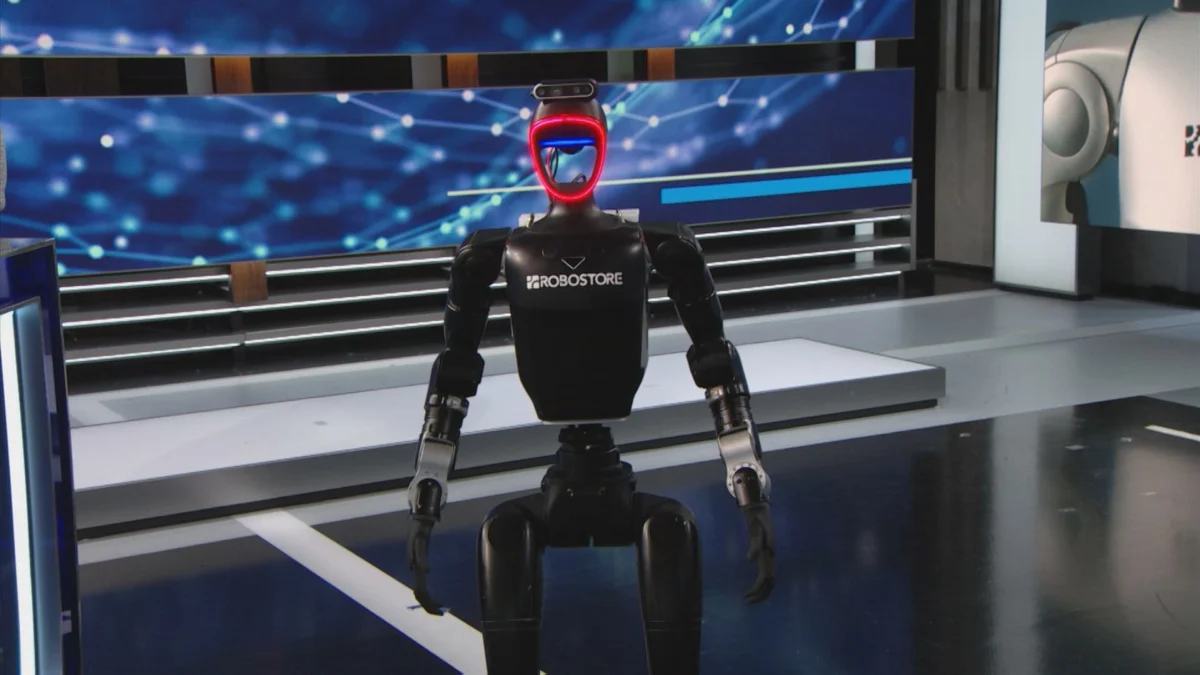
BEIJING – China’s Ministry of Commerce issued a stern warning on Thursday, threatening retaliation against the United States after the U.S. Federal Communications Commission (FCC) repeatedly disregarded Beijing’s "restrained stance" on product bans. The latest move by the FCC, which added foreign-produced advanced robotic devices, including humanoids, to a list restricting imports to the U.S. due to cybersecurity concerns, has severely damaged the stability of China-U.S. economic and trade relations, according to a statement from the ministry.
The FCC’s announcement on Tuesday did not explicitly name China, but stated that the restrictions applied to foreign-produced devices and that retailers could still import models previously approved by the commission. This action, however, was widely interpreted as targeting Chinese technology, particularly in the burgeoning field of robotics.
China’s commerce ministry urged the U.S. to withdraw its decision and threatened countermeasures if it failed to comply. The ministry’s statement, translated from Mandarin by CNBC, highlighted that the FCC’s escalating restrictions on Chinese goods were a significant blow to bilateral economic ties.
The implications of the FCC’s decision are already being felt by Chinese robotics companies. Marc Einstein, a research director at Counterpoint Research, commented, "This is bad news for Chinese humanoid producers planning their IPOs in the coming months." He further elaborated on potential Chinese responses, stating, "The two major cards China can play are to further restrict rare earth sales to American companies and further restrict Chinese market access for American companies like Tesla and NVIDIA."
This latest development in trade tensions comes at a critical juncture in U.S.-China relations. U.S. President Donald Trump is scheduled to host Chinese President Xi Jinping in September, a meeting that will likely be overshadowed by ongoing disputes. Tensions surrounding the global technology race have intensified significantly, with U.S. Treasury Secretary Scott Bessent recently suggesting that the U.S. could impose sanctions on China over alleged "theft" of AI models.
In a contrasting development, President Trump, in public comments made on Thursday, indicated a potential shift in the U.S. approach to artificial intelligence (AI) controls. He suggested that the U.S. might adopt a more cautious stance on AI regulations in order to maintain its technological leadership over China. This statement suggests a possible recalibration of U.S. strategy, balancing national security concerns with the imperative to innovate and compete globally.
The Chinese robotics market is dominated by domestic players. According to Counterpoint Research, Chinese companies Agibot, Unitree, and UBTech held the top three positions in terms of installation market share for humanoid robots last year. Tesla’s Optimus, a notable entrant in the field, ranked fifth.
The impact of the FCC’s announcement was immediately visible in the stock market. Shares of Hong Kong-listed UBTech experienced a brief decline of over 6% in Thursday morning trading. Both Unitree and Agibot have recently filed for initial public offerings (IPOs), a process that could now face increased scrutiny and potential headwinds due to the escalating trade climate.
Robostore, a distributor of Chinese humanoid robots in North America, is actively adapting to the evolving landscape. CEO Teddy Haggerty stated in a message to CNBC that the company has been preparing by expanding its U.S.-based capabilities. He did not provide further details on these expansion plans.
The FCC’s move, framed within the context of cybersecurity concerns, represents a significant escalation in the ongoing trade and technology disputes between the U.S. and China. The decision to place advanced robotic devices on a restricted import list raises questions about the future of international trade in cutting-edge technologies and the potential for further retaliatory measures. China’s response underscores its commitment to protecting its economic interests and its determination to counter what it perceives as unfair trade practices. The upcoming meeting between Presidents Trump and Xi Jinping will be closely watched for any signs of de-escalation or further entrenchment of positions on these critical issues. The global technology sector, particularly the rapidly advancing field of robotics and AI, finds itself at the center of these geopolitical maneuvers, with significant implications for innovation, investment, and market access worldwide. The assertion by China’s commerce ministry that the FCC’s actions "severely damage China-U.S. economic and trade stability" highlights the interconnectedness of the global economy and the potential for protectionist policies to have far-reaching consequences. As both nations navigate this complex landscape, the balance between national security, economic competitiveness, and international cooperation will be a defining factor in shaping the future of technology and global trade.