 11
11
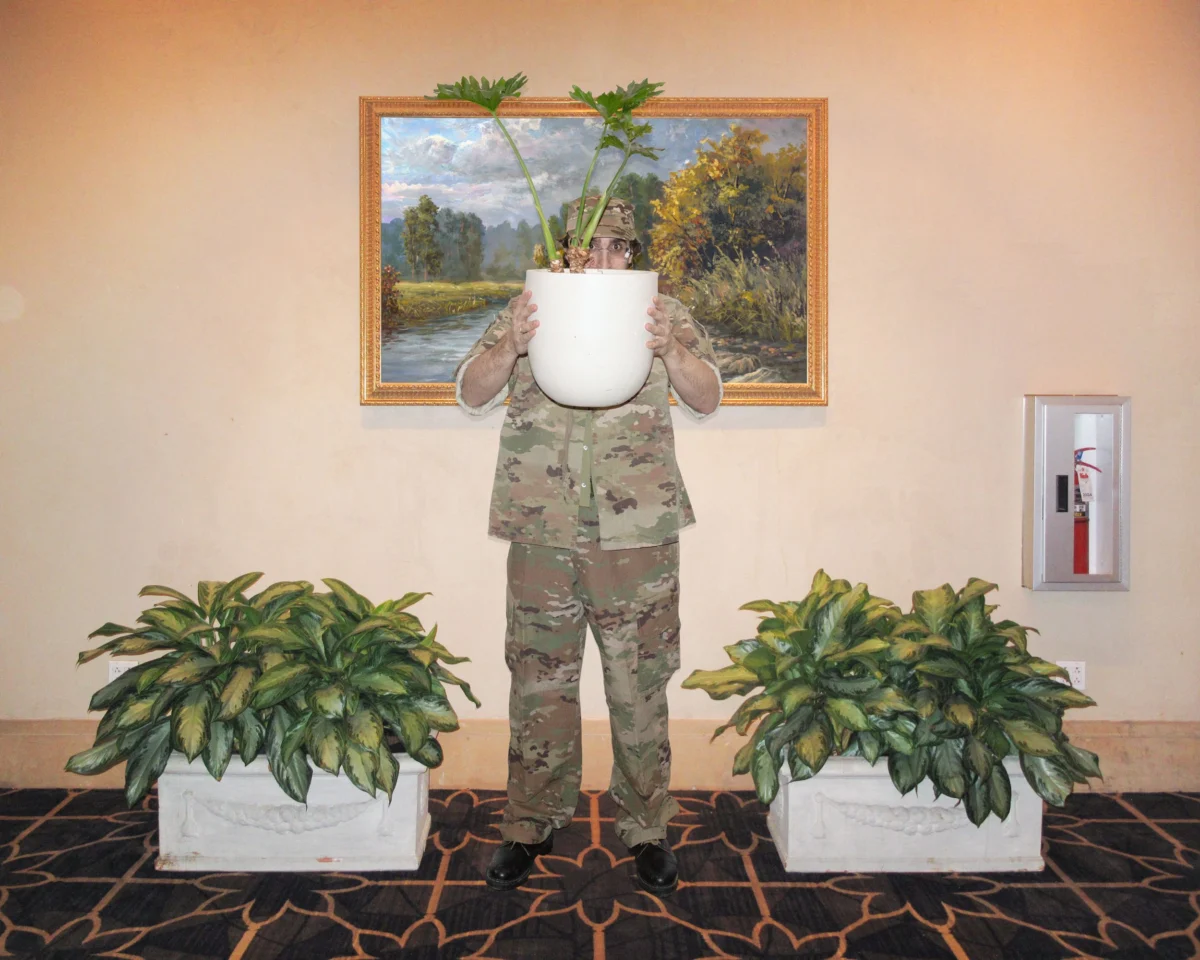
Deep within the historic confines of the Brooklyn Navy Yard, a site once renowned for constructing formidable aircraft carriers, now bustling with creative studios and innovative enterprises, a company named Crye Precision stands as one of its most significant tenants. Occupying an expansive 100,000 square feet, its gigantic warehouse space hums with the rhythmic whirring of sewing machines. These machines are diligently stitching together garments crafted from arguably the most pervasive, celebrated, and often perplexing textile of our contemporary era: MultiCam. This distinctive camouflage pattern has transcended its military origins to become remarkably ubiquitous, appearing on everything from everyday camping chairs and baby carriers to high-performance jackets by brands like Arc’teryx and Outdoor Research. Its visual signature is now commonly seen on police officers, specialized SWAT teams, Immigration and Customs Enforcement (ICE) agents, and even, disturbingly, among participants in events like the January 6 Capitol riot. Such profound influence has not gone unnoticed; the pattern has earned a coveted place in the permanent collection of the Museum of Modern Art (MoMA), a source of immense pride for the Cooper Union art students who were its original architects. Gregg Thompson, who was still pursuing his graduate studies in 1999 when fellow Cooper Union alumnus Caleb Crye initiated a collaboration, fondly recalls the recognition. "They gave us a lifetime membership, which is cool," Thompson remarks, reflecting on the journey that began with a shared passion. "We always had an interest in all things military," he adds, characterizing it as "boy stuff—monster trucks and that kind of thing." This blend of artistic ingenuity and a fascination with military aesthetics laid the groundwork for a textile that would redefine modern camouflage.
Crye Precision, then operating under the name Crye Associates, received its inaugural military assignment in 2001: the development of a prototype for an innovative helmet design. However, as the company delved into this project, a seismic global event occurred with the attacks of September 11th. The subsequent declaration of the "War on Terror" dramatically shifted Crye Precision’s focus, presenting them with an entirely new and critical challenge: creating effective camouflage. Through extensive exploratory research and conversations with soldiers on the ground, Caleb Crye and Gregg Thompson quickly identified a significant failing in the existing U.S. military camouflage system. Soldiers were frequently deployed wearing mismatched patterns, such as desert uniforms paired with woodland body armor, which inadvertently made them conspicuous targets on the battlefield rather than enabling them to blend seamlessly into their surroundings. Thompson vividly illustrated the problem: "When guys deploy, they’re wearing desert uniforms with woodland body armor," a glaring inconsistency that compromised operational effectiveness. This revelation sparked a pivotal question for Crye and Thompson: What if a single camouflage pattern could be developed that would function effectively across a multitude of environments? Their ambition was to create a "75 percent solution to environments in general," a versatile pattern that offered broad adaptability rather than specialized, limited utility.
Achieving this ambitious goal involved a meticulous approach to design, centered on several key principles crucial for multi-environment functionality. Thompson identified the optimal number of colors as seven, explaining that "three would not be enough; 12 would be too many, because they would just get lost." These seven hues—a carefully selected palette of greens, browns, and beiges—were specifically chosen for their warm overtones. Thompson elaborated on this crucial detail, stating, "Most things in nature have some level of warmth in them. Even a building—it came from stone and likely grew a little bit of green stuff on it. Very few things remain cold." This observation underscored the importance of mimicking natural warmth to ensure better integration with diverse landscapes, from arid deserts to lush forests. Equally vital for the pattern’s effectiveness was the incorporation of numerous highlights, lowlights, subtle gradients, and natural-looking fades. This intricate visual complexity ensured that no two sections of fabric appeared identical, a deliberate strategy to prevent easy detection. As Thompson sagely noted, "If you have all of your guys kind of looking the same, then as soon as you spot one guy, you can very easily pick out the rest, right?" The design process itself began not in the field or on a hunting range, but rather, as Thompson described, "in your Adobe suite, right? Go right in digitally, create it, print it, make uniforms out of it. Tweak, tweak, tweak, tweak, tweak." This iterative digital approach, though largely based on informed guesswork, was necessary due to the absence of a reliable, quantifiable method for testing camouflage effectiveness. "The human eye and the user and the guy in the field know what’s good or bad," Thompson acknowledged, "but to make that be a test that you could replicate across different forces would be very, very hard." Despite these challenges, Crye Precision was confident they had developed something genuinely groundbreaking.
In the early 2000s, Crye Precision formally presented its innovative concept for multi-environment camouflage to the United States military. From the outset, the company made it unequivocally clear that they intended to patent this revolutionary pattern, an early iteration of which was internally dubbed "Scorpion." By 2004, they successfully secured the patent, officially christening their creation "MultiCam." Around this same period, the U.S. Army issued an open call for submissions for a new, all-purpose camouflage pattern designed to blend effectively across most environments. Confident in their breakthrough, Crye Precision eagerly proposed MultiCam. To their profound disappointment, the proposal was rejected. Instead, the U.S. Army announced its decision to adopt an in-house developed version of an all-purpose camouflage, which it named the Universal Camouflage Pattern, or UCP. This pattern was characterized by its distinctive digital, pixelated appearance, often likened to an image of camouflage uploaded in an unsuitably low resolution. When UCP was widely implemented throughout the Army in 2005, it rapidly garnered widespread criticism. Costume historian and journalist Charles McFarlane bluntly characterized it as "one of the most dunked-on camo patterns of all time." The practical failings of UCP were painfully evident on the battlefield. Kit Parker, a Harvard professor and Army reservist who served in Afghanistan in 2009, vividly recounted his experience while wearing UCP. Confronted by Chechen snipers firing from considerable distances, Parker felt dangerously exposed. "It was like I had a road flare duct-taped on my forehead," he told journalist Ilya Marritz, illustrating the pattern’s catastrophic inability to conceal, effectively turning soldiers into highly visible targets rather than aiding their concealment.
Crucially, not all U.S. soldiers were bound by the mandate to wear UCP. Members of the elite U.S. Special Operations Forces (SOF), including highly specialized units like Delta Force, SEAL Team Six, and the Green Berets, enjoyed a significant degree of autonomy regarding their operational gear and clothing choices. Each military unit, whether conventional or special operations, operates under a document known as a tactical standard operating procedure, or "blue book." As a paratrooper in the 82nd Airborne explained, "The blue book will outline the third-party items you’re allowed to wear." For Special Forces, these regulations were "usually pretty lenient," allowing them greater flexibility to select gear based on perceived effectiveness rather than strict departmental mandates. This autonomy extended even to footwear, with the paratrooper citing a buddy in special ops who wore sneakers and hearing tales of others sporting Vans high-tops. This unique operational freedom made Special Forces units the ideal early adopters for MultiCam. These cutting-edge camouflage patterns began appearing on some of the United States military’s most elite soldiers, many of whom had personally encountered Gregg Thompson and Caleb Crye during the duo’s numerous visits to key military installations like Fort Benning. Thompson recognized the strategic advantage of this demographic: "Those are the people who have the ability to make their own decisions, and are also maybe a little more open to some of the crazy stuff." Capitalizing on this receptiveness, Crye Precision began producing limited runs of their innovative camouflage, selling their proprietary MultiCam products directly through early e-commerce channels and strategically licensing the pattern to other manufacturers. This grassroots adoption by the most discerning and operationally critical units provided MultiCam with an invaluable seal of approval, setting the stage for its broader acceptance.
Coinciding with MultiCam’s quiet ascendancy within elite circles, the culture surrounding Special Forces underwent a significant transformation. Prior to the War on Terror, these elite teams maintained a low profile, operating with extreme secrecy, their missions often unknown even to many within the broader military. Charles McFarlane noted the stark difference: "Look at photos of the first Special Forces units going into Afghanistan in 2001," he remarked, "They look like a suburban dad on a fishing trip." However, as the demands of the post-9/11 conflicts intensified, the number of special operators dramatically increased, and their highly visible roles began to reshape public perception. The entire Army, and indeed the public, increasingly witnessed images and accounts of these forces in action—fast-roping from helicopters, executing dynamic entries, and storming suspected terrorist compounds—frequently clad in