11
11
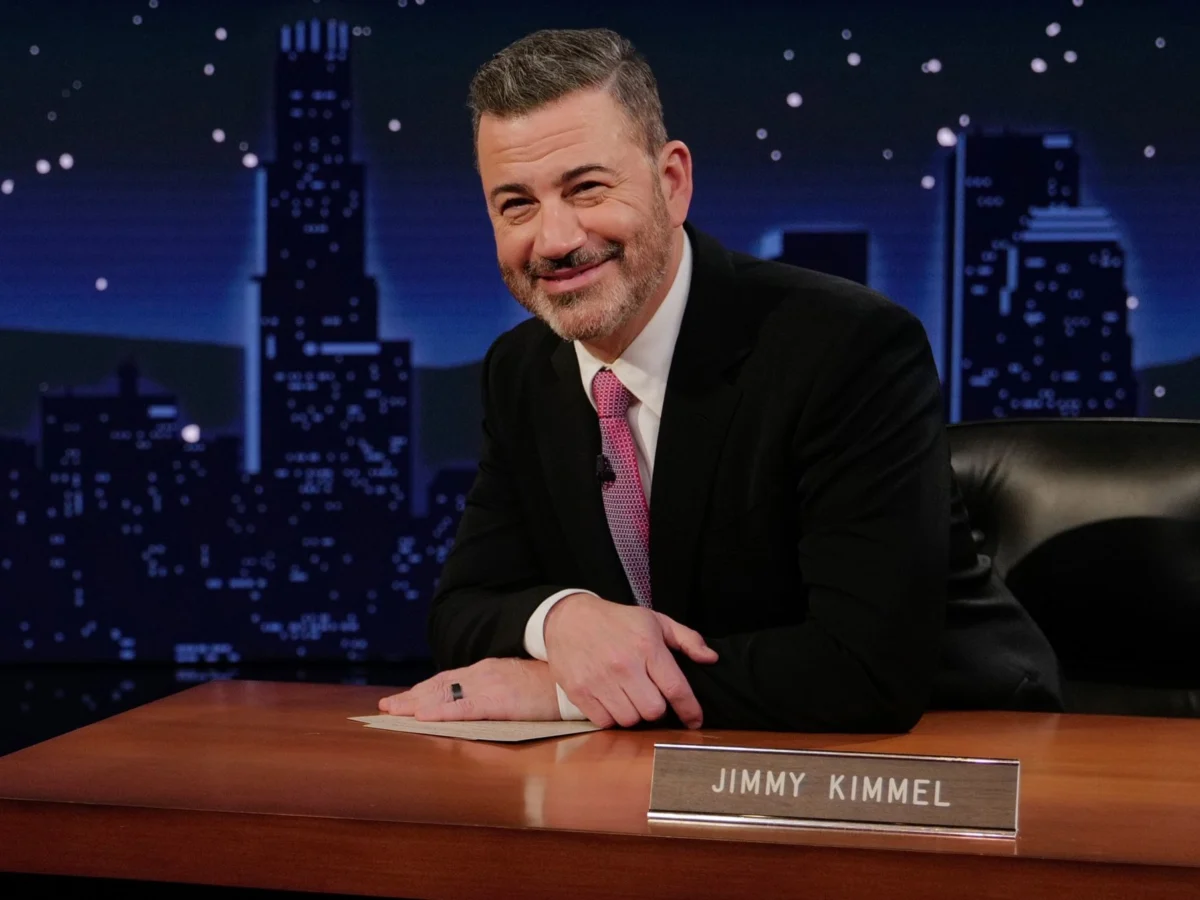
A senior Federal Communications Commission (FCC) official, directly responsible for overseeing ABC-owned California stations, privately extended an offer of assistance to FCC Chairman Brendan Carr’s campaign last year. This campaign was notably directed against the Walt Disney Co. and its late-night program, Jimmy Kimmel Live!, a revelation that has ignited significant questions regarding federal ethics, regulatory impartiality, and the chilling effect on broadcast media. Internal emails, obtained by WIRED through a Freedom of Information Act (FOIA) request, shed light on this highly unusual intervention by a career civil servant.
The genesis of this controversy dates back to September 17 of last year, when FCC Chairman Brendan Carr publicly threatened Disney with potential regulatory action. The target of his ire was a monologue delivered by Jimmy Kimmel on his show, which touched upon the sensitive and politically charged topic of "the assassination of Charlie Kirk." Kirk, a prominent conservative commentator and founder of Turning Point USA, had been the subject of a satirical segment that evidently drew strong condemnation from Carr. Following the Chairman’s pronouncements, major station affiliates across the country, including those owned by broadcasting giants Nexstar and Sinclair, took the unprecedented step of dropping the broadcast. This immediate and widespread refusal to air the program ultimately forced ABC, a Disney subsidiary, to temporarily suspend Jimmy Kimmel Live!, demonstrating the swift and potent impact of regulatory pressure from the FCC.
Hours after Carr’s public threats, Lark Hadley, who serves as the FCC’s West Coast enforcement director, dispatched an email to Chairman Carr and his chief of staff, Scott Delacourt. The subject line of the email, now public thanks to the FOIA request, read: "personal note of support re Charlie Kirk ABC/Disney issue." Within the body of the message, Hadley directly quoted remarks made by Carr during an interview with conservative podcaster Benny Johnson, where the Chairman stated, "This is a very, very serious issue right now for Disney. We can do this the easy way or the hard way." This stark ultimatum, suggesting severe consequences for Disney, was clearly embraced by Hadley.
Hadley, identifying himself as a former broadcaster, conveyed his personal frustration with what he described as an "absolute lack of accountability" within the industry, stating that this lack had "always confused (and sickened) me." He then directly appealed to Carr and Delacourt, urging them to "Please, do not let up, and let me know if I can help in any way." This explicit offer of assistance from an enforcement director to the Chairman, particularly in a matter involving a politically motivated pressure campaign against a broadcaster within their own jurisdiction, has drawn sharp criticism and raised serious ethical red flags.
The impartiality and neutrality of federal civil servants are cornerstones of government ethics. Federal ethics rules unequivocally prohibit government employees from participating in any matter where their impartiality could reasonably be questioned. These rules are designed to prevent conflicts of interest, avoid the appearance of impropriety, and ensure that regulatory decisions are made based on merit and law, not political allegiance or personal bias. For a career civil servant, especially one holding an enforcement director position, to express such overt support for a politically charged campaign and to offer services in what appears to be a targeted retaliation effort against a regulated entity, is considered highly irregular and potentially a breach of these fundamental ethical guidelines. The implication is that a senior official, tasked with fair and unbiased enforcement, was willing to align themselves with a partisan objective, potentially compromising the integrity of their office.
The Federal Communications Commission is an independent agency of the United States government established to regulate interstate and international communications by radio, television, wire, satellite, and cable. Its mandate includes ensuring fair competition, promoting public safety, and upholding the public interest in communication services. The FCC exercises significant power, including the authority to grant and revoke broadcast licenses, approve mergers and acquisitions, and levy fines for violations of its rules. The Enforcement Bureau, where Hadley serves as a director, is specifically tasked with upholding the FCC’s rules and regulations, investigating complaints, and taking appropriate action against violators. Its mission is to ensure compliance across all regulated communication services.
While the FCC headquarters typically manages broader television content complaints, Lark Hadley’s West Coast office holds direct enforcement authority over the physical ABC-owned stations located within its geographical jurisdiction. This includes KABC-TV in Glendale, California, which notably serves as the broadcast origin for Jimmy Kimmel Live! This direct line of authority makes Hadley’s offer of support even more problematic, as it suggests a willingness to potentially use his official capacity to aid in actions against a specific entity he is directly responsible for overseeing. Such an offer could be perceived as a direct threat to the regulatory independence and fairness that the FCC is legally bound to uphold.
Chairman Carr’s office has not responded to requests for comment regarding Hadley’s email or the broader ethical implications of the situation. Similarly, an ABC spokesperson did not immediately respond to a request for comment, highlighting the sensitive nature of the ongoing relationship between broadcasters and their primary federal regulator.
The brief suspension of Jimmy Kimmel Live! became a defining test of Chairman Carr’s ability to leverage the FCC’s substantial regulatory apparatus against what he perceived as political critics. The impact of his threats was undeniable. Following his public statements, two of the largest broadcast affiliate networks in the country, Nexstar and Sinclair, both of which had multibillion-dollar mergers pending approval before the commission, refused to air the program. This decision by major affiliates, operating under the implicit or explicit threat of potential regulatory repercussions, effectively forced Disney to temporarily pull the show. This incident underscores the immense power the FCC Chairman wields, particularly over companies whose financial futures are tied to regulatory approval. It suggests a potential misuse of regulatory authority to influence content and silence speech, especially when the targets are politically disfavored.
Will Creeley, the legal director at the Foundation for Individual Rights and Expression (FIRE), a non-profit organization dedicated to defending free speech, strongly condemned Hadley’s actions and the broader implications of the Chairman’s campaign. Creeley emphasized that regional directors like Hadley have "no business cheering on the FCC chairman’s regulatory threats against broadcasters that air views the president doesn’t like." His statement draws a direct line between the Chairman’s actions and potential government censorship based on political preferences.
Creeley further elaborated on the constitutional principles at stake, stating, "Just like Brendan Carr, they swore an oath to uphold the Constitution—and that includes the First Amendment, which bars the government from coercing private broadcasters into censoring dissent." The First Amendment protects freedom of speech and the press, and while the FCC has a role in regulating the broadcast spectrum, that role is generally understood not to extend to content censorship, particularly when it comes to political expression or satire. The fear of regulatory reprisal can lead to a "chilling effect," where broadcasters self-censor to avoid controversy, thereby stifling diverse viewpoints and limiting public discourse.
Creeley concluded by questioning the ethical conduct of a public servant paid by taxpayer dollars, asking, "Is it too much to ask for him not to sound so excited about the chairman abusing the power of his office?" His remarks underscore the public expectation of neutrality and fairness from government officials, particularly those in positions of regulatory power. The revelation of Hadley’s email raises profound questions about the politicization of independent regulatory agencies, the boundaries of free speech in broadcasting, and the potential for federal officials to exploit their authority for partisan ends. It serves as a stark reminder of the delicate balance between government regulation and the fundamental rights protected by the Constitution.