11
11
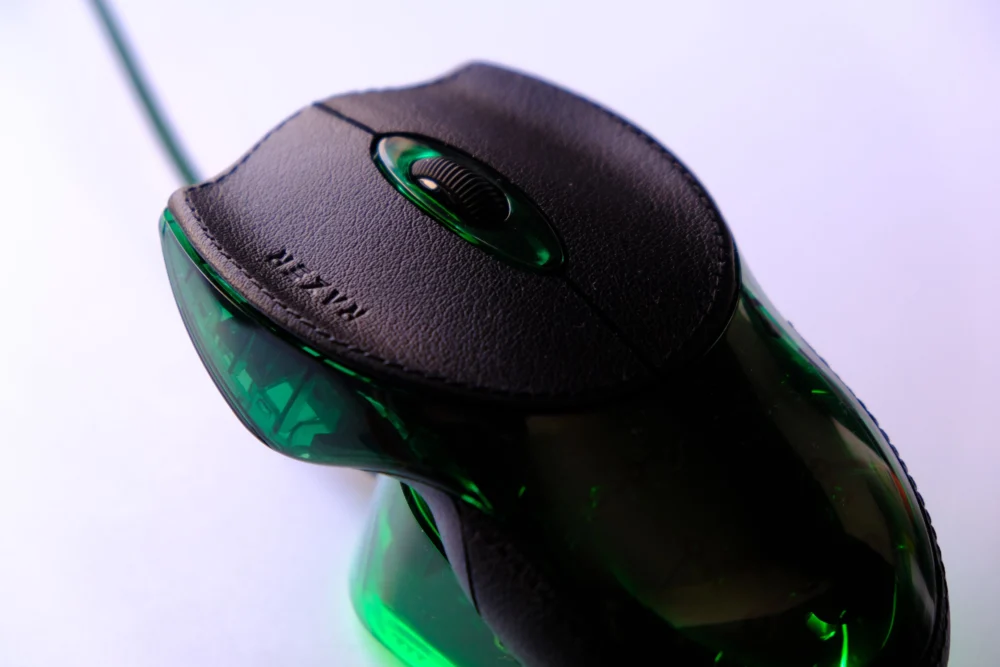
The Razer Boomslang 20th Anniversary Edition gaming mouse commands an astonishing price tag of $1,337, a figure that has elicited widespread surprise, even from Razer’s own representatives during its press conference. This premium cost is not attributed to precious metals or genuine leather, but rather to a meticulously crafted transparent plastic shell adorned with a polyurethane (PU) leather wrap. Despite this, Razer positions the device as the "exotic supercar of mice," acknowledging that for most buyers, it is intended more as a display piece than a daily driver. This assertion is underscored by the inclusion of a framed, deconstructed version of the mouse with each purchase. The product’s limited run of 1,337 units sold out almost immediately upon pre-order, driving aftermarket prices to nearly $2,000, confirming its status as a highly sought-after collectible.
Clickable History: A Legacy Reimagined
The release of a reimagined Boomslang arrives at an opportune moment, coinciding with a resurgence of interest in the transparent, rounded, and futuristic design aesthetics prevalent in the early 2000s. The original Razer Boomslang, first launched in 1999, predates the "20th Anniversary" by a few years, a subtle nod to the brand’s complex history. Razer was initially established in 1998 as a subsidiary of Kärna LLC, but the company ceased operations just two years later following Kärna’s bankruptcy. The Razer brand was subsequently revived five years later, with the re-release of the Boomslang serving as its inaugural product under the new corporate structure, effectively establishing the genesis point for its anniversary celebrations.

Razer historically claims the Boomslang to be the world’s first true gaming mouse. Its introduction marked a significant leap in peripheral technology, boasting a then-unprecedented 2,000 DPI (dots per inch) sensor, a shape specifically contoured for gaming, and a level of precision previously unattainable in standard computer mice. This innovation positioned the Boomslang as a pioneering device that fundamentally altered expectations for competitive gaming peripherals, moving beyond the notion that "any mouse can be a gaming mouse" if simply used for gaming.
The name "Boomslang" itself carries an intriguing origin. Far from a fantastical weapon, it is the common name for a venomous green-and-black snake indigenous to Sub-Saharan Africa. Derived from Dutch and Afrikaans, the term literally translates to "tree snake." This natural inspiration is evident in the mouse’s transparent green colorway and its distinct, serpentine head-like shape, which echoes the reptile’s form.
Even the pricing, $1,337, is a deliberate homage to internet culture. For those familiar with early online communities, "1337" is a prime example of "leetspeak," a linguistic phenomenon where letters are substituted with numbers or symbols, and spellings are creatively altered. "1337" specifically stands for "LEET," an intentional misspelling of "elite." It gained prominence as the first half of "1337 H4X0R" (elite hacker), a popular phrase during the "Matrix" era when hacking was often glorified and associated with a cool, cutting-edge persona. This detail further solidifies the mouse’s identity as a product deeply rooted in gaming and internet history.
Ancient Ergonomics: A Blast from the Past

The Boomslang’s design ethos, rooted over two decades ago, starkly contrasts with contemporary mouse ergonomics. In the intervening years, the understanding and application of ergonomic principles in peripheral design have advanced considerably. Therefore, judging this design by modern standards would be anachronistic. The original Boomslang emerged during an era characterized by chunky gaming controllers like the Xbox "Duke" and the unconventional three-pronged N64 controller. At a time when "ergonomics" was still an emerging concept rather than a well-defined standard, the Boomslang’s design was perceived as far more acceptable.
Despite its primary role as a collector’s item, the mouse is still theoretically capable of gaming. The reviewer found its performance surprisingly competent. Its distinctive shape, notably low-slung and wide, evokes the imagery of a peripheral designed for an "Elite" alien from the Halo universe, with two central fingers and a thumb resting on each side. While undeniably bizarre and archaic in feel, it is not inherently dysfunctional.
Adapting to the Boomslang requires a complete re-evaluation of hand placement. The thumb intuitively curls beneath the main hump, mirrored by the pinky finger on the opposing side. The two primary click buttons offer ample surface area for three fingers to rest comfortably. For users accustomed to resting their middle finger on the right mouse button, this setup feels exceptionally unusual, as the middle finger naturally gravitates towards the mouse wheel. This adjustment period, though initially awkward, leads to a surprisingly natural feel after a few minutes of use.
To assess its gaming capabilities, the reviewer tested the Boomslang with period-appropriate titles such as Halo: Combat Evolved, Counter-Strike, Quake 2, and Half-Life. Achieving any degree of agility necessitates a fingertip-only grip, with the thumb and pinky sliding into the crevices of the side buttons for enhanced stability. The mouse wheel, positioned significantly further back than on modern mice, makes it challenging to access with the middle finger when fingertips are at the mouse’s leading edge. This grip style leaves the palm of the hand hanging off the back, providing a visceral appreciation for the ergonomic advancements in mouse design over the years.

One of the primary challenges encountered was maintaining fine control. The mouse’s substantial head and weight, exceeding 100 grams, make it prone to retaining momentum, causing it to "swing around like a battle axe" during precise movements. The side buttons present another peculiar ergonomic element. Located in what could be described as the mouse’s "armpits," they curve beneath the front section, precisely where the thumb and pinky naturally rest. Their creased shape, conforming to the mouse’s contours, requires considerable force to actuate, preventing accidental presses but also making them easy to overlook during intense gameplay.
Technically, the Boomslang is designed to be ambidextrous, featuring a mirrored shape and button layout on both sides. However, the reviewer suggests that "ambidextrous" might be a generous descriptor, as the mouse tends to feel "equally awkward in both hands" rather than genuinely comfortable for left or right-handed use.
Modern Internals: Bridging Eras
Beneath its retro exterior, the Boomslang 20th Anniversary Edition houses thoroughly modern components, ensuring high-performance capabilities. It shares the same internal assembly as Razer’s latest Deathadder series, incorporating cutting-edge Gen-4 optical switches for rapid and durable clicks, and an 8,000 Hz polling rate for exceptional responsiveness and precision. These specifications place it firmly on par with most premium, lightweight gaming mice available today.

While its weight of nearly 108 grams is heavier than many contemporary gaming mice that prioritize ultra-light designs (often below 60 grams), the Boomslang does not feel sluggish. Its massive footprint combined with a low profile distributes the weight effectively, making it surprisingly easy to maneuver. While it doesn’t offer the featherlight agility of modern competitive mice, it is certainly more responsive than a productivity-focused device like the MX Master 4.
The most significant enjoyment derived from using this mouse, according to the reviewer, was the unique experience of playing early 2000s games with it. Engaging in Quake 2, Halo: Combat Evolved, or a CS2 deathmatch session with the Boomslang provided a distinct, if not competitively superior, experience. Performance may not have been optimal, but the sensation evoked a strong sense of "physical nostalgia," making the gaming sessions uniquely fun.
Rebuilding an Old Mouse: Design Philosophy and Manufacturing Realities
The decision to utilize artificial PU leather instead of genuine leather for the mouse’s wrapped components was a deliberate one, as explained by Charlie Bolton, Razer’s lead designer. Bolton highlighted practical considerations such as longevity and maintenance, as PU leather is generally more resistant to degradation over time compared to natural leather. Furthermore, he noted that some religions hold specific views on the ownership and handling of leather products, making PU leather a choice that enhances the product’s accessibility to a broader global audience. This decision, while potentially counter-intuitive for a "premium" item in some cultural contexts, reflects a thoughtful approach to inclusive design.

The choice of PU leather also addressed a common issue with the original Boomslang: the degradation of its soft-touch plastic coating. Bolton showcased a grossly sticky and deteriorated original model, emphasizing the prevalent disdain for soft-touch plastic’s inevitable transition to a tacky texture over time. The PU leather on the anniversary edition offers a superior and more durable tactile experience.
Similarly, the transparent plastic shell, while potentially less "premium" than materials like magnesium (used in some of Razer’s past products) or carbon fiber (seen in Corsair’s offerings), was chosen for its authentic aesthetic. Bolton demonstrated a prototype with an opaque black shell, which, he noted, lacked the distinctive charm of the transparent design. Experiments with magnesium also failed to capture the original mouse’s unique feel. The transparent plastic, as observed by the reviewer, successfully replicates the iconic look of the early 2000s, reinforcing the nostalgic appeal.
Regarding the mouse’s extraordinary price, Bolton confirmed it was a "mix of both" a collectors’ premium and the inherent costs of custom tooling for a limited-run product. Injection-molded plastic products typically rely on large-scale production runs to amortize development costs. When only 1,337 units are manufactured instead of tens or hundreds of thousands, the per-unit price naturally escalates exponentially. Additional cost factors include the hand-stitched PU leather surfaces and the integration of wireless charging capabilities, all contributing to a product that was far from inexpensive to produce.
Further reinforcing its status as a collector’s item, the package includes more than just the functional mouse. A separate, substantial frame arrives, displaying all the disassembled components required to build another Boomslang, mounted with integrated LED backlighting. While seemingly absurd, this elaborate display piece ironically addresses a common modern grievance: the lack of repairability in electronic devices. The reviewer confirmed that all the displayed parts are fully functional and could theoretically be used for repairs, a surprising nod to user empowerment, complete with exposed screws on the frame for easy access.

A Collector’s Item: Beyond Utility
The question of whether the Razer Boomslang 20th Anniversary Edition is "worth buying" cannot be answered solely through the lens of functionality. From a performance or usability standpoint, no mouse, regardless of its specifications, can objectively justify a $1,337 price tag, or anything remotely close to it. It is unequivocally not a "good deal" in the traditional sense, nor a sensible expenditure for a mere peripheral.
Instead, the Boomslang exists primarily as a collector’s item, deriving its value not from practical utility but from the cultural space it occupies. For affluent gaming enthusiasts who cherish memories of early Razer mice and LAN parties, this device transcends its functional purpose, becoming a piece of art or a tangible relic of their youth. It embodies both a profound sense of nostalgia for "simpler" times and a symbol of prestige and exclusivity. Its LED-backlit framed display would undoubtedly appeal to video game streamers and content creators seeking to showcase a unique piece of gaming history.
The inherent absurdity of such an expensive mouse is acknowledged, yet it fits within a broader societal trend. There is a burgeoning culture surrounding limited-run, artificially scarce products that command prices far exceeding their intrinsic worth. While such practices are open to critique, the Boomslang taps into this established market for aspirational goods.

The review concludes by suggesting that while an everyday mouse should not cost this much, the Boomslang is not an everyday mouse. As millennials age and accumulate wealth, the market may witness an increasing number of such high-priced, collectible technology products, mirroring trends seen in luxury goods industries like watches or fashion. For its specific niche as a collector’s item, the Razer Boomslang’s existence, and its price, are deemed acceptable.