 11

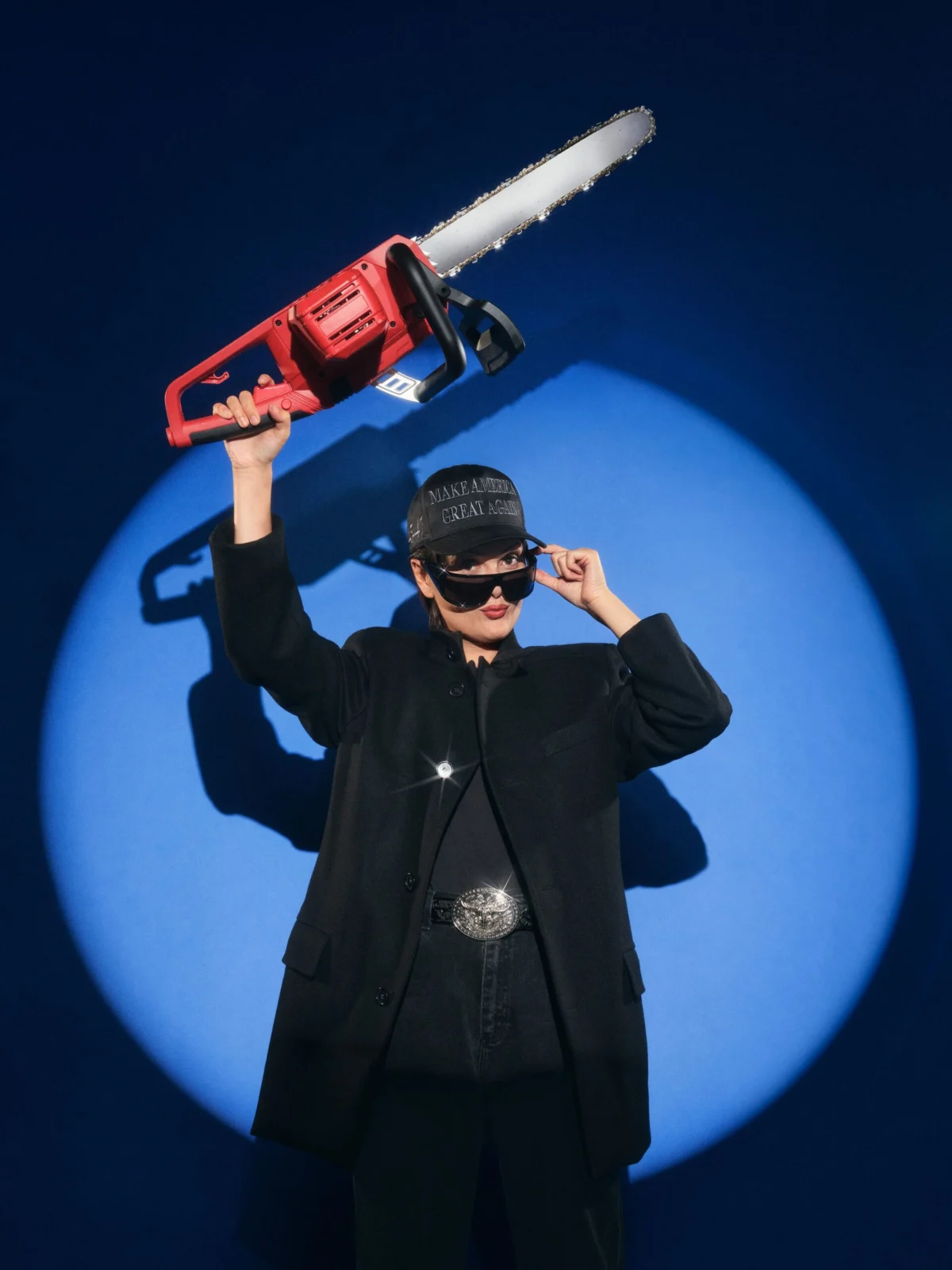
Comedian Patti Harrison, celebrated for her distinctive use of facial expressions and a style that shifts from demure to deranged, recently graced the cover of WIRED magazine, lampooning prominent figures in the tech world. Known for scene-stealing roles in shows like Tim Robinson’s I Think You Should Leave and Hulu’s Shrill, Harrison’s comedic approach was perfectly suited for WIRED’s "unhinged cover concept," which satirized the male-dominated leadership of Silicon Valley. She embodied five (and a half) "masters of the universe": Elon Musk, Sam Altman, Dario Amodei, Mark Zuckerberg, and Jeff Bezos, with Lauren Sánchez Bezos by his side. Harrison, who openly enjoyed mocking the architects of platforms she once cherished, spoke to WIRED in London after a successful run of her show, Just Ironing Some Things Out!, and performances at the Edinburgh Festival Fringe.
Katie Drummond, the interviewer, commended Harrison for "nailing the assignment" for the WIRED Women cover, a compliment Harrison playfully debated. Harrison admitted to an initial anxiety, fearing the interview might be a "transphobic takedown piece" that would force her to define womanhood. Drummond quickly affirmed Harrison as their "WIRED Woman," emphasizing that her trans identity was not part of the initial calculus for the cover choice; rather, her "over-the-top absurdist approach to comedy" was the draw. Harrison expressed appreciation for this affirmation, noting that while she is outspoken about being transgender, she doesn’t always explicitly address it in her work or play overtly trans characters. She finds it "meaningful" to be recognized for her humor and online presence, which she described as "talking about jism and kissing my dog on the mouth."
The conversation delved into the delicate balance Harrison strikes between conventional humor and incorporating political themes into her work. While she doesn’t explicitly discuss politics in her comedy due to what she describes as "scattered speech" and a tendency to forget details, she acknowledges that her lived experience as a transgender woman is inherently political. She believes that one cannot separate morals from politics and that comedy, being rooted in an understanding of the world’s truth, inherently reacts to reality. Choosing to make comedy about anything other than current global events is, in itself, a political act, a reaction to the "existential dread" of reality.

Harrison described the current social media landscape as a "panopticon," a "hell" where users are "bugs trapped under a little glass." She lamented the monopolization of platforms and the resulting censorship and limited discourse. She highlighted the collective awareness that social media is "evil" and "profits bad things," yet people remain addicted, wasting time and inadvertently funding "evil people who make the quality of everything worse." This addiction, she argued, is not a personal failing but a systemic issue, as platforms are "designed to make sure that people become addicted."
Reflecting on her personal journey with social media, Harrison recalled her early experiences with Xanga and MySpace in rural Ohio as a closeted teenager. These platforms were vital tools for connection, allowing her to find communities and interests beyond her immediate environment, free from the overwhelming advertisements and algorithms prevalent today. She vividly remembered her teenage anger upon seeing the first YouTube ad, a stark contrast to the current ad-saturated digital experience.
Harrison’s early fascination with technology was profound. Growing up, she was obsessed with sci-fi, fantasy, The Matrix, Aliens, and Ghost in the Shell, envisioning a futuristic world where technology and the organic synthesized seamlessly. This stemmed from being a "bored hillbilly kid" with dreams of artificial intelligence, self-driving cars, and robot animals coexisting with humans. However, this youthful optimism has given way to profound disillusionment. Capitalism, she argued, "sours everything," exposing "grifters" and revealing "the rot" as people abandon proclaimed morals for profit. She performs a comedic impression of a Boston Dynamics robot dog in her show, which leads into a serious discussion about the military application of these technologies. She mentioned the "Darpa dog" reference, and humorously claimed "sponsorship" from Darpa (Defense Advanced Research Project Agency) and AIPAC for her book, which she joked would combine her transgender journey with the necessity of investing in advanced robotics capable of human-grabbing and autonomous killing. This comedic interjection underscores her critical view of military-industrial complex funding and its impact on technological development.
Her disillusionment deepened with the realization that technologies, initially promised for benign uses, are deployed in combat zones, specifically referencing the use of robot dogs in Gaza, which she unequivocally labeled a "full-on genocide." This, she stated, makes her lose faith in the tech community, which she once viewed as "intrinsically progressive" due to its scientific nature. She believes capitalism’s supposed innovation through competition ultimately leads to the suppression of good ideas, as "someone buys that way and then takes it away from everybody so that they can offer us shittier versions." This applies to social media, which she feels was once "good" without ads, algorithms, and chronological feeds.

On the topic of AI, Harrison expressed fascination with its technology, having used earlier iterations like Dall-E, an image generator. However, she is "horrified at the rate at which it’s immediately integrated without any sort of vetting into our society for profit." She criticized the lack of concern for environmental impact, citing data centers, and the reckless acceleration of AI development by "bad people with money" at the expense of societal well-being. The idea of using ChatGPT for mundane tasks, she found "evil."
Creatively, Harrison acknowledges that her online presence will inevitably be absorbed by AI. As a response, she prioritizes live shows and often chooses not to record her material into specials. This intentional decision is partly contrarian, partly born from boredom with repeating material, but also provides a "certain level of safety" against the pervasive digitization and potential AI replication of creative work. She worries about a future with "AI hologram comedians" like George Carlin.
Despite her critiques, Harrison sees a potential silver lining in the "AI slop" and the digital overload: a renewed premium on physical products and in-person events. She has observed a trend towards analog things, which she finds "exciting." However, she raised concerns about the environmental impact of increased physical waste if this trend fully reverses the digital shift. She also noted the growing desire for physical ownership as a direct response to digital purchases proving impermanent, calling it a reaction to the "capitalist economy [that] has completely punished everyone." Her ideal world is one where "we’re all boho and we’re drawing on the wall… Minions having sex on a wall with chalk in a cave somewhere."
The pervasive digital landscape also impacts her comedic approach. Harrison recounted a recent experience where she posted a "thirst trap" image from her WIRED shoot, wearing a bra and a MAGA hat, jokingly "coming out as MAGA" and criticizing "judgmental" queer and liberal communities. She believed the joke was clear to her followers, but algorithms pushed it to wider audiences, resulting in "random harassment." Progressive individuals responded angrily, questioning her trans identity and condemning her post, while some MAGA commenters used transphobic slurs. This incident highlighted how algorithms deliberately "agitate" users, stripping context and fueling anger.

Harrison also criticized the hypocrisy of free speech arguments, noting how her own account has been censored by AI for innocuous terms like "bitch" used affectionately, while hateful, transphobic comments against her remain unmoderated. This "ever-moving line for freedom of speech" is, in her view, "destroying your nervous system and your sense of security." She shared an anecdote about growing up in a conservative, rural town, where some homophobic individuals became surprisingly supportive after she came out as trans, suggesting that personal experience can change minds. She believes social media’s design intentionally keeps people separated.
Despite the bleak outlook on technology and social media, Harrison finds hope in the "rise in class consciousness" and the "rising interest in socialism." She believes that if people awaken to the failings of "capitalist democracy," it could lead to genuine technological advancements that truly benefit humanity.
When asked about her "WIRED Woman," Harrison humorously dodged the question, jokingly suggesting Candace Owens or Erika Kirk before admitting it was her "nightmare" to pick just one. Her ultimate hope, she reiterated, lies in this growing class consciousness, envisioning a future where society transcends the "worst version of everything" delivered by current capitalist systems.