11
11
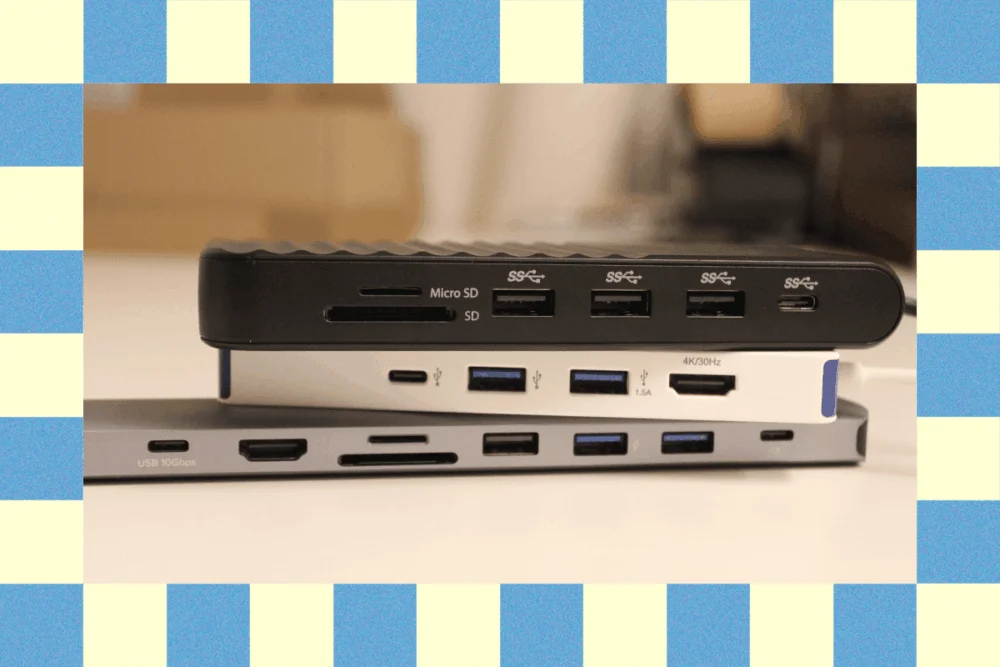
In an era where modern laptops, particularly sleek models like the MacBook Air, increasingly prioritize minimalist design, the scarcity of integrated ports has become a common frustration for users. The days of a diverse array of built-in connections are largely behind us, often leaving professionals and casual users alike scrambling for ways to connect their essential peripherals. While carrying a collection of individual dongles can address this, a more elegant and efficient solution lies in the adoption of USB hubs and, for more demanding setups, docking stations. These devices serve as crucial expanders, transforming a single laptop port into multiple connections, thereby streamlining workflows and significantly reducing desk clutter.
This comprehensive guide, informed by years of rigorous testing across dozens of models, aims to identify the top USB hubs tailored to various user needs. Our selections prioritize performance, versatility, and value, ensuring that whether you’re a creative professional, a remote worker, or a student, you can find the ideal connectivity solution. This article has been updated in February 2026, with the list refined to highlight the most effective options and honorable mentions including the HyperDrive Next Mobile Dock and Kensington Triple Video Dock. For those looking to further enhance their workspace, we also recommend exploring our related guides on the Best Docking Stations, Ultimate Work-From-Home Gear, Best Office Chairs, Best Standing Desks, and Best USB Flash Drives.
Featured USB Hubs and Adapters for Enhanced Connectivity
Our top picks cover a range of applications, from general-purpose expansion to specialized needs like high-resolution video output and integrated storage.
Best Overall: Plugable USB-C 9-in-1 Hub (USBC-9IN1E)
The Plugable USB-C 9-in-1 Hub stands out as the premier choice for most users due to its balanced blend of functionality, reliability, and affordability. Priced at $50 and available through Amazon and Plugable’s official website, this hub offers a comprehensive suite of nine essential ports from a single USB-C connection. While specific port configurations can vary, a "9-in-1" hub typically includes a combination of USB-A ports for legacy devices, USB-C Power Delivery for charging your laptop, HDMI or DisplayPort for external displays, an Ethernet port for stable wired internet, and SD/microSD card readers for photographers and videographers. Its robust design and consistent performance make it an excellent daily driver for expanding the capabilities of any USB-C-enabled laptop, delivering a seamless experience whether you’re at your desk or on the go.

Best Budget USB-C Hub: Hiearcool USB C Hub, USB-C Multi-Port Adapter
For users seeking maximum functionality without breaking the bank, the Hiearcool USB C Hub emerges as the top budget-friendly option. Available for just $20 on Amazon, this multi-port adapter proves that effective connectivity doesn’t have to come at a premium. While exact port specifications might vary by model, budget hubs like this typically provide a selection of commonly needed ports such as several USB-A ports, an HDMI output, and potentially an SD card reader. It’s an ideal choice for students, casual users, or anyone who needs to connect a few essential peripherals like an external mouse, keyboard, or a monitor without investing heavily. Its compact design also makes it highly portable, fitting easily into any laptop bag.
If You’re All-In on USB-C: Satechi USB-C Multiport 8K
Designed for users fully committed to the modern USB-C ecosystem and demanding cutting-edge display capabilities, the Satechi USB-C Multiport 8K hub is a premium offering. Available for $100 on Amazon and Satechi’s website, this adapter is engineered to handle the highest resolution monitors. Its "8K" designation indicates support for a single 8K display at a certain refresh rate, or multiple 4K displays. Beyond its impressive video capabilities, it typically includes high-speed USB-C and USB-A data ports, a Gigabit Ethernet port for fast and reliable network access, and often a USB-C Power Delivery port to keep your laptop charged while in use. This hub is particularly suited for graphic designers, video editors, and power users who require the highest bandwidth and display fidelity from their peripherals.
Add Some Storage: Satechi USB-C Hybrid Multiport Adapter
The Satechi USB-C Hybrid Multiport Adapter introduces an innovative feature by integrating storage capabilities directly into the hub. Ranging from $80 to $90 and available at Amazon, Walmart, and Satechi, this adapter uniquely combines a standard multiport hub with an M.2 SATA SSD enclosure. This allows users to add external storage, such as an M.2 SATA SSD, directly within the hub itself, eliminating the need for a separate external drive. In addition to storage, it typically offers a 4K HDMI output at 60Hz, USB Power Delivery (PD) for charging, and multiple USB-A 3.0 data ports. This makes it an invaluable tool for content creators, remote workers, or anyone who frequently handles large files and needs both expanded connectivity and integrated, fast storage on the go.
Understanding the Ecosystem: USB Hubs vs. Docking Stations
The distinction between a USB hub and a docking station can sometimes be ambiguous, as both serve to expand a device’s connectivity. However, their primary design and intended use cases differ significantly.
USB Hubs are generally smaller, more portable devices designed for on-the-go connectivity. They plug directly into a single port on your laptop, instantly providing additional USB ports, SD card readers, headphone jacks, and other common connections that your computer might lack. Many modern hubs also include USB-C with Power Delivery (USB-PD) functionality, allowing you to charge your laptop through the hub while simultaneously connecting other accessories. This makes them ideal for mobile professionals, students, or anyone who needs flexible connectivity without being tethered to a fixed workstation. They are compact enough to be carried in a laptop bag, offering convenience and versatility for various environments.

Laptop Docking Stations, on the other hand, are larger, more robust, and typically more expensive accessories. They are engineered to be a semi-permanent fixture on your desk, forming the core of a comprehensive workstation setup. Docking stations almost always feature their own external power supply, capable of charging your laptop and all connected peripherals. Crucially, they excel at providing multiple monitor outputs, often supporting dual or even triple high-resolution displays, alongside a full complement of USB ports, Ethernet connections, and sometimes audio jacks. If your workflow frequently involves connecting your laptop to a keyboard, mouse, multiple external monitors, and other high-powered accessories in a dedicated office or home setup, a docking station offers unparalleled convenience and performance, transforming your portable device into a powerful desktop experience with a single cable connection.
Navigating the USB Landscape: Key Considerations Before Purchase
Choosing the right USB hub requires an understanding of several technical specifications that can greatly impact performance.
Port Speeds Matter; Version Numbers Often Don’t Tell the Full Story. One of the most perplexing aspects of USB technology is its version numbering system. It’s intuitive to assume that USB 3.2 is inherently faster than USB 3.0, but this is often not the case due to a confusing rebranding strategy by the USB Implementers Forum (USB-IF). This has led many manufacturers to bypass the version numbers altogether, instead printing the actual maximum data transfer speed (e.g., 5 Gbps, 10 Gbps) directly onto the ports or in the product specifications. When evaluating a hub, always prioritize the stated transfer speeds in gigabits per second (Gbps) or megabytes per second (MB/s) over the seemingly sequential USB version numbers to ensure you get the performance you expect.
Use Thunderbolt for Your Most Data-Hungry Devices. Thunderbolt, a high-speed interface developed jointly by Intel and Apple, utilizes the same physical USB-C connector but offers significantly greater bandwidth and capabilities. Thunderbolt 3 and 4 ports, for instance, can achieve blistering speeds of up to 40 Gbps, making them indispensable for demanding applications. These ports are ideal for connecting external Solid State Drives (SSDs) for rapid data transfer, high-resolution 4K and 8K displays, or monitors with ultra-high refresh rates crucial for professional gaming or video editing. The latest iteration, Thunderbolt 5, is even more powerful, pushing speeds to 80 Gbps (and up to 120 Gbps for unidirectional display connections). It’s crucial to confirm that your laptop’s USB-C port explicitly supports Thunderbolt technology to leverage these advanced capabilities.
Don’t Forget the Power: USB Power Delivery (USB-PD). Most basic USB hubs draw power directly from your laptop to operate and to power connected devices. This means they occupy a port and can potentially drain your laptop’s battery faster. However, many modern USB hubs support USB Power Delivery (USB-PD), often marketed as "passthrough charging." This crucial feature allows you to connect your laptop’s power adapter directly to a dedicated USB-C port on the hub. The hub then intelligently delivers power to your laptop for charging while simultaneously powering all other connected accessories. When selecting a hub with USB-PD, verify that the wattage supported by its USB-C input port meets or exceeds your laptop’s charging requirements. For example, a MacBook Pro under heavy load typically requires around 96 watts, so a hub offering 100-watt USB-PD is advisable to ensure efficient charging.

What Is Going on With USB Generations? A Deep Dive into the Naming Chaos
The evolution of USB specifications has been accompanied by a naming convention that has proven notoriously confusing for consumers. When USB 3.0 launched in 2008 with a maximum speed of 5 Gbps, it was straightforward. However, the introduction of USB 3.1 in 2013, boasting 10 Gbps, led to a problematic renaming: the original 5-Gbps USB 3.0 became "USB 3.1 Gen 1," while the new, faster 10-Gbps version was called "USB 3.1 Gen 2."
The situation escalated further with the arrival of USB 3.2 in 2019. The 5-Gbps standard was rebranded again as "USB 3.2 Gen 1." The 10-Gbps version became "USB 3.2 Gen 2." And the truly new, 20-Gbps specification was named "USB 3.2 Gen 2×2." The "2×2" signifies the use of two 10 Gbps data lanes simultaneously, doubling the bandwidth. This convoluted scheme has made it incredibly difficult for consumers to discern actual performance based solely on version numbers. As a result, many reputable hub manufacturers have wisely abandoned these confusing labels, opting instead to print the precise maximum speed (e.g., "10 Gbps" or "20 Gbps") directly next to the relevant ports.
Practical Implications for You: If you’re utilizing older storage devices or accessories, understanding the specific generation of USB is vital if transfer speed is a priority. A device marketed as "USB 3.0" several years ago and a device labeled "USB 3.2" today could, bafflingly, offer identical transfer speeds if the latter is merely "USB 3.2 Gen 1" and the manufacturer isn’t transparent about the generation or actual speed ratings. Always seek out clear speed indicators.
All Those Confusing USB Terms, Explained
Beyond generational names, various terms describe USB’s capabilities and physical forms.

USB 2.X/USB 3.X/USB 4: These numerical designations refer to different versions of the USB specification, primarily defining their maximum data transfer rates and power delivery capabilities. While most USB devices are designed to be backward compatible (e.g., a USB 3.0 device will work in a USB 2.0 port), the entire connection chain will operate at the speed of its slowest component. For instance, if you connect a high-speed USB 3.2 SSD to a USB 3.2 port on your computer but use an older USB 3.0 cable, your data transfer will be bottlenecked to USB 3.0 speeds. Ensuring every link in your chain—the device, the hub, the cable, and the computer port—is rated for the desired speed is crucial for optimal performance.
USB Power Delivery (USB-PD): As discussed, USB-PD is a critical feature that resolves the dilemma of choosing between charging your laptop and connecting accessories when ports are limited. A USB-PD enabled port on a hub allows you to plug your laptop’s charger directly into the hub, which then intelligently routes power to your laptop (and often other connected devices) while simultaneously enabling data transfer through the hub’s other ports. This is frequently referred to as "pass-through charging," though it’s not an official technical specification. When considering USB-PD, always confirm that the wattage supported by the hub’s USB-C input port is sufficient for your laptop’s power demands. High-performance laptops, for example, might require 90W or more, making a 100W USB-C PD port on the hub essential.
USB-C and USB-A: These terms refer to the physical shape and design of USB connectors and ports. USB-C is the modern, small, elongated, and reversible oval connector that has become increasingly common on laptops, smartphones, and many other devices. Its reversibility means there’s no "wrong way" to plug it in, adding significant convenience. USB-A is the older, rectangular port that has been ubiquitous for decades, familiar to most computer users. While there are other, less common types of USB connectors, USB-C and USB-A are the two you are most likely to encounter and interact with in the context of USB hubs.
Thunderbolt: The High-Performance USB-C Standard
Thunderbolt, an Intel-owned technology developed in collaboration with Apple, shares the same physical USB-C connector as standard USB devices but operates under a set of more stringent requirements, granting it superior capabilities.
Higher Transfer Speeds: Thunderbolt ports are engineered for massive data throughput, far exceeding typical USB-C ports. Thunderbolt 3 and 4, for example, boast symmetrical speeds of up to 40 Gbps. The recently introduced Thunderbolt 5 pushes this even further, achieving a staggering 80 Gbps, and even up to 120 Gbps for unidirectional connections, such as outputting to multiple high-resolution displays. This immense bandwidth makes Thunderbolt ideal for professional applications involving large file transfers, complex daisy-chained peripherals, and advanced display configurations.

Superior Display Output Support: A key advantage of Thunderbolt is its inherent design for external display connectivity. Most Thunderbolt ports can easily support at least one 4K display, with more advanced versions like Thunderbolt 4 capable of handling multiple 4K displays simultaneously. Thunderbolt 5 dramatically expands this capability, offering support for multiple 8K displays or several 4K displays at incredibly high refresh rates, which is crucial for professionals and high-end gamers.
Seamless Compatibility with USB: Despite its advanced specifications, Thunderbolt maintains excellent cross-compatibility with standard USB ports and devices. A USB-C device can be plugged into a Thunderbolt port and will function correctly, albeit at the speed of the slowest link in the chain (i.e., USB speeds). This ensures that users can connect a wide array of existing USB peripherals without compatibility issues, while still having the option to utilize Thunderbolt’s full potential with compatible high-performance devices.
Do USB Cables Matter for Speed? Absolutely.
The performance of your USB hub and connected devices is not solely determined by the hub itself; the quality and specification of your USB cables are equally critical. A hub capable of massive data transfer speeds will be bottlenecked if the cables you use cannot support those same speeds. This is an easily overlooked aspect because many cables lack clear labels indicating their specifications.
Here’s how to ensure you’re using the right cable:
Other Good USB Hubs to Consider (Honorable Mentions)

Beyond our top recommendations, several other hubs and mobile docks offer specialized features worth considering.
Ugreen Revodok Pro 211 Docking Station for $64: This Ugreen offering blurs the line between a portable hub and a dedicated docking station. It features a compact yet sturdy aluminum block connected by a braided cable, making it more robust than many hubs but still reasonably portable. In testing, its three USB ports (one USB-C and two USB-A) achieved impressive data-transfer speeds of up to 900 MB/s, making it highly efficient for moving large files like 4K video footage in minutes. However, a significant limitation for Mac users is that its dual monitor support is restricted to mirroring displays, rather than extending them.
Hyper HyperDrive Next Dual 4K Video Dock for $150: Another hybrid dock, the HyperDrive Next Dual 4K Video Dock is particularly noteworthy for its robust Mac support, offering true dual-monitor extension—a feature often absent in mobile docks that typically only allow mirroring on macOS. While this capability comes at a higher price point, it’s a valuable investment for MacBook users needing expanded display real estate. The dock provides two HDMI ports capable of 4K output, though only one can achieve 60 Hz, with the other limited to 30 Hz. For optimal performance with multiple displays, users might need to reduce the resolution to 1440p or 1080p on one of the monitors to maintain a 60 Hz refresh rate. A similar Targus model from the same company offers dual 4K at 60 Hz but lacks the Mac extension capability.
Anker USB-C Hub 5-in-1 for $20: This Anker USB hub is a highly practical and portable option, ideal for photographers and videographers on the go. Designed to plug into a laptop’s USB-C port, it provides essential connections for offloading media from camera gear. Its USB 3.0 ports demonstrated solid transfer speeds over 400 MB/s in testing, which, while not the absolute fastest, is more than adequate for a device in its price range. The integrated SD card reader also performed reliably, reaching speeds of 80 MB/s for both reading and writing, sufficient for most file transfer needs.
Kensington Triple Video Mobile Dock for $83: The Kensington Triple Video Mobile Dock is another mobile solution aimed at providing extensive external display support. This dock is technically capable of powering up to three 1080p displays at a smooth 60 Hz, utilizing its two HDMI ports and one DisplayPort. This generous port configuration in a relatively small form factor offers significant versatility for users needing multiple screens. While its basic plastic casing might not inspire premium aesthetics, its functional capabilities make it a strong contender for users prioritizing multi-display setups on a budget.