 11
11
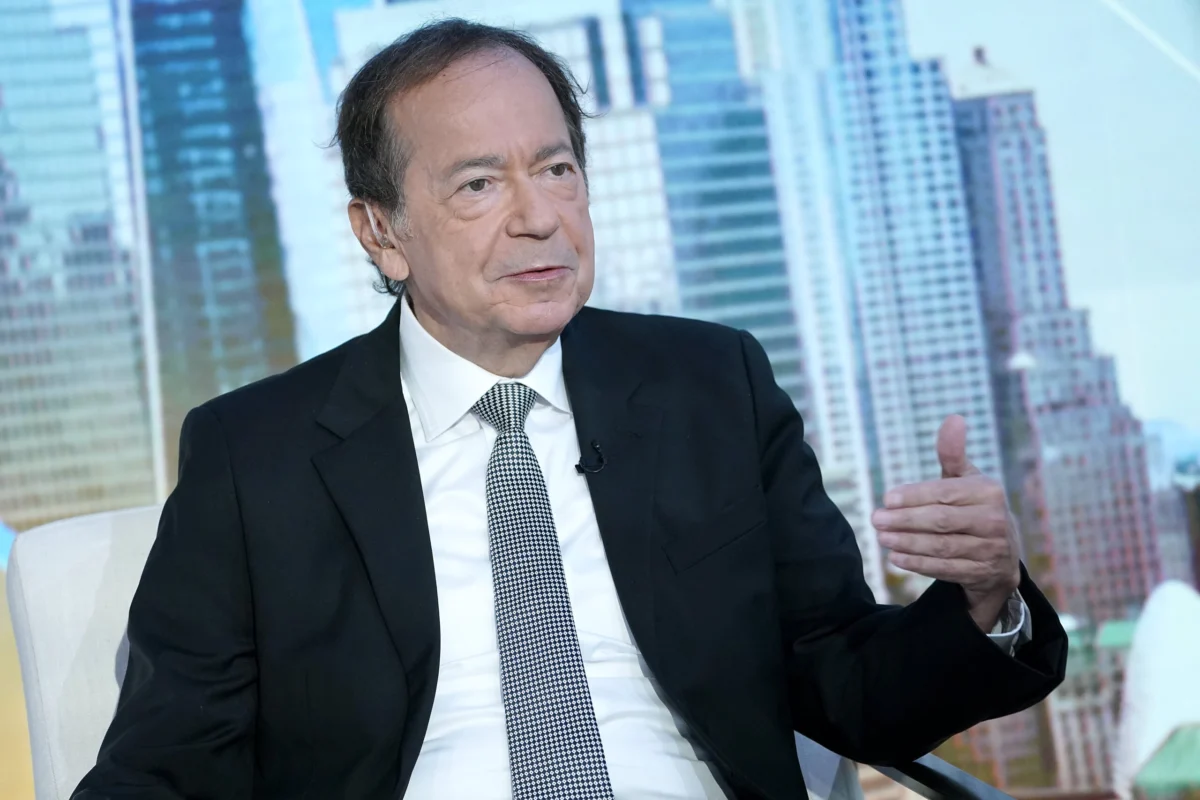
Hedge fund titan John Paulson, renowned for his prescient bet against the U.S. housing market and subsequent pivot to gold, has declared that the precious metal is currently positioned at the dawn of an extended bull market. Speaking on CNBC’s "The Exchange" on Wednesday, Paulson articulated his conviction, stating, "I do think we’re in the beginnings or the early stages of a long-term bull market for gold." He elaborated on this outlook by suggesting that a declining faith in traditional paper currencies will inevitably drive increased demand for gold as a stable alternative.
Paulson’s financial acumen was famously demonstrated when his short position on subprime mortgages became one of the most lucrative trades in Wall Street’s history. In 2009, he strategically shifted his investment focus to gold. His rationale was rooted in the anticipation that the substantial fiscal and monetary stimulus measures enacted in response to the 2008 financial crisis would ultimately devalue the U.S. dollar. Since Paulson’s strategic move, gold prices have experienced a significant surge, approximately quadrupling and at one point exceeding the $5,000 per ounce mark before experiencing a subsequent correction.
The billionaire investor highlighted a discernible broadening of demand for physical gold. This expansion is being spearheaded by central banks globally, which have been actively augmenting their gold reserves. Concurrently, there has been a notable increase in private sector interest in the precious metal. Paulson emphasized this trend, asserting, "Gold is becoming the most apt reserve currency in the world, replacing fiat currencies." He further elaborated on the institutional buying, noting, "The demand from central banks, for instance, has continued to grow, as has the private sector."
Beyond the direct investment in bullion, Paulson expressed a strong preference for investing in gold mining companies, particularly those possessing substantial undeveloped reserves. He posited that investors could potentially achieve greater returns by focusing on these companies rather than solely on the physical commodity. "I think the greatest way to invest is to invest in early-stage gold stocks," he advised.
Paulson’s commentary coincided with an announcement from NovaGold Resources, indicating its intent to acquire Paulson Advisers’ 40% stake in the Donlin Gold project, situated in Alaska. Paulson, who holds the position of co-chairman at NovaGold, explained that the company offers investors a leveraged exposure to escalating gold prices, a benefit derived from its considerable resource base. He provided specific figures to underscore this point: "NovaGold has 40 million ounces of gold indicated and measured resources and reserves at the market [capitalization] of $4.2 billion." Paulson concluded by recommending gold mining stocks as a prime avenue for investment, suggesting, "I think the best way to play gold is through stocks like NovaGold, if not NovaGold itself."

The strategic rationale behind Paulson’s bullish stance on gold extends beyond simple market trends. His analysis is informed by a deep understanding of macroeconomic forces and their impact on currency valuations. The period following the 2008 financial crisis saw unprecedented interventions by central banks worldwide. These measures, including quantitative easing and historically low interest rates, were designed to stimulate economic activity and prevent financial collapse. However, such expansive monetary policies inevitably raise concerns about inflation and currency debasement. In this environment, gold, with its historical role as a store of value and a hedge against inflation, tends to perform well.
Paulson’s initial success in the subprime mortgage crisis was a testament to his ability to identify systemic risks and market dislocations. His subsequent embrace of gold suggests a similar conviction about the long-term trajectory of global financial markets. He appears to be signaling a potential shift away from traditional fiat currencies, which are subject to the monetary policies of individual nations, towards a more tangible and historically stable asset. The increasing diversification of gold demand, from central banks to private investors, further bolsters his argument for a sustained bull market. Central banks, often acting as long-term holders of reserves, are increasingly viewing gold as a critical component of their financial stability strategies, especially in an era of geopolitical uncertainty and fluctuating currency values.
The investment strategy championed by Paulson, which favors gold miners over bullion, is predicated on the principle of leverage. Gold mining companies, by their nature, have the potential to magnify the returns of a rising gold price. When the price of gold increases, the profitability of mining operations can rise disproportionately, especially for companies that have managed to control their production costs. Furthermore, companies with significant undeveloped reserves, like NovaGold, represent potential future upside. The discovery and development of new gold deposits, coupled with efficient extraction processes, can lead to substantial value creation for shareholders. Paulson’s emphasis on "early-stage gold stocks" suggests a focus on companies with high-growth potential, where exploration success and project development can lead to significant price appreciation.
The specific mention of NovaGold and the Donlin Gold project serves as a concrete example of Paulson’s investment philosophy in action. The Donlin Gold project is recognized as one of the largest undeveloped gold deposits in the world. Its substantial resource base, as highlighted by Paulson’s reference to 40 million ounces of gold, positions NovaGold to potentially benefit significantly from rising gold prices. The acquisition of Paulson Advisers’ stake by NovaGold itself may signal a strategic consolidation or a move to streamline operations, further enhancing the project’s development prospects. The market capitalization relative to the resource size, as pointed out by Paulson, suggests a potential undervaluation, offering an attractive entry point for investors.
In essence, John Paulson’s pronouncements represent a powerful endorsement of gold as an investment asset. His analysis, grounded in his successful track record and informed by a sophisticated understanding of economic forces, suggests that the current environment is highly conducive to sustained gold price appreciation. The dual drivers of declining confidence in fiat currencies and increasing institutional and private sector demand create a compelling narrative for a long-term bull market. Moreover, his advocacy for investing in gold mining companies, particularly those with significant undeveloped resources, provides a specific and potentially high-reward strategy for investors looking to capitalize on this trend. The ongoing developments with NovaGold and the Donlin Gold project serve as a tangible illustration of this investment thesis, underscoring the potential for substantial returns in the evolving landscape of precious metals investment.