 11
11
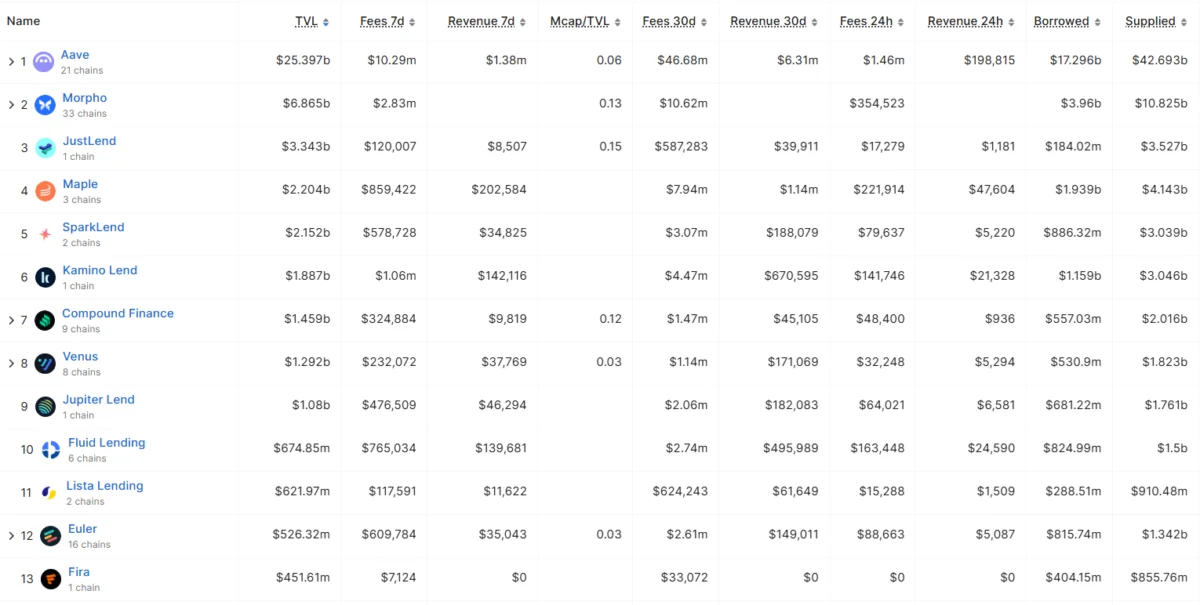
Fira, an Ethereum-based decentralized finance (DeFi) lending protocol, has officially launched, bringing approximately $450 million in deposits to its platform. This significant pre-launch figure underscores a strong market demand for predictable, long-term fixed-rate lending and borrowing within the decentralized finance ecosystem. The protocol aims to revolutionize the DeFi lending landscape by offering a novel approach to interest rate determination, moving away from the volatile utilization-based models that currently dominate the sector.
At its core, Fira’s innovation lies in its fixed-rate credit market. This structure allows users to effectively "lock in" their borrowing costs and lending returns for predetermined periods. Instead of relying on algorithms that fluctuate with the ebb and flow of borrowing activity, Fira organizes its lending and borrowing around specific maturities, mirroring practices found in traditional fixed-income markets. This fundamental shift promises to bring a much-needed layer of predictability to on-chain credit, a characteristic that has historically been elusive in DeFi.
The contrast with existing DeFi lending protocols is stark. In most current platforms, borrowers face the uncertainty of constantly changing funding costs, while lenders struggle to forecast their returns. This inherent unpredictability makes it challenging for participants to engage in long-term financial planning and strategy within DeFi. Fira’s design addresses this directly by introducing yield curves and defined maturities, features that are standard in traditional financial markets but remain a rarity in the rapidly evolving world of decentralized finance.

Fira is not venturing into uncharted territory as the sole pioneer of fixed-rate DeFi credit. The announcement acknowledges that other protocols, such as Notional Finance, IPOR, and Term Finance, have also explored similar fixed-rate structures. However, Fira’s substantial pre-launch deposit volume suggests it has successfully captured significant user interest and trust from its inception.
A notable aspect of Fira’s debut is the substantial inflow of liquidity from users of the modular lending platform Euler Finance. According to Pete Siegel, Chief Financial Officer at Fira, the $450 million in deposits was "reallocated" from Euler users during Fira’s pre-launch phase, which commenced on January 8th. Siegel elaborated that this initial market, termed UZR, facilitated approximately a thousand users who were already active on Euler and had assets in a product available on Euler, to migrate their holdings to Fira at a fixed rate. This migration strategy effectively transferred established liquidity into Fira, demonstrating a clear user preference for the fixed-rate model being offered.
The significant deposit amount highlights a clear demand for fixed-rate lending products among DeFi users. Siegel emphasized that these deposits are a direct reflection of this user interest, indicating a market gap that Fira is poised to fill.
Data from DeFiLlama, a widely recognized DeFi analytics platform, currently places Fira with approximately $451.6 million in total value locked (TVL) on the Ethereum network. While this figure is considerably smaller than that of established giants like Aave, which boasts a TVL of roughly $25.3 billion and is the largest lending protocol in the sector, Fira’s debut TVL is nonetheless impressive, especially for a new entrant. This positions Fira as a noteworthy player in the DeFi lending space from its very first steps.

In parallel with its launch, Fira has placed a strong emphasis on security, a paramount concern in the DeFi space. The protocol’s smart contracts have undergone rigorous scrutiny, with six independent security audits conducted by reputable firms including Sherlock, Spearbit (via Cantina), Hexens, and yAudit. These audits took place between November 2025 and early 2026, ensuring a comprehensive review of Fira’s underlying code.
Furthermore, Fira has implemented a bug bounty program through Sherlock, offering rewards of up to $500,000 to users who can identify critical vulnerabilities within the protocol’s open-source, Ethereum-based smart contracts. This proactive approach to security aims to build trust and assurance among users and the broader DeFi community.
Fira’s entry into the market, with its focus on fixed-rate lending and substantial pre-launch backing, signals a potential shift in the DeFi lending paradigm. By offering a more predictable and stable environment for borrowing and lending, Fira aims to attract a wider range of participants, including those who may have been hesitant to engage with the inherent volatility of existing DeFi protocols. The success of Fira could pave the way for further innovation in fixed-income DeFi products, bringing the sector closer to maturity and broader institutional adoption.