 11
 1
 2
 3
TBC Bank, the preeminent financial institution in Georgia, has successfully integrated specialized artificial intelligence agents into its delivery and service workflows, marking a significant shift in how large-scale banking infrastructures manage the balance between rapid innovation and operational stability. With a dominant 40% market share and a user base of 1.42 million daily active participants, the institution manages a complex ecosystem of more than 200 digital banking services. The scale of these operations is supported by a technical workforce of over 1,000 employees organized into 150 product development squads, overseeing a network of more than 450 interconnected systems. In the highly regulated and competitive Georgian financial sector, TBC Bank’s transition to AI-augmented operations highlights a strategic pivot from traditional process optimization to intelligent automation.
The impetus for this transformation arose from a realization among engineering and service governance leaders that conventional process improvements had reached a plateau. Despite years of refining development standards and modernizing internal tooling, the organization continued to encounter operational friction. Giga Shubitidze, the SDLC Governance Lead at TBC Bank, noted that while prior initiatives had accelerated output, significant bottlenecks remained at the intersections of different work stages. The primary challenge was the failure of critical context to transition effectively between delivery phases, which often led to uninformed decision-making and delayed response times during system disruptions. This identified gap suggested that the next evolution of the bank’s Software Development Lifecycle (SDLC) required the infusion of artificial intelligence to bridge the communicative and analytical divides between teams.

Before deploying AI agents at scale, TBC Bank recognized the necessity of establishing a standardized, data-rich foundation. The institution understood that automating chaotic or fragmented processes would only lead to accelerated failures. Consequently, the bank focused on standardizing incident, problem, change, alert, and release management protocols. This was achieved by defining specific services, owners, and dependencies within Jira Service Management Assets. To monitor system health, the bank adopted Site Reliability Engineering (SRE) metrics, focusing on four golden signals: error rate, latency, traffic, and saturation. By connecting context across Jira Service Management, Confluence, and various monitoring tools, the bank created a "trusted foundation" of data. This preparation ensured that AI agents would have access to reliable information, rather than operating in an informational vacuum.
A core component of the bank’s strategy was the reimagining of governance. Historically viewed as a bureaucratic hurdle that slows down delivery, governance was redefined at TBC Bank as a built-in accelerator. By embedding intelligent guardrails directly into software development and technology service management (TSM) workflows, the bank aimed to bring health signals and ownership data into the process automatically. This eliminated the need for manual context assembly at every checkpoint. To support this, the bank introduced specialized agents with defined roles and specific access boundaries within the Atlassian ecosystem, including Jira and Confluence.
The organizational structure supporting this AI transformation was equally rigorous. An AI Transformation Management team was established to coordinate broad initiatives, while dedicated AI Research and Development groups focused on specialized areas such as assisted analysis, design, development, and quality engineering. To ensure cultural adoption, TBC Bank utilized "Prompt & Pizza" sessions, hackathons, and leadership meetups, fostering a community of "AI Champions." This multi-tiered approach allowed the bank to pilot AI workflows in narrow environments before expanding them across the enterprise. Crucially, the bank established a strict policy limiting enterprise use to approved AI platforms, ensuring that all AI-generated recommendations were supported by evidence and that all critical production actions remained subject to human approval.

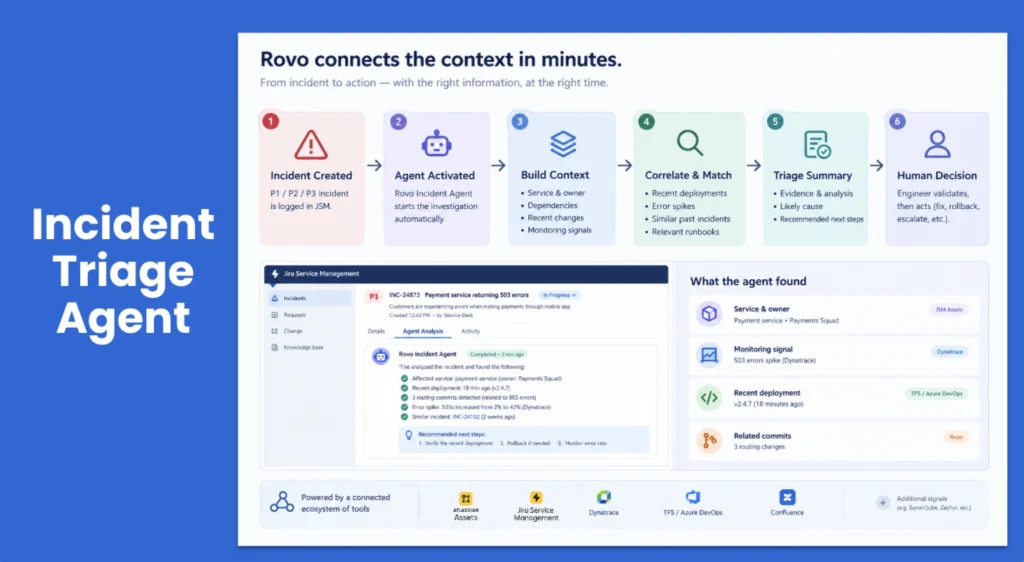
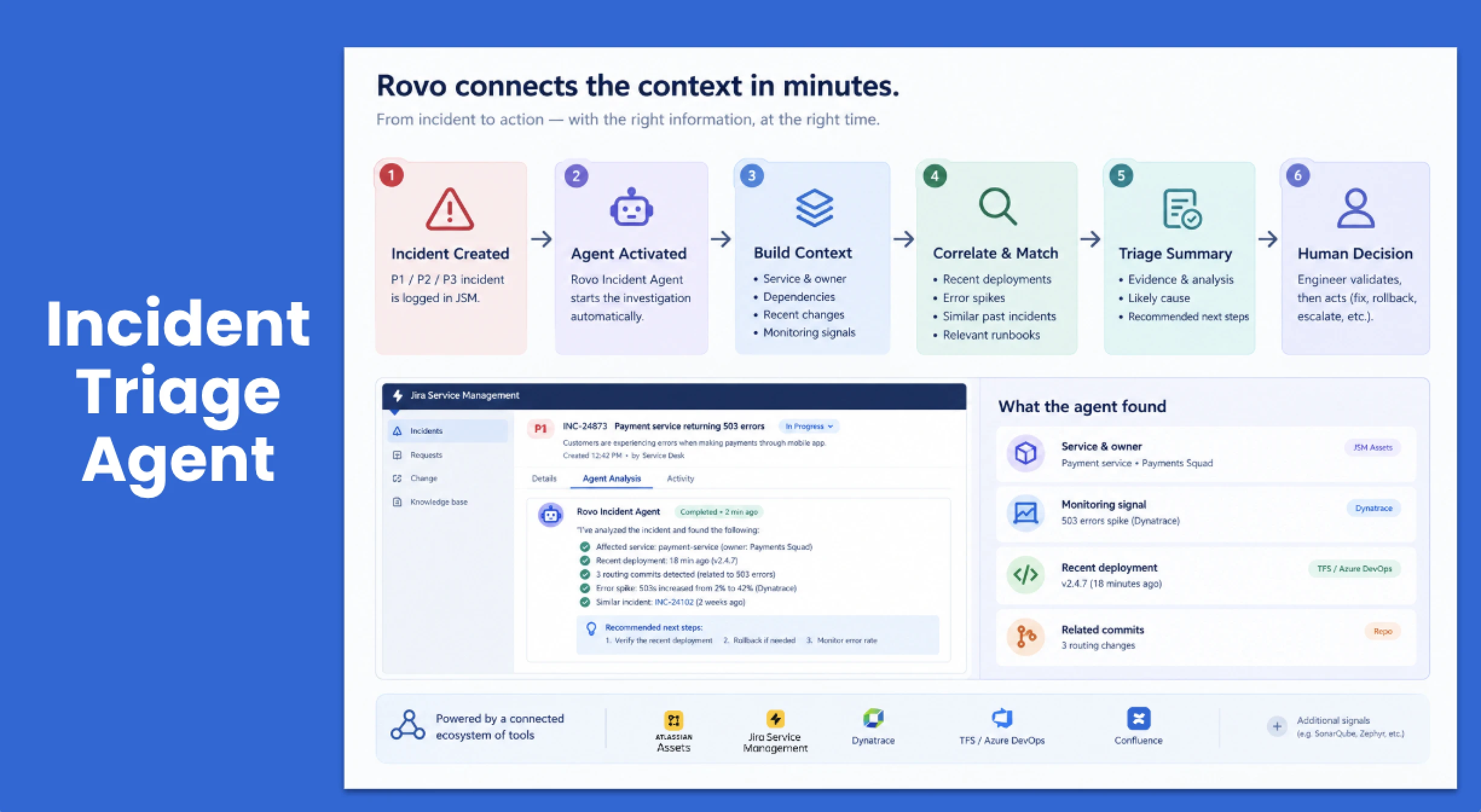
One of the most impactful applications of this technology has been in the realm of service operations and incident triage. Prior to the AI integration, engineers often spent between 20 and 50 minutes manually gathering data from disparate monitoring tools, deployment logs, and documentation during a system incident. TBC Bank addressed this by embedding an Incident Triage Agent directly into its Jira Service Management workflow. In a documented instance of the agent’s effectiveness, it was able to identify a deployment that occurred 18 minutes prior to a major incident, map the affected services and their dependencies, and correlate the change with a specific spike in 500 and 503 server errors. By delivering this comprehensive context to human responders within minutes, the agent allowed engineers to focus on decision-making and remediation rather than data collection.
The measurable outcomes of these initiatives have been substantial, demonstrating gains in both speed and reliability. Since the implementation of AI-augmented governance and workflows, TBC Bank has reported a 62% increase in delivery speed, measured by story points per person. This efficiency gain has not come at the cost of stability; on the contrary, the bank saw a 34% reduction in its Change Failure Rate, indicating that deployments are now significantly more reliable. Furthermore, the institution achieved a 23% improvement in Mean Time to Recovery (MTTR), a critical metric for maintaining customer trust in digital banking services. These statistics underscore the value of the bank’s "standardization-first" approach, proving that AI is most effective when applied to well-defined, transparent processes.
The bank’s use of AI agents also extends into the knowledge management sphere. By utilizing Atlassian Rovo and MCP (Model Context Protocol) servers, TBC Bank has enabled agents to pull information from Confluence, which serves as the organization’s primary knowledge base. Some agents are Rovo-native, while others utilize external platforms that connect back to the Atlassian environment, ensuring a seamless flow of information across different technical silos. This connectivity ensures that whether a team is in the planning, development, or maintenance phase, they have access to the same high-fidelity data.

The governance framework established by TBC Bank emphasizes accountability and traceability. Even as the bank explores more autonomous agent capabilities, the "human-in-the-loop" principle remains non-negotiable. Every action taken or recommended by an agent is logged, providing a clear audit trail that is essential for regulatory compliance in the banking industry. This framework ensures that agents serve as sophisticated investigative and analytical tools that empower human employees rather than replacing them.
Looking toward the future, TBC Bank has outlined a roadmap to further deepen its AI integration. The institution plans to standardize AI usage across all development teams and expand agent support into the realms of technical governance and enterprise architecture. On the service management side, the bank is currently piloting an agent designed to review root cause analyses (RCAs) and suggest preventive actions to ensure that past incidents do not recur. Additionally, TBC is exploring the application of AI in change management and IT request management to further reduce manual overhead.
The final stage of their current strategy involves the construction of a comprehensive AI governance framework. This framework is designed to facilitate secure and auditable adoption of emerging AI technologies, ensuring that the bank remains at the forefront of financial innovation while adhering to the highest standards of security and risk management. By treating AI as a core component of its operational fabric rather than a peripheral tool, TBC Bank has set a benchmark for how traditional financial institutions can navigate the complexities of digital transformation in the modern era. The success of their model—built on a foundation of standardized data, clear ownership, and human-centric AI—provides a blueprint for other organizations seeking to scale their operations without compromising on service quality or regulatory integrity.