 11
 1
 2
 3
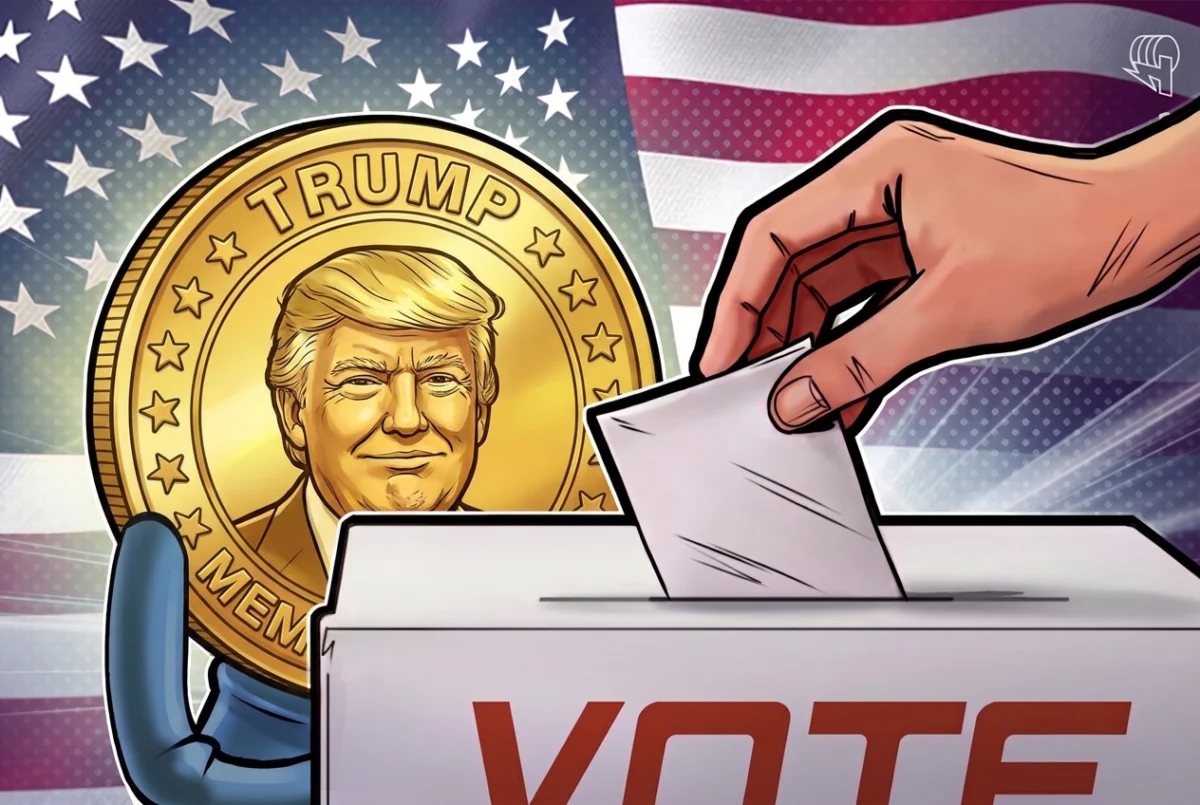
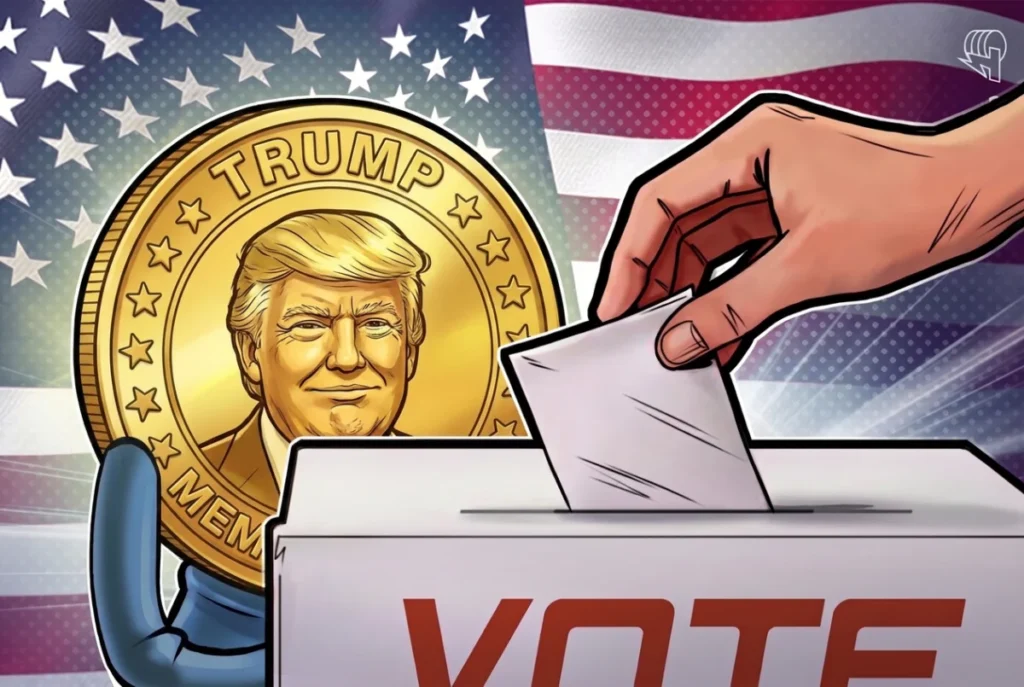
The political landscape of the United States has shifted following the recent midterm elections, and this seismic change is reverberating through the cryptocurrency market, particularly impacting tokens associated with former President Donald Trump. On Wednesday, two prominent crypto assets, Official Trump (TRUMP) and World Liberty Financial (WLFI), experienced significant declines, ranking among the top 100 digital assets to suffer the most substantial losses. This downturn has ignited a debate about the sustainability of politically aligned cryptocurrencies and their future prospects, especially as the wider crypto market demonstrated robust growth.
According to CoinMarketCap data, Official Trump (TRUMP), a memecoin launched in January 2025, shed 17% of its value over a 24-hour period, trading at $1.33. Concurrently, World Liberty Financial (WLFI), the governance token for a decentralized finance (DeFi) project launched in 2024 and reportedly backed by the Trump family, saw its value drop by over 7% to $0.047. These significant drops occurred in the wake of a wave of Democratic victories in Tuesday’s midterm elections, including unexpected wins in Texas, which ultimately saw the Democratic party secure control of both the House and the Senate, wresting power from the Republicans.
The implications of these election results extend beyond the immediate market fluctuations. Analysts suggest that the shift in political power could present obstacles for Trump in advancing his proposed crypto initiatives. Furthermore, it is likely to usher in increased scrutiny for his family’s cryptocurrency ventures. The observed losses in these politically linked tokens are prompting a critical examination of whether political sentiment alone can serve as a sustainable driver of demand for such digital assets.
In stark contrast to the performance of the Trump-associated tokens, the broader cryptocurrency market experienced a significant rally. Bitcoin (BTC), the leading digital asset, saw its value climb by more than 4% over the same 24-hour period, reaching approximately $80,500. Ethereum (ETH), the second-largest cryptocurrency, followed suit with a 6% increase, trading at $2,433. Other major cryptocurrencies also posted gains, with BNB rising 3%, XRP climbing 2.6%, and Solana (SOL) adding 2.5% to its market value. The overall cryptocurrency market capitalization experienced a healthy surge of 3.4%, reaching $2.69 trillion.
The downward trend was not limited to the TRUMP and WLFI tokens. Other cryptocurrencies with perceived ties to the Trump family also faced selling pressure. The MELANIA memecoin, associated with former First Lady Melania Trump, saw a nearly 13% decrease in its value over 24 hours, settling around $0.066. Additionally, a token named after Vice President JD Vance (VANCE), despite lacking a confirmed official connection to the vice president, also experienced a significant drop of nearly 12%.
These declines were further reflected across the broader political memecoin sector. The total market capitalization of this niche within the crypto market fell by more than 16% on the day, amounting to $477 million. Despite the overall downturn in value, trading volume within this sector surged by 123%, reaching $437 million, indicating continued speculative interest despite the price drops.
Benjamin Sarquis Peillard, founder and CEO of Cap, a DeFi platform specializing in stablecoin yields, commented on the diverging performance of politically linked tokens compared to established cryptocurrencies. He observed that investors appear to be differentiating their investment strategies based on the nature of the underlying asset. "Bitcoin and other established assets respond to a combination of liquidity, institutional flows and macroeconomic conditions," Peillard stated, "while politically linked tokens can be more sensitive to shifts in expectations around Washington." He elaborated that even as the broader market recovers, these politically charged tokens might encounter persistent selling pressure as investors re-evaluate their risk exposure.
Peillard further posited that while the current selloff could be interpreted as a short-term reaction to the election outcomes, a more significant long-term question remains: "what supports demand for these tokens beyond their association with a political figure?" This sentiment underscores the potential fragility of tokens whose value is heavily reliant on political narratives rather than intrinsic utility or technological innovation.
Beyond the immediate market reactions, the election results also cast a shadow of uncertainty over the future of cryptocurrency legislation in the United States. Specifically, the stalled Digital Asset Market Clarity Act, commonly known as the CLARITY Act, faces an even more complex path forward. This bill, intended to establish a comprehensive regulatory framework for digital assets, failed to gain sufficient traction in the Senate earlier this year, falling short of the required 60 votes. Notably, Democrats had advocated for stronger ethical provisions and safeguards against potential conflicts of interest concerning Trump’s crypto ventures, with several Republicans also opposing the bill’s advancement.
"The midterm results introduce a new layer of regulatory uncertainty, particularly around the pace and direction of digital asset legislation," Peillard noted. He emphasized that this uncertainty can have a more immediate and pronounced impact on politically linked tokens, as investor sentiment is intrinsically tied to evolving political environments and expectations.
While the cryptocurrency sector continues to garner both support and opposition from lawmakers across the political spectrum, the precise impact of the midterm election results on future crypto legislation remains to be seen. Peillard concluded by highlighting a broader concern for the industry: "the more important question is whether Congress can establish a durable regulatory framework that provides clarity regardless of which party holds power." The ability of lawmakers to forge a stable and predictable regulatory environment will be crucial for the sustained growth and maturation of the digital asset market as a whole.