 11

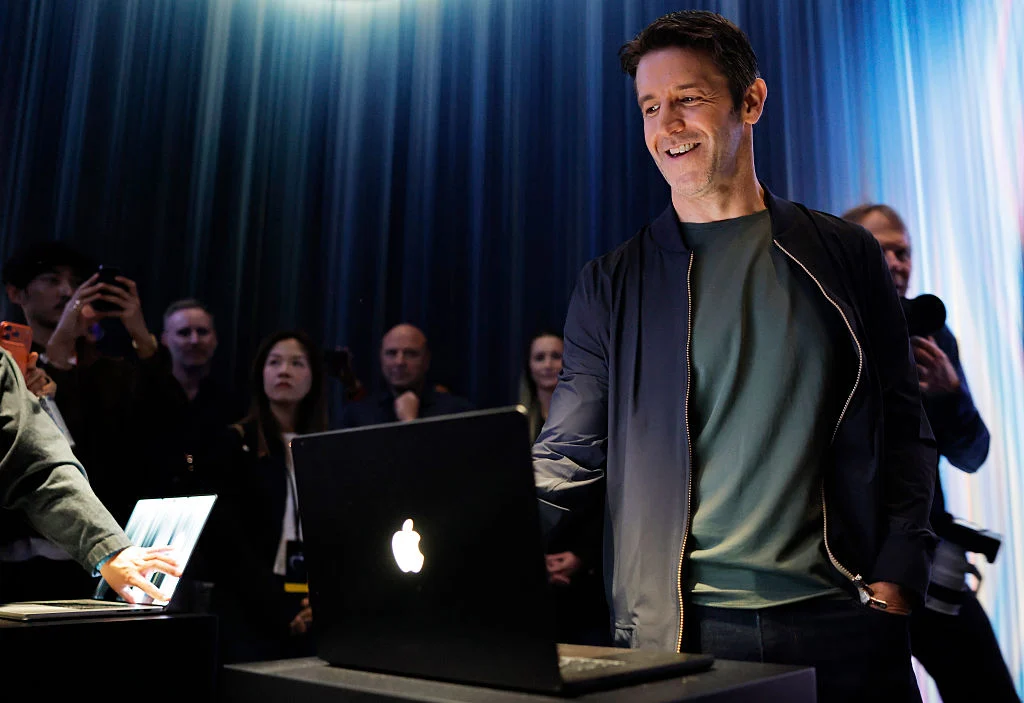
On October 31, 2026, Apple CEO John Ternus asserted confidence in the company’s artificial intelligence strategy, addressing criticisms that Apple has lagged behind competitors in the rapidly evolving AI landscape. During a recent interview with Steven Levy for Wired, Ternus, who officially became CEO at the beginning of September, articulated Apple’s distinct approach to AI, prioritizing user benefit and seamless integration over flashy, standalone features. His remarks come amidst increasing scrutiny of Apple’s AI advancements, particularly following the delayed but eventually launched powerful version of its virtual assistant, Siri, earlier this summer.
Over the past couple of years, the perception that Apple is "behind on AI" has gained traction within the tech industry and among consumers. This narrative has been largely fueled by the aggressive and highly public rollout of generative AI technologies by other tech giants such as Google, Microsoft, and OpenAI. These competitors have showcased groundbreaking large language models, sophisticated chatbots, and innovative image and content generation tools, often making their advancements immediately accessible to users. In contrast, Apple’s public-facing AI initiatives have, until recently, appeared more measured and less focused on direct generative capabilities. The significant delay in delivering a more powerful version of Siri, a cornerstone of Apple’s ecosystem and a primary interface for AI interaction, further solidified this perception, leading many to question Apple’s strategic positioning and readiness for an AI-dominated future. Industry analysts have frequently pointed to the perceived gap in conversational AI capabilities and the absence of headline-grabbing generative features directly integrated into Apple’s core products, creating a stark contrast with the continuous stream of AI innovations from its rivals. This situation has undeniably placed pressure on Apple to clearly articulate its vision and demonstrate tangible progress in the fiercely competitive artificial intelligence domain.
The much-anticipated overhaul of Siri, which finally launched in the summer of 2026, aimed to address long-standing criticisms regarding its limited contextual understanding, rigid command structure, and sometimes frustrating interactions. For years, users and developers alike had expressed desires for a more intuitive, intelligent, and deeply integrated virtual assistant. While the new version promised significant improvements, including enhanced natural language processing, more robust multi-turn conversational abilities, and deeper integration with both native and third-party applications, its eventual debut was met with a degree of "anticlimax," as suggested by a TechCrunch article from August 2026. This feeling likely stemmed from the immense build-up of expectations over the years, coupled with the fact that competitors had already pushed the boundaries of what virtual assistants and AI agents could achieve. The delay meant Apple had to enter a landscape where rivals had already established advanced benchmarks, forcing Siri to play catch-up rather than set the pace. A truly "powerful" Siri, in the eyes of many, would ideally offer proactive assistance, understand complex user intent across various contexts, seamlessly manage tasks across Apple’s device ecosystem, and even learn from individual user behavior to provide highly personalized, intelligent interactions, all while upholding Apple’s stringent privacy standards.
Despite the external critiques and the long road to Siri’s enhancement, Ternus, a longtime Apple executive who officially stepped into the CEO role at the beginning of September 2026, remained steadfast in his conviction regarding the company’s AI direction. "Everyone has an opinion," he acknowledged during the candid Wired interview, recognizing the widespread discourse surrounding Apple’s AI efforts. However, he quickly added with conviction, "I really like where we’re at." This statement suggests a deep internal confidence within Apple regarding its ongoing AI development efforts, possibly hinting at significant advancements that are either yet to be publicly unveiled or are being integrated in a more subtle, foundational manner across its platforms. Apple’s historical approach often involves meticulous development, rigorous testing, and a steadfast focus on delivering polished, integrated user experiences rather than rushing to market with nascent or unrefined technologies. Ternus’s comment implies that while the public perception might currently be one of lagging, Apple’s internal roadmap and current progress are entirely aligned with its long-term strategic goals. It points to a deliberate and methodical approach, prioritizing quality, privacy, and seamless integration over a race for headline-grabbing, but potentially less polished, features. Coming early in his tenure as CEO, this declaration sets a clear tone for his leadership, emphasizing continuity in Apple’s core values while acknowledging the imperative of innovation.

Ternus further clarified Apple’s foundational philosophy regarding AI implementation, stating unequivocally, "We’re absolutely going to leverage AI" in new products. This commitment underscores that Apple views AI not as a peripheral addition but as a core enabler for future innovations. However, he immediately qualified this by emphasizing a crucial distinction: "We don’t want to ship AI for AI’s sake." This principle is central to Apple’s overarching design ethos, which historically eschews showcasing technology merely for its novelty or technological prowess. Instead, Apple aims to embed technology so seamlessly into the user experience that it becomes an invisible enabler of better, more intuitive functionalities. For Apple, AI is a powerful tool designed to enhance existing features and enable entirely new ones, such as advanced computational photography that intelligently optimizes images, more personalized health tracking and proactive wellness suggestions, improved accessibility features for a wider range of users, optimized device performance and battery life, and heightened security through on-device machine learning that processes sensitive data locally.
The focus, as Ternus articulated, is squarely on the tangible benefit to the user, rather than on explicitly highlighting the underlying AI algorithms. He summarized this user-centric approach clearly: "When we’re doing it right, people won’t have to think about whether it was AI that made this happen or more traditional software. What matters is, did we build something that they really love?" This philosophy suggests that Apple’s AI will primarily manifest as smarter, more intuitive features that "just work," enhancing privacy, convenience, and creative capabilities without demanding explicit user interaction with complex AI models. This approach also aligns with Apple’s long-standing commitment to privacy, often favoring on-device machine learning to keep user data secure and private, even if it means a different development trajectory compared to cloud-heavy AI solutions. This contrasts significantly with some industry trends where AI is presented as a distinct, often complex, and sometimes bewildering interface, requiring users to actively engage with the underlying models.
Steven Levy pressed Ternus on a more fundamental question about AI’s potential to disrupt established paradigms, specifically whether advanced AI agents might eventually render traditional applications unnecessary. The rapid evolution of sophisticated AI agents, capable of performing complex tasks, coordinating information, and interacting with various services autonomously, has indeed sparked widespread discussions about a future where users might interact directly with intelligent systems rather than launching individual apps. Such a profound shift could have significant implications for Apple’s thriving App Store ecosystem, which has grown into a multi-billion-dollar revenue generator and a cornerstone of its platform strategy. The App Store has not only been a financial success but also a testament to the power of human creativity and innovation, hosting millions of applications crafted by developers worldwide.
Ternus acknowledged the provocative nature of the question, conceding, "That could make life really easy, I suppose," recognizing the undeniable convenience that such powerful agents could offer. However, he swiftly pivoted back to Apple’s core values, emphasizing the enduring importance of human creativity and product design. "But the creation of products is a deeply human and personal thing, something that we love to do," he asserted. This response underscores Apple’s fundamental belief in the intrinsic value of human-crafted experiences and the irreplaceable role of software developers and designers as creators. While AI agents might automate certain tasks and streamline others, Ternus’s statement implies that the curated, intentional design, the unique aesthetic appeal, and the specific functionalities of apps – born from human ingenuity and passion – will continue to hold profound significance. It suggests a vision where AI primarily augments human creation rather than replaces it, empowering developers to build even more sophisticated and personalized applications, and allowing users to discover and engage with a rich tapestry of human-designed digital experiences. The implication is that even in an increasingly AI-driven world, the human touch in product development, the artistic expression, and the unique problem-solving found within applications will remain a vital component of Apple’s ecosystem, fostering a symbiotic relationship between advanced technology and human creativity.
As Apple navigates the complex and competitive AI landscape, CEO John Ternus’s recent remarks provide critical insight into the company’s steadfast, yet evolving, strategy. Posted on October 31, 2026, this interview highlights Apple’s unwavering commitment to integrating AI in a manner that prioritizes user experience, privacy, and seamless functionality, rather than chasing fleeting trends or developing AI purely for its own sake. While external perceptions of Apple’s AI readiness may vary, Ternus’s confidence signals a concerted, deliberate effort to leverage artificial intelligence as a foundational layer to enhance its beloved products and services. This approach ensures that Apple’s innovations continue to resonate with users who value thoughtful design, practical utility, and a respectful approach to personal data. The future, in Apple’s view, will see AI working tirelessly behind the scenes, making technology more intuitive, powerful, and personal, all without overshadowing the deeply human element of creation and interaction that defines its iconic brand.