 11
11 1
1 2
2 3
3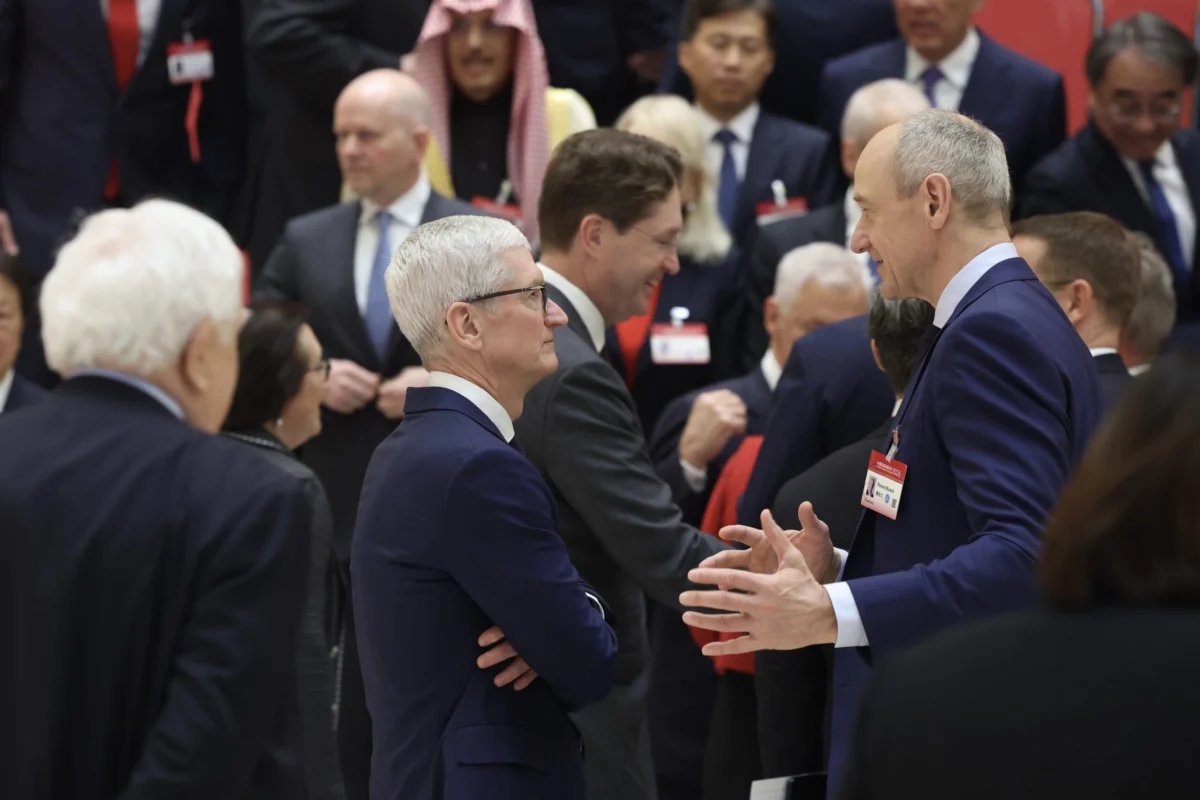
BEIJING – A significant contingent of over 80 global business leaders, representing a spectrum of industries from technology giant Apple to pharmaceutical powerhouse Eli Lilly, convened in Beijing this past weekend for the annual state-organized China Development Forum. This gathering underscores a renewed strategic focus by major corporations on engaging with the vast Chinese consumer market, a sentiment amplified by the lingering uncertainties of the COVID-19 pandemic, a period of slower economic growth, and persistent U.S.-China trade frictions.
Apple CEO Tim Cook, following Chinese Premier Li Qiang’s address, took to the stage on Sunday, highlighting the "extraordinary" pace of technological advancement within China, particularly in areas like factory automation. "We are proud to be part of that progress, and we’re committed to working alongside our supplier partners to push it even further," Cook stated, further emphasizing Apple’s commitment to sustainability by noting that over 90% of its production in China is powered by clean energy.
Apple continues to rely heavily on China for its manufacturing operations, with the majority of its iPhones produced in the country. China represented a substantial portion of Apple’s revenue, accounting for nearly 18% in the December quarter. The recent launch of the iPhone 17 has proven particularly successful, with Apple smartphone sales in China experiencing a 23% year-on-year increase in the first nine weeks of the year, a notable achievement given that China’s overall smartphone market saw a 4% decline during the same period, according to data from Counterpoint Research. Prior to his arrival in Beijing, Cook also visited Chengdu, a trip that occurred amidst ongoing discussions and pressure for Apple to reduce its App Store fees in China.

An official delegate list obtained by CNBC revealed that over 30 executives from U.S. companies, including McDonald’s, Tapestry (parent company of Coach), and Mastercard, were in attendance. The forum also welcomed representatives from prominent corporations in the United Kingdom, South Korea, and Germany.
These executive visits to Beijing coincide with a trade truce established between the U.S. and China in October, which temporarily reduced the effective tariff rate to below 50% for a year. The future of this truce and China’s willingness to permit the export of more critically needed rare earth minerals remain subjects of ongoing negotiation. U.S. President Donald Trump’s planned visit to Beijing for trade talks has been postponed by at least a few weeks due to the ongoing Iran war. Despite the White House’s efforts to encourage a repatriation of U.S. investment, American companies are continuing to pursue expansion plans within China.
Pharmaceutical giant Eli Lilly announced in March its intention to invest $3 billion in China over the next decade. While China currently accounts for just under 3% of Eli Lilly’s total revenue, CEO David A. Ricks expressed optimism about the company’s significant potential in the Chinese market, particularly for its GLP-1 obesity drug, contingent on the development of improved reimbursement systems. Beijing has demonstrated a willingness to make incremental improvements in foreign access to its markets. Eli Lilly’s Mounjaro weight-loss drug was added to China’s list for state-run health insurance reimbursements this year.
During the forum, China’s Premier Li Qiang indicated that Beijing would facilitate greater access for foreign businesses to the country’s services sector and pledged to increase imports of healthcare and digital technology products. Premier Li also addressed the notion of state subsidies driving China’s technological advancements, asserting that the country has not pursued a trade surplus, noting that profits from products manufactured by foreign companies in China are often repatriated to their home markets. China reported a record trade surplus in 2025. The nation’s 15th five-year development plan, initiated this year, prioritizes technological self-sufficiency and the bolstering of domestic demand, with measures such as trade-in subsidies and modest increases in social welfare aimed at stimulating consumption.

However, not all perspectives were represented at the forum. Stephen Roach, an economist and senior fellow at Yale Law School, noted his absence from this year’s event after 25 years of participation. "My focus on consumer-led rebalancing was always presented as constructive criticism," Roach stated via email, adding, "Ironically, it is something they have finally embraced in the 15th five-year plan – albeit with inadequate policies."
For invited executives, the stakes remain high. Volkswagen CEO Oliver Blume has made two trips to Beijing within a four-week period, the most recent accompanying German Chancellor Friedrich Merz on a state visit in late February. "Our long-standing partnership provides an opportunity to address challenges clearly at the China Development Forum as well: volatile supply chains, an imbalance between supply and demand, and high price pressure in the market," Blume commented in a statement. He emphasized the importance of stable framework conditions for Volkswagen as China’s largest foreign investor and welcomed measures to enhance domestic demand, foster fair competition, and stabilize supply chains.
Blume characterized the current year as "very crucial" in an interview with CNBC’s Eunice Yoon on the sidelines of the forum. Following a three-year initiative to develop local manufacturing and technological capabilities, Volkswagen is set to launch 20 new models in China this year. The automaker experienced an 8% decline in China passenger car sales last year.