 11
11
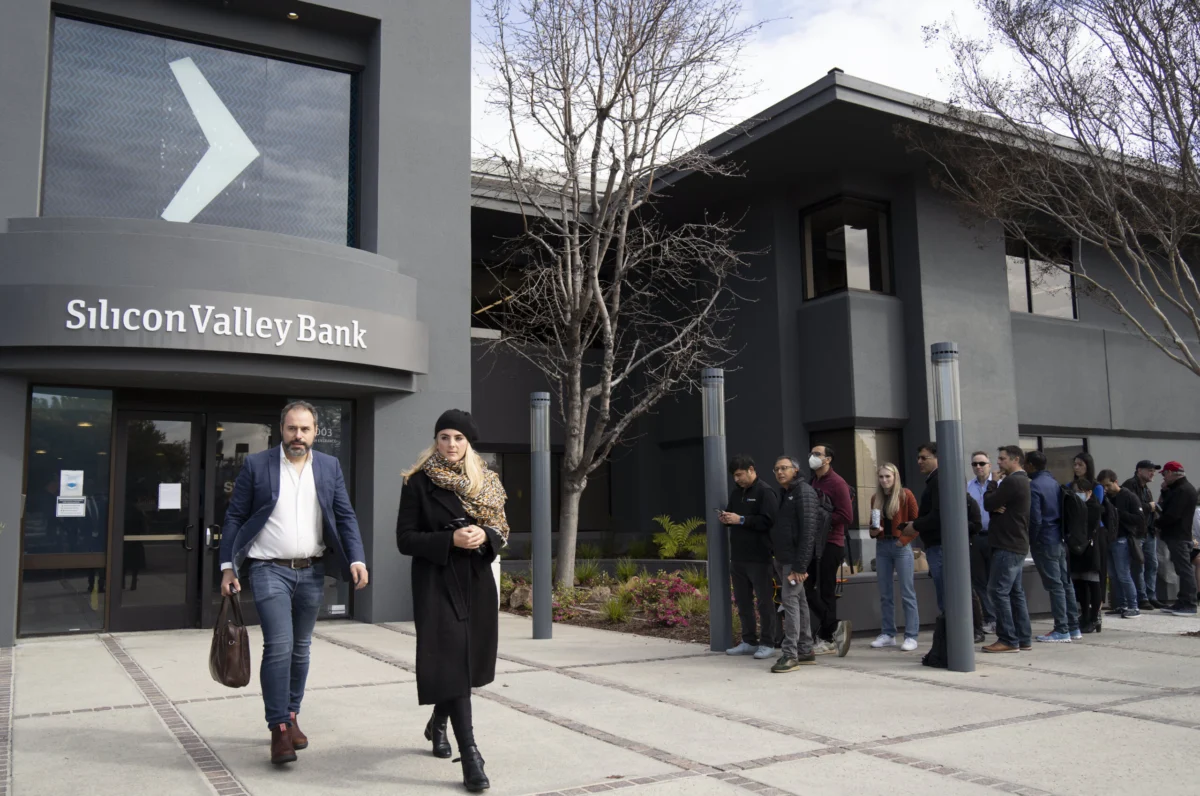
Three years ago, on the evening of March 9, 2023, JPMorgan Chase executive Doug Petno was attending a colleague’s retirement party in New York City. His evening took an unexpected turn when his boss, Jamie Dimon, summoned him for a crucial call. Regulators were on the line with an urgent inquiry: Was JPMorgan Chase interested in acquiring Silicon Valley Bank (SVB)? The West Coast lender, a prominent financial institution for startups, was experiencing a massive exodus of deposits, with customers withdrawing funds in significant numbers.
The following day, March 10, 2023, California’s finance regulators officially seized SVB, marking the abrupt collapse of an institution central to the American startup ecosystem. Over that tumultuous weekend, Dimon, Petno, and other senior JPMorgan leaders deliberated the potential acquisition of SVB, which had just seen a staggering $42 billion in deposits vanish. Ultimately, they decided against the purchase. A key factor in this decision was the significant influx of SVB clients who were, in a flight to safety, simultaneously opening accounts with JPMorgan.
"We had three years’ worth of incoming clients in a weekend," Petno, co-head of JPMorgan’s commercial and investment bank, shared in a recent exclusive interview with CNBC. "Onboarding teams were opening up accounts around the clock." This surge in new clients, driven by the SVB crisis, sparked an idea within Petno. He envisioned JPMorgan developing a comprehensive banking solution that could directly compete with SVB and other prominent fintech startups like Brex, Ramp, and Mercury, all of which had successfully established profitable niches by serving founders and venture capital investors.
"We went to our board and said, ‘there’s a vacuum in the market,’" Petno revealed. "At that very moment, everybody saw the opportunity." This realization marked a strategic pivot for JPMorgan, a financial behemoth already dominant in both retail and institutional finance. The ambition to win the specific segment of startup banking from its West Coast rivals was not solely about capturing additional deposits. It was intrinsically linked to JPMorgan’s broader growth strategy, which aims to expand a bank that generated over $180 billion in revenue last year. Furthermore, by engaging deeply with the startup community, the New York-based lender sought to remain at the forefront of technological advancements.
With an annual technology budget approaching $20 billion, JPMorgan’s objective extends beyond merely serving startup clients and venture capital investors. The firm is keen to learn from these innovative entities. JPMorgan actively monitors Silicon Valley startups for potential solutions to challenges the bank itself faces, ranging from cybersecurity to the complexities of quantum computing. Petno noted that when a JPMorgan client announces layoffs and expense reductions related to artificial intelligence, the bank often dispatches a team of its bankers to investigate the client’s strategies. These investigations typically reveal that the implementation of new AI agents constitutes only a minor factor in the workforce reductions. Instead, the primary drivers are often attributed to factors such as over-hiring and inefficient operational processes.
JPMorgan’s foray into startup banking commenced in 2016, prompted by its increasing awareness of tech-focused competitors during its westward expansion. Initially, the bank’s services were limited to larger, more established startups. This approach was partly due to the bank’s then-nascent digital banking solutions, which did not fully align with the preferences of younger founders. Additionally, JPMorgan lacked a sufficient number of investment bankers at the time to adequately target smaller, higher-risk startups. For years, certain segments of the venture capital community perceived JPMorgan as being slow to open accounts and that resolving payment issues often required time-consuming branch visits. "They want to go to the website to open an account, and if it’s more than 15 minutes, they’re done," Petno commented.
However, in the immediate aftermath of the SVB collapse, Petno and his team acted decisively. They recruited key personnel from SVB, including John China, then-President of SVB Capital. China now leads JPMorgan’s innovation economy business alongside Andrew Kresse. By late April 2023, JPMorgan found itself in a position to acquire another distressed California-based bank, First Republic, which also served the technology sector. JPMorgan emerged as the winning bidder for First Republic. Leveraging the insights gained from the SVB situation and the banking operations of First Republic, JPMorgan reported a doubling of its revenue from startup banking in 2023. Despite the emphasis on digital banking, Petno acknowledged that occasionally, a startup founder may still visit a Chase branch to deposit a substantial funding check into a standard account. In such instances, JPMorgan’s systems are now designed to seamlessly transition that client to the specialized startup team.
JPMorgan has significantly expanded its client base in this sector, quadrupling the number of total clients to nearly 12,000. These clients are served by a dedicated team of 550 bankers located on both the East and West Coasts, who draw upon resources from various divisions within the organization. Founders and venture capital investors are clients of the private bank, while the startups themselves are supported by the commercial bank. Venture capital funds operate as separate clients, a business segment largely integrated from the acquisition of First Republic. While JPMorgan has not disclosed specific revenue figures for its startup banking division, Petno indicated that its growth rate is "dramatically higher" than that of the bank’s primary business lines.
Despite these advancements, Petno remains focused on enhancing the firm’s digital banking offerings for startups, highlighting an ongoing project aimed at providing a competitive edge. The competitive landscape for startup banking includes SVB, now owned by First Citizens Bank, along with fintechs like Mercury and Ramp. Other players in this space include Stifel and Customers Bank. Notably, in January, Capital One acquired Brex for $5.15 billion, signaling continued consolidation and strategic moves within the industry.
Recognizing that the majority of startups do not achieve long-term success, JPMorgan actively identifies companies it anticipates will thrive. The bank seeks to establish relationships with these promising ventures early in their lifecycle, mirroring SVB’s earlier approach. This strategy allows JPMorgan to provide not only essential banking services but also valuable investment banking advice as the startups grow. JPMorgan’s overarching ambition is to become the preeminent, all-encompassing financial partner for founders, catering to their complete range of needs, from initial seed funding through to initial public offerings and beyond, including support for international expansion. "Once you’re onboarded, you can never outgrow JPMorgan, from unicorn all the way to a Magnificent 7," Petno concluded, emphasizing the firm’s commitment to supporting companies at every stage of their development.