 11
11 1
1 2
2 3
3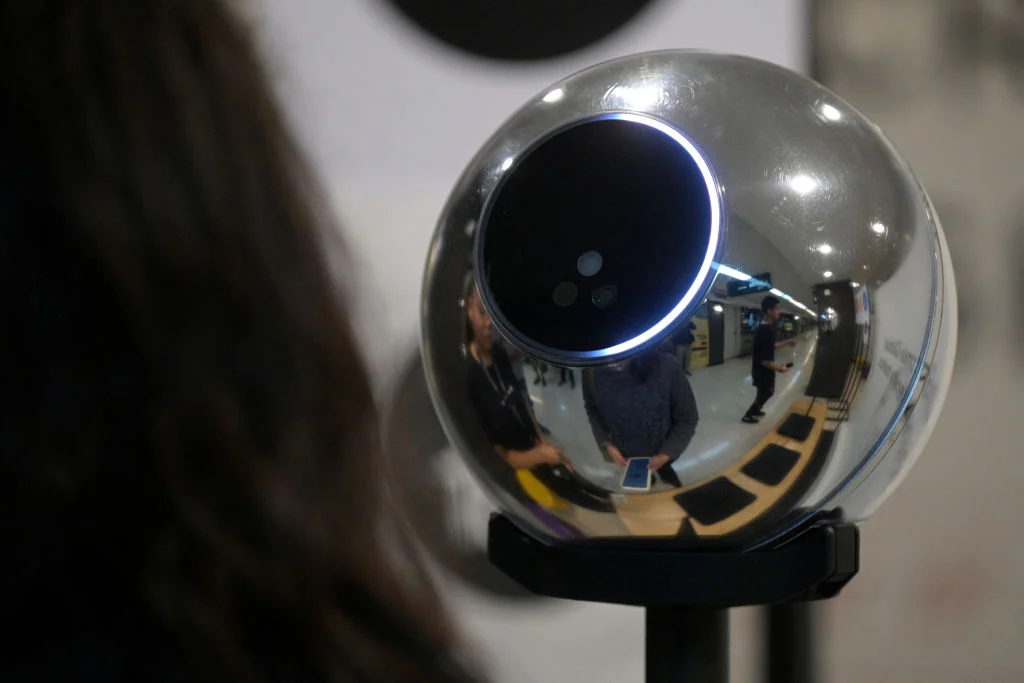
World, the ambitious venture co-founded by OpenAI CEO Sam Altman, has introduced AgentKit, a new verification tool aimed at securing the rapidly expanding landscape of agentic commerce. The company, through its operational arm Tools for Humanity (TFH), is dedicated to pioneering "proof of human" technology – robust ID verification solutions crucial for an internet increasingly saturated with AI-generated content of potentially dubious quality. The dual role of Altman, a key figure behind OpenAI, a company frequently cited for its contributions to the proliferation of AI-generated content, highlights a compelling narrative: a visionary who not only fuels the AI revolution but also proactively seeks to mitigate its inherent challenges by establishing clear distinctions between human and machine online.
The emergence of agentic commerce represents a significant and transformative shift in online consumer behavior. This innovative practice involves individuals deploying sophisticated AI programs or "agents" to autonomously browse websites, evaluate products, and execute purchases on their behalf. The allure of agentic commerce is clear: it promises unparalleled levels of automated convenience, efficiency, and personalized shopping experiences, allowing users to delegate tedious online tasks and optimize their purchasing decisions without constant manual oversight. Imagine an AI agent autonomously monitoring prices, comparing features across multiple retailers, and executing a purchase when specific criteria are met, all while the user focuses on other activities.
However, this nascent trend, while promising, simultaneously introduces a host of potential vulnerabilities and ethical considerations. Industry experts and security analysts have raised the specter of novel forms of fraud, widespread spam, and other large-scale internet abuses that could undermine trust and stability in digital transactions. Without adequate verification, AI agents could be weaponized for sophisticated phishing scams, automated account takeovers, or even coordinated price manipulation across e-commerce platforms. The potential for bot-driven market distortions and identity theft via compromised agents necessitates robust safeguards to ensure the legitimacy and integrity of these automated interactions.
The increasing reliance on AI agents is not a distant future but a present reality, necessitating urgent solutions. Major players in the e-commerce and financial sectors have already begun to embrace this paradigm shift. Last year, industry giants such as Amazon and MasterCard integrated automated buying capabilities into their platforms, signaling a clear trajectory towards broader adoption. Furthermore, Google recently unveiled its own protocol specifically designed to facilitate and support the growth of agentic commerce, underscoring the mainstream acceptance and strategic importance of this technological evolution. The imperative for reliable verification systems has, therefore, become a critical industry priority.
In response to these escalating concerns, World, via Tools for Humanity, announced on Tuesday its purported solution: AgentKit. This innovative software development tool is specifically engineered for commercial websites, enabling them to integrate a novel verification system directly into their platforms. AgentKit’s primary function is to empower these sites to definitively ascertain that a genuine, unique human being is the ultimate decision-maker behind an AI agent’s purchasing activities. By acting as a crucial gatekeeper, AgentKit aims to instill a critical layer of trust, accountability, and security into automated transactions, ensuring that delegated purchasing power remains firmly linked to a verifiable human identity.
At the core of AgentKit’s functionality lies World ID, the foundational linchpin of TFH’s entire verification ecosystem. World ID is designed to provide a secure, privacy-preserving, and decentralized method for proving humanness online without revealing personal identifying information. The most robust and secure iteration of World ID is generated through a sophisticated biometric process involving a meticulous scan of a user’s eyes via World’s distinctive Orb device. This futuristic, spherical device precisely captures an individual’s iris pattern, which it then converts into a unique, highly encrypted digital code. Crucially, the Orb does not store raw biometric data; instead, it generates a cryptographic hash of the iris pattern, ensuring user privacy. This encrypted code, representing the verified World ID, then serves as a digital passport, granting users access to TFH’s expanding suite of services and applications through the dedicated World app. This unique biometric verification process is central to World’s mission of creating a reliable and unforgeable "proof of human" in a digital world increasingly populated by non-human entities.
A pivotal aspect of AgentKit’s architecture is its seamless integration with the x402 protocol, a recently launched payment system designed specifically for the era of automated, machine-to-machine transactions. The x402 protocol, a collaborative innovation developed by cryptocurrency exchange Coinbase and internet infrastructure giant Cloudflare, establishes a blockchain-based open standard. This standard is specifically engineered to enable automated computer programs – AI agents – to transact directly with one another online, critically, without requiring constant human intervention at every single step of the process. This capability is vital for the efficiency and scalability promised by agentic commerce but also presents the inherent verification challenge that AgentKit aims to solve.
To leverage AgentKit, users are required to register their specific AI agents with their personal World ID. Once registered and linked, this World ID then communicates through the x402 system to commercial websites. This communication effectively conveys that a distinct and unequivocally verified human being has authorized and approves of the AI agent’s purchasing decisions, even if the actual transaction execution is automated. This integration ensures that while the execution of a purchase may be delegated to an AI agent for speed and convenience, the ultimate authority and responsibility remain anchored to a verifiable human identity, creating a secure chain of trust from human to agent to transaction.
In an official statement, Tools for Humanity articulated the strategic positioning of their new offering: "AgentKit is built as a complementary extension to the x402 v2 protocol, in coordination with Coinbase." The statement further elaborated on its flexibility, noting, "The integration is designed so that any website already using x402 can enable proof of unique human verification alongside (or instead of) micropayments." This highlights AgentKit’s versatility, allowing websites to choose the level of verification needed, either supplementing existing payment verification or providing a standalone human verification layer.
Providing further clarity in an interview with TechCrunch, Tiago Sada, Chief Product Officer at TFH, offered an insightful analogy, comparing the new function to delegating "power of attorney" to an AI agent. Sada explained that by definitively verifying that an AI program is operating under the explicit authority and on behalf of a particular, verified user, a commercial website gains the necessary information to make informed decisions regarding the trustworthiness of transactions initiated by those agents. "What the World ID badge tells you is that someone is a real and a unique human," Sada emphasized. He further clarified that while AgentKit provides this crucial verification, websites retain the autonomy and discretion to block specific users or agents they deem to be operating in bad faith, ensuring a vital balance between automation, security, and platform control. This implies that while World ID confirms unique humanness, websites can still apply their own risk assessments.
Currently, AgentKit is being offered in a beta phase to developers, a strategic move designed to gather valuable feedback and refine its functionalities over time. This iterative development approach aims to ensure the tool is robust, universally applicable, and meets the diverse needs of the evolving agentic commerce ecosystem. Sada also underscored a key prerequisite for consumers wishing to utilize this advanced verification: they must possess a verified World ID, which, for the highest level of assurance, must be derived from an Orb scan. This requirement reinforces World’s commitment to its unique biometric verification method as the gold standard for proving humanness.
The timing of AgentKit’s launch is particularly pertinent, aligning with the accelerated adoption of agentic commerce across various industries. As this field continues its rapid expansion, the imperative for robust safeguards that guarantee reliability and stability becomes increasingly critical. World is strategically positioning itself to become the de facto provider of this essential stability, aiming to be the trusted intermediary that bridges the gap between AI autonomy and human accountability in online transactions. The company anticipates that such a system will be indispensable for the sustained growth and trustworthiness of the agentic commerce ecosystem, offering a fundamental layer of trust that protects consumers and businesses alike from the potential pitfalls of an AI-driven digital economy.
The genesis of World and its core mission of "proof of human" technology takes on a deeper significance when viewed through the lens of Sam Altman’s broader technological endeavors. As a co-founder of both World and OpenAI, the company widely credited—and sometimes criticized—for accelerating the proliferation of AI-generated content, Altman appears to be addressing a problem he himself has, in part, contributed to creating. This unique position suggests a profound foresight into the challenges posed by an AI-saturated digital landscape, where distinguishing authentic human interaction from sophisticated machine mimicry becomes increasingly difficult. World’s efforts, therefore, can be seen as a proactive and foundational measure to build the necessary infrastructure for trust, authenticity, and accountability in an evolving digital frontier.
The debate around AI’s impact on digital identity, commerce, and the broader internet is expected to be a prominent theme at industry gatherings. For instance, the TechCrunch event scheduled for October 13-15, 2026, in San Francisco, CA, is likely to host discussions on such innovative solutions and the future trajectory of AI integration in everyday transactions. Platforms like AgentKit, with their focus on verifiable human intent, will be vital components in shaping secure and reliable online environments as the digital world becomes increasingly automated and intertwined with artificial intelligence.