 11
11
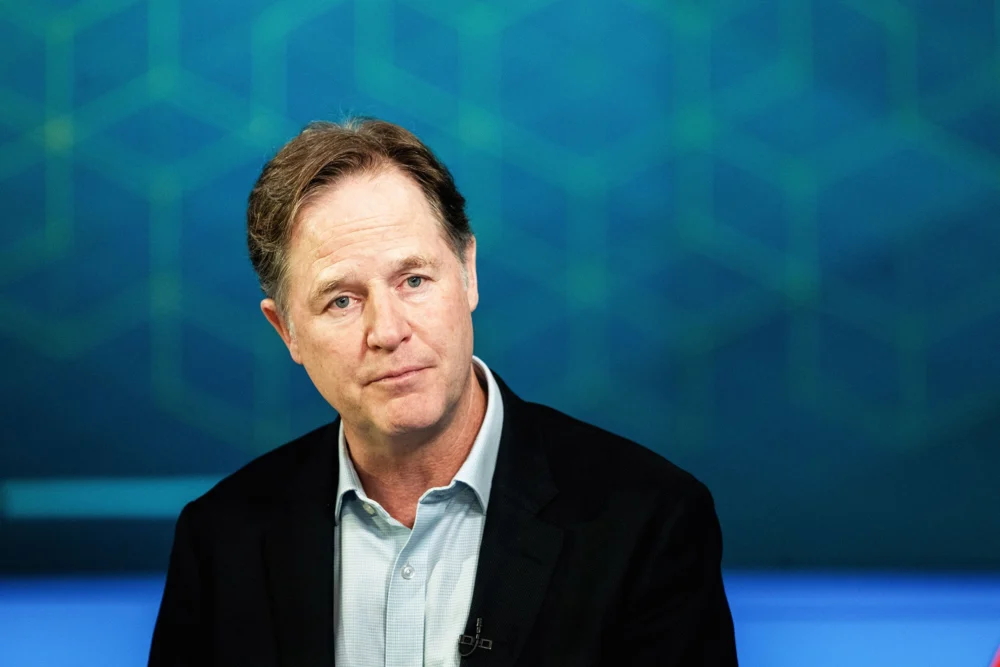
Nick Clegg, the former president of global affairs at Meta, has broken his relative silence since departing the tech giant in January 2025, just days before Donald Trump’s anticipated return to the White House. The former UK Deputy Prime Minister has announced his appointment to the boards of two artificial intelligence companies: British data center firm Nscale and the education technology startup Efekta. His new roles signal a focused return to the public sphere, particularly within the burgeoning AI landscape, where he navigates a nuanced path, disavowing both apocalyptic "AI doomer" narratives and uncritical "boosterism."
In a recent interview, Clegg articulated his cautious yet hopeful perspective on AI. He expressed a strong aversion to what he calls "hype on both sides," dismissing extreme predictions of AI destroying life as much as declarations of it being the most powerful human invention since fire. According to Clegg, such rhetoric often serves the interests of those with something to sell or a desire to inflate the perceived power of their creations. He characterizes AI as "both very versatile and very stupid," exceptionally powerful for tasks like coding but "exceptionally useless for many others." This inherent contradiction, he believes, is why humanity struggles to discuss the technology coherently, often making the fundamental mistake of anthropomorphizing artificial intelligence.
Clegg’s decision to join Efekta, a spinout of the Swiss company EF Education First, underscores his conviction that education will be among the first sectors to be profoundly transformed by AI. Efekta offers an AI-based teaching assistant designed to adapt to individual student abilities, providing personalized instruction and sending progress reports to teachers. The core aim is to replicate the benefits of one-to-one tutoring, a pedagogical ideal rarely feasible in traditional classroom settings. The platform currently serves approximately 4 million students, primarily across Latin America and Southeast Asia. Clegg’s extensive background in politics and technology is expected to be instrumental in guiding Efekta’s expansion into new global territories, leveraging his unique insights into both policy and digital innovation.
During a meeting at EF’s West London office, Clegg elaborated on his belief in the transformative power of immersive, online teaching. He highlighted that while every child learns differently and at varying paces, the dream of truly personalized education has historically eluded educators due to the sheer difficulty of providing individual attention. AI, he argues, provides the "secret sauce" for adaptive, interactive personalization, making this long-held dream a reality. He particularly noted Efekta’s focus on large, underserved markets, where chronic teacher shortages persist. Clegg envisions a profound democratizing effect, where a student in a rural Brazilian town could receive the same responsive, high-quality interaction from the Efekta AI teacher as a child in a privileged London borough like Mayfair.
Addressing concerns about AI’s potential to undermine foundational skills or foster over-reliance on chatbots, Clegg maintained that attempting to exclude AI from schools is "senseless." Instead, the focus should be on how best to incorporate it. He drew parallels to the advent of calculators, which initially sparked fears of students losing the ability to perform mental arithmetic—fears that ultimately proved unfounded. While acknowledging that AI will undoubtedly have an effect, he believes the net outcome for educational performance should be positive.
However, Clegg is not oblivious to the risks, especially concerning vulnerable children. He warned of the "perils" of children and vulnerable adults becoming "emotionally dependent and invested in a relationship with something that has an avatar, humanoid presence in their lives." He advocated for a "very precautionary approach" at a societal level, emphasizing the need for clear age-gating for "agentic AIs"—those designed to act autonomously. He pointed out the practical difficulties of enforcing such bans, suggesting that effective age verification might only be achievable through the "choke points" of app stores on platforms like iOS and Android, rather than relying on individual companies to hold sensitive personal data like passport details. Crucially, he differentiated Efekta’s product, stating it poses no such risk, as its AI is a "teacher-controlled experience" and not designed for "surreptitious midnight relationships" with pupils.
Reflecting on his nearly seven years at Meta, a period during which AI emerged as the leading frontier technology, Clegg revealed how his experience shaped his views. He found the concept of "superintelligence" to be "hand-wavy," suggesting it’s often used by Silicon Valley companies primarily to attract top data scientists rather than representing a tangible, universally understood goal. His time at Meta solidified his concerns about the "power paradox" of AI: technologies that empower individuals simultaneously concentrate immense power in the hands of a very small number of players, primarily in the US tech sector and in China. He explained that the "physics" of large language models (LLMs)—specifically the "unbelievably expensive" infrastructure required to build them—will exacerbate this "bifurcation of power," leading to an increasingly small oligopoly of players. He foresees an inevitable "shakeout" given the unsustainable annual spending on AI infrastructure, describing the current situation as an "imbalance of individual empowerment on one hand and extraordinary globs of agglomerated power on the other."
Clegg also defended the Facebook Oversight Board, which he helped establish at Meta, as an effective mechanism for governing the company’s content decisions. He believes the board has done "a great job," issuing numerous binding content decisions that Meta was compelled to implement, often to the chagrin of internal teams. While acknowledging it was never intended to be a "Supreme Court" capable of fully reining in Mark Zuckerberg, he praised Meta for voluntarily tying its hands in this manner. His disappointment, however, lies in the fact that other platforms have not adopted this model, which he attributes to a "massive sea change in attitude toward content moderation in the US post-Musk takeover at Twitter," coupled with what he calls the "infantile tendency for the MAGA crowd to call any content moderation an act of censorship."
Regarding Meta’s subsequent shift from independent fact-checkers to crowdsourced moderation, Clegg noted that while Zuckerberg’s position has evolved, crowdsourcing "in theory" can work at scale. He argued against romanticizing independent fact-checkers, pointing out their limited capacity to review content and the widespread perception among nearly half the American population that they were ideologically biased.
Beyond the corporate landscape, Clegg voiced significant frustration with the broader politics of the AI race. He criticized both "pesky Brussels bureaucrats" for "knee-capping European AI founders" and "Big Tech elites" for "prostrating themselves at Trump’s feet." He observed a stark change in the US climate under the Trump administration, where Silicon Valley companies have seemingly aligned with the current US administration—an alignment he speculates is for "the protection of their businesses." He decried the "self-serving political rhetoric" surrounding content moderation, particularly the "hallowed status" attached to the First Amendment in the US, often used to dismiss European regulatory efforts. He cited the EU’s AI Act as a "ludicrous act of self-harm" and a "textbook example of how not to regulate." He argued that its initial drafts, published years before ChatGPT, could not possibly apply effectively to the rapidly evolving technology, unfairly burdening developers of underlying foundation models with responsibility for downstream uses. This, he believes, is a "total betrayal" of smart European entrepreneurs, undermining European sovereignty in technology by making it harder for them to build world-beating companies.
As an alternative to what he views as heavy-handed regulation, Clegg has become a "keen advocate of open source." He sees it as the most effective way to democratize these powerful technologies and prevent the emergence of an "oligopolistic power of a very small number of proprietary models." He noted the "irony of ironies" that China, the world’s largest autocracy, is paradoxically doing the most to facilitate democratized access to AI tools through open sourcing, whether "by accident or design."