 11
11
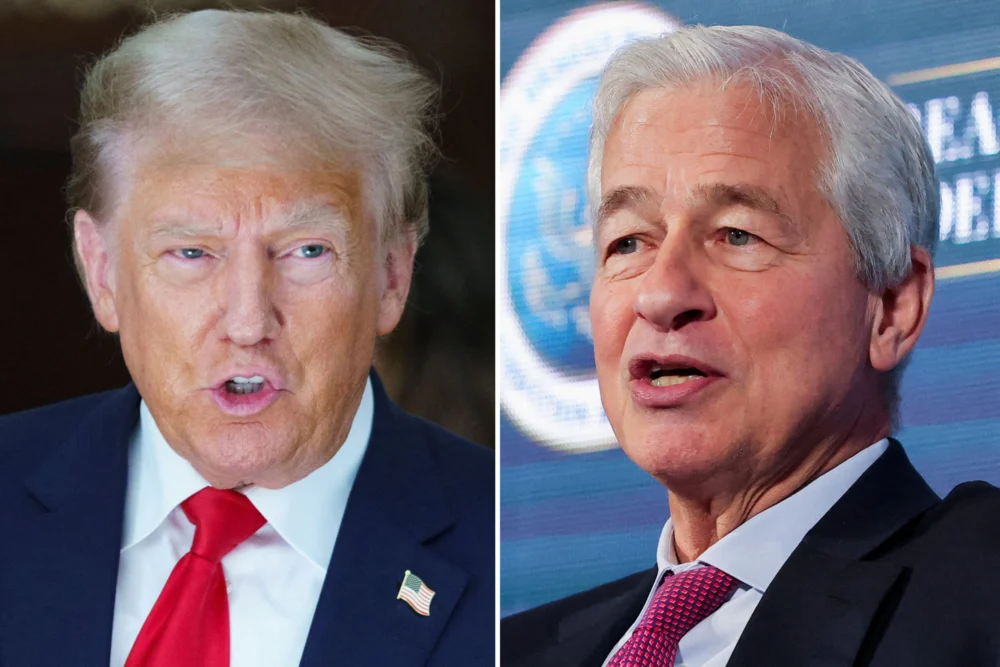
JPMorgan Chase CEO Jamie Dimon stated on Monday that while former President Donald Trump’s lawsuit seeking $5 billion in damages for the closure of his accounts lacks merit, he understands and sympathizes with the president’s frustration. Trump is alleging that JPMorgan and other financial institutions terminated his accounts for political reasons, a move his conservative supporters have characterized as discriminatory.
"The case has no merit," Dimon told CNBC’s Leslie Picker in an interview conducted on the sidelines of a JPMorgan conference in Miami. Despite this legal assessment, he added, "But I agree with them. They have the right to be angry. I’d be angry, too. Like, why is a bank allowed to do that?"
Dimon explained that banks are often compelled to sever ties with individuals due to regulatory pressures. He elaborated that financial institutions are "forced" to debank clients to comply with regulators, who can penalize companies for exposing lenders to reputational risk. "We debank people because it causes legal, regulatory risk for us," Dimon stated. "It’s been much easier for a bank to say, ‘I’m not taking the risk, let them go bank elsewhere.’"
The lawsuit against Dimon and JPMorgan was filed in January as part of a broader legal campaign initiated by Trump following his return to public life last year. The former president or his companies have also filed lawsuits against Capital One over similar debanking claims, various media outlets for alleged defamation, and even the Internal Revenue Service concerning the leak of his tax information.
In recent court filings, JPMorgan acknowledged that it had closed numerous accounts associated with Trump in the weeks following the January 6, 2021, Capitol attack. While no specific statute mandates that banks must disassociate from customers based solely on reputational risk, the banking industry operates within a complex framework of regulations and guidance that creates significant risks for lenders when serving certain clientele.
The lawsuit against JPMorgan, recognized as the world’s largest bank by market capitalization, and its CEO places Dimon in a delicate position. As one of the most prominent voices in the financial sector, Dimon is tasked with navigating the defense of himself and his institution while simultaneously avoiding further antagonization of Trump, a figure who possesses the considerable influence to impact markets through social media pronouncements.
Furthermore, the financial industry is on the cusp of experiencing benefits from a deregulatory agenda championed by Trump appointees, which is anticipated to enhance bank profitability and reduce capital requirements for potential losses. Dimon expressed his hope for a resolution, noting, "There are a lot of misunderstandings here. Hopefully the law will change, and hopefully it’ll get sorted out."
The situation underscores a broader tension between financial institutions’ risk management practices, regulatory compliance, and the political landscape. Banks, in their capacity as highly regulated entities, often face a challenging calculus when balancing client relationships with the potential for legal and reputational repercussions. The closure of accounts, even for high-profile individuals, is frequently driven by an assessment of risk that extends beyond traditional financial metrics to encompass factors such as public perception and regulatory scrutiny.
The lawsuit highlights the powerful leverage that regulators and the threat of reputational damage can exert on financial institutions. Dimon’s comments suggest that the current environment incentivizes banks to err on the side of caution, potentially leading to the divestment from clients deemed to pose even a remote risk. This practice, often referred to as "debanking," has become a point of contention, particularly when it appears to be politically motivated.
Trump’s legal action aims to challenge this practice, arguing that it constitutes a form of political discrimination. His supporters have echoed this sentiment, viewing the account closures as an attempt to silence or penalize individuals based on their political affiliations or activities. The lawsuit seeks substantial damages, reflecting the perceived harm caused by the termination of financial services.
JPMorgan’s admission of closing accounts after the January 6th events provides a factual basis for Trump’s claims, although the bank’s stated rationale centers on risk management rather than overt political bias. The subsequent legal proceedings will likely delve into the specifics of the bank’s decision-making process, examining whether the actions taken were justifiable under existing regulatory frameworks or constituted an overreach driven by external pressures.
Dimon’s dual role as a bank CEO and a prominent figure in the business community places him at the nexus of these complex issues. His public statements are scrutinized for their implications on both the financial industry and the broader political discourse. His acknowledgment of the public’s right to be angry, while simultaneously defending the bank’s actions, reflects the difficult balancing act he must perform.
The context of a deregulatory push under the Trump administration further complicates the narrative. While such policies are intended to foster economic growth and enhance profitability for financial institutions, they also raise questions about the potential for increased risk-taking and the role of banks in society. Dimon’s hope that the law will change suggests a desire for clearer guidelines or a more favorable regulatory environment that allows banks to serve a wider range of clients without undue apprehension.
The outcome of this lawsuit could have significant implications for the banking industry’s practices regarding client relationships and risk management. It may also contribute to a broader conversation about the intersection of finance, politics, and individual rights in a highly regulated environment. The complexity of the issues involved suggests that a swift or simple resolution may be unlikely, with the case potentially setting important precedents for how financial institutions navigate the challenges of political sensitivity and reputational risk.