 11
11
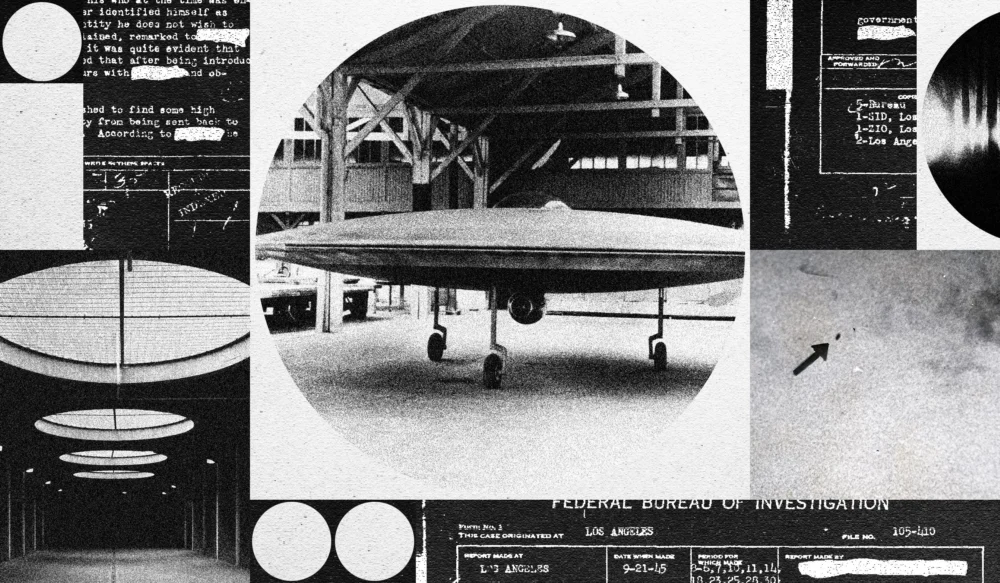
The topic of extraterrestrial life has once again surged into the public consciousness, fueled by recent high-profile comments from two former US presidents. This renewed focus comes at a time when the public is already deeply captivated by the possibility of aliens and unidentified aerial phenomena, further intensifying a long-standing fascination with what lies beyond Earth.
Last month, a media frenzy erupted after former President Barack Obama made a seemingly off-hand remark during a podcast lightning round, stating that aliens were "real." His comment, though later clarified, immediately captured headlines and ignited widespread discussion across social media and traditional news outlets. Obama subsequently explained that his statement was intended to convey the high probability of life existing somewhere in the vastness of the universe, rather than confirming direct contact or visitation. However, the initial furor appeared to inspire a swift reaction from former President Donald Trump. Shortly after Obama’s clarification, Trump announced via a Truth Social post that his administration would "begin the process of identifying and releasing Government files related to alien and extraterrestrial life, unidentified aerial phenomena (UAP), and unidentified flying objects (UFOs)." This declaration promised an unprecedented level of transparency on a subject long shrouded in secrecy and speculation.
The rapid succession of these presidential interventions serves as potent evidence of the enduring and widespread appeal of the alien phenomenon. It demonstrates that the concept of extraterrestrial life transcends political divides and demographic boundaries, captivating individuals from all walks of life. Greg Eghigian, a professor of history and bioethics at Penn State University who specializes in the study of UAP and abduction narratives, highlighted the profound impact of such high-level engagement. "Whenever a high-ranking official—and you can’t get much higher than a president and a former president—even touches on the subject in a passing comment," he noted, "it’s riveting." The very act of a current or former commander-in-chief addressing the topic lends it an undeniable gravity and legitimacy in the public eye.
With the promise of forthcoming government disclosures, the inevitable question on everyone’s mind is: What secrets do these files truly hold? The All-domain Anomaly Resolution Office (AARO), a specialized branch within the Pentagon specifically tasked with tracking and analyzing UAP, has confirmed its involvement. A Defense Department official informed WIRED that AARO is actively coordinating with both the White House and various federal agencies. Their mission is to "consolidate existing UAP records collections and facilitate the expeditious release of never-before-seen UAP information." The official expressed enthusiasm for the initiative, stating, "We welcome the president’s initiative to supercharge these efforts and make more UAP information available to the public as soon as possible."
While the exact contents of the forthcoming files remain speculative until their official release, historical patterns of government disclosures offer some clues about their likely nature. However, a more profound mystery looms: whether any amount of released material could ever truly satiate humanity’s deep-seated and often insatiable curiosity about the potential discovery or contact with lifeforms originating beyond Earth. Anamaria Berea, an associate professor at George Mason University who previously served on NASA’s UAP Independent Study Team, encapsulates this fundamental human drive. "This is a very fundamental existential question that we all have," she explains. "Is it just us, or are there some others out there? If they are out there, are they friendly or not? This is existential to our humanity. It’s beyond science." This profound yearning to understand our place in the cosmos fuels much of the public’s intense interest.
What Do People Want to Be in the Files?
For many, the answer is unequivocally clear: they want definitive proof. This includes tangible evidence such as alien spaceships, alien bodies, or any unequivocal sign of extraterrestrial presence. The pervasive suspicion that the US government has been deliberately withholding such blockbuster revelations has been a staple of popular culture and conspiracy theories for decades, famously amplified by incidents like Roswell. More recently, these long-held beliefs have been reignited and seemingly validated by public testimonies before Congress, most notably from former intelligence official David Grusch, who speculated on the existence of nonhuman biological or technological materials allegedly held by the government. This concept has also been explored in recent documentaries like The Age of Disclosure, further embedding the idea of a cover-up in the public consciousness.
This rich lore surrounding an alleged alien cover-up inevitably sets expectations extraordinarily high for any new government release. Consequently, there is a significant risk that the new disclosures could yield yet another anticlimax in the absence of clear, irrefutable evidence. Adam Frank, a professor of astrophysics at the University of Rochester who specializes in the search for extraterrestrial life, voices this concern directly. He suggests that "unless you are going to actually release real data—by real data I mean the spaceship or the alien body that these congressional testimonies so far have said existed—then it’s just going to be more smoke and mirrors."
Indeed, the bar for public satisfaction is so high that even the presentation of a bonafide spaceship or alien body might not pass muster, given the extraordinary depth and variety of theories that proliferate across various subcultures. Skeptics might question its authenticity, its origin, or even its true purpose. What if it’s not the "right kind" of spaceship, or what if it’s perceived as a deliberate misdirection—a calculated plot by the government to quell public interest while continuing to conceal even more profound truths? Eghigian warns that "even some sort of really remarkable and extraordinary revelation would certainly not satisfy the social-media-verse." He anticipates reactions such as, "Hey, is this another hoax? Is this another game that the government is playing with us? What else are they keeping from us?" Ultimately, he concludes, "I don’t foresee almost any way for this thing to be definitively resolved in terms of the public interest."
What’s Likely in the Files?
If history serves as any guide, a new release of government files will most likely center on detailed accounts of UAP sightings and the various government programs established to track and study them. The US government has a long history of periodically releasing documents and reports stemming from internal investigations into these phenomena.
One of the earliest and most comprehensive such initiatives was Project Blue Book, which operated under the US Air Force from 1952 to 1969. Over its seventeen-year lifespan, Project Blue Book investigated thousands of UFO sightings, meticulously documenting each case and attempting to provide conventional explanations whenever possible. While the project ultimately concluded that the vast majority of sightings could be attributed to misidentification of conventional aircraft, natural phenomena, or hoaxes, a small percentage remained unexplained, continuing to fuel public speculation.
Later disclosures include the 1994 Roswell Report, which revisited the infamous 1947 incident in New Mexico, concluding that the alleged "flying saucer" crash was, in fact, the wreckage of a secret US military balloon project known as Project Mogul. More recently, the Pentagon declassified and officially released a series of UAP videos that had previously been leaked to the public. These videos, often referred to as "Tic Tac," "Gimbal," and "GoFast," captured unexplained aerial maneuvers by objects observed by US Navy pilots, featuring eerie visuals that have defied conventional explanation and significantly reignited mainstream interest in UAP.
Anamaria Berea clarifies that UAP "can be a number of things." She notes that "It’s not like they are all in one bucket. Many of them actually are, in time, cleared up. Some of them, maybe, were balloons, airplanes, or some atmospheric phenomenon that we don’t know about. Then, yes, there is a small category where it is still not clear what they are." It is this small, tantalizing category of unexplained sightings that continues to excite the public imagination.
However, it is crucial to note that despite the mystery surrounding these phenomena, government releases have consistently specified that there is no definitive evidence to suggest these UAP are extraterrestrial in origin. This stance has been reiterated in recent official reports from AARO, which have systematically reviewed historical UAP cases and found no indications of alien visitation or technology.
Occasionally, government disclosures about UAP have included significant admissions, such as instances where authorities deliberately misled citizens about the true nature of certain sightings. A famous example is the CIA report in 1997, which candidly stated that the Air Force had made "misleading and deceptive statements to the public in order to allay public fears and to protect an extraordinarily sensitive national security project." This revelation exposed a history of government deception, further eroding public trust and fueling the belief that more profound truths are being withheld.
In this context, a new release of files may contain more information about the government’s internal protocols for evaluating UAP, records pertaining to its historical public posture toward the topic, or even broader insights into past government campaigns of deception aimed at managing public perception. It is also plausible that new files could contain previously unreleased visuals of UAP, or more granular details about existing UAP sightings, such as enhanced radar data or additional witness accounts. However, much of this potential material will likely remain ineligible for declassification if the Pentagon determines it poses a risk to national security. For instance, the government routinely avoids divulging sensitive locations of military assets, insights into advanced surveillance technologies, or operational methodologies.
Greg Eghigian explains the rationale behind such classifications: "Classifying stuff, a lot of times, is not about the information, per se. By revealing that material, you may reveal something about the way something was found out or something was seen. You’re revealing something about technology, or information processing, and oftentimes that is the concern about classifying material." Given these constraints and historical precedents, Eghigian concludes, "I think in all likelihood, what we’ll see is what we typically see. There’s maybe going to be some new nuggets in there, but I think a lot of people are going to come away very, very unsatisfied."
What’s Probably Not in the Files?
While Trump’s order specifically included files related to "alien life" in addition to UAP and UFOs, the bad news for enthusiasts is that, judging by past releases and current scientific practice, there will probably be nothing genuinely new about alien life itself in these forthcoming files. The good news, however, is that this is largely because alien-related scientific research is already largely available in endless volumes of studies and documents, as there is generally no reason to classify it in the first place.
Adam Frank highlights this transparency: "There’s a huge amount of work that the government has done, all of which is actually transparent about the study of life in the universe. There are a lot of documents people can go find about what the government knows, or think it knows, about extraterrestrial life."
Because the scientific search for alien life, known as astrobiology and the Search for Extraterrestrial Intelligence (SETI), has largely transpired in the open for decades, it is highly unlikely that any government files would suddenly divulge a groundbreaking scientific finding, such as the confirmed detection of an artificial optical beacon from a distant star system, or the undisputed discovery of an otherworldly machine drifting through our solar system. Indeed, as we have observed in recent years, critical scientific debates between researchers over phenomena like the origin of interstellar objects or the assessment of possible biosignatures in exoplanet atmospheres are routinely hashed out in a highly public manner, through peer-reviewed journals, scientific conferences, and public announcements by space agencies like NASA and ESA. This open scientific culture is one key reason Anamaria Berea believes the odds of a vast, decades-long global conspiracy about aliens would be incredibly difficult to maintain, especially within the international scientific community. "It’s not like all the reports come from the US government," she notes, pointing out that governments of the United Kingdom, France, and Brazil, among others, have also released documents related to UAP. "It’s not a US-specific phenomenon. You find it all over the globe. It would be really, really hard to believe that there is such a global conspiracy."
When Are We Going to Find Aliens?
The current scientific search for alien life encompasses an incredibly vast and diverse array of projects, both within our solar system and far beyond. These efforts include ambitious surface missions on neighboring worlds, such as NASA’s Mars rovers (Perseverance, Curiosity) searching for signs of ancient microbial life, and future missions like Europa Clipper and Dragonfly (to Titan) designed to investigate potentially habitable ocean worlds. Telescopes like the James Webb Space Telescope are scrutinizing the atmospheres of exoplanets for possible biosignatures—chemical indicators of life. Additionally, there are ongoing surveys to spot alien artifacts in our solar system, and dedicated SETI programs using radio and optical telescopes to detect technosignatures—signs of advanced technology from other civilizations. Many scientists are also developing new, rigorous ways to investigate UAP and potential technosignatures observed closer to home, aiming to constrain explanations for the most enigmatic sightings with scientific methodology.
Any one of these ongoing, open-source scientific projects holds the potential to finally provide that most irresistible data point in the universe—the unequivocal existence of life beyond Earth. Alternatively, and this is as challenging for many alien enthusiasts to contemplate as it is for scientists to acknowledge, we simply may never definitively know if aliens are "real," in former President Obama’s initial, unclarified sense, whether here in our solar system or out in the vast cosmic wilds. Nevertheless, the scientific search continues undeterred. As Adam Frank succinctly puts it, "If these files don’t actually give us the spaceship or a biological sample, you’re going to have to actually go out and do the science anyway." The fundamental quest for cosmic companionship remains a scientific endeavor, irrespective of government disclosures.