 11
11
As the global demand for artificial intelligence continues its unprecedented surge, driving the construction of colossal, energy-intensive data centers, developers are increasingly turning to a housing solution popularized during previous resource booms: temporary villages known as "man camps." These self-contained communities, historically used to house workers in remote oil fields, are now becoming critical infrastructure for the rapid deployment of AI’s physical backbone. The shift underscores the immense logistical challenges and rapid timelines associated with building the next generation of digital infrastructure.
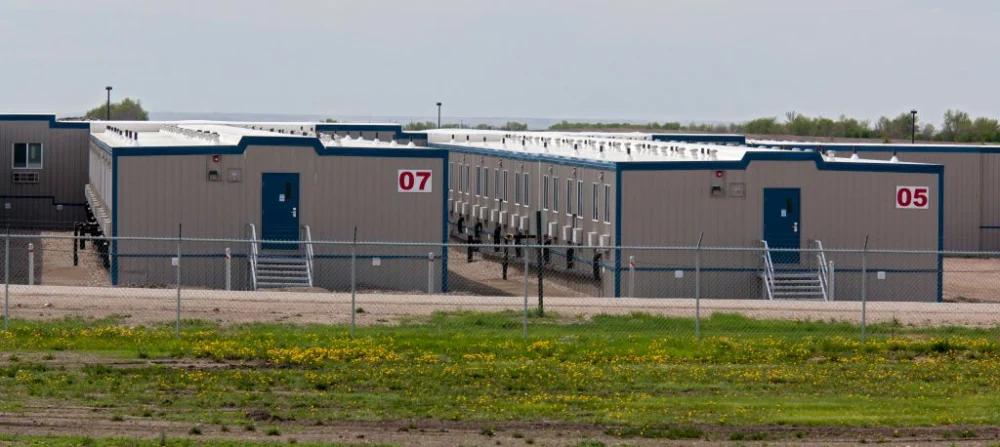
Posted on March 8, 2026, at 9:30 AM PDT, this burgeoning trend highlights how the high-tech frontier of artificial intelligence is creating demand for established, yet often controversial, solutions to workforce accommodation. The need to house hundreds, or even thousands, of temporary workers in often remote or undeveloped locations has made these modular, quickly deployable camps an indispensable asset for tech giants and their contractors. The image accompanying this report, depicting housing for oil workers in North Dakota’s oil boom, vividly illustrates the lineage of these specialized accommodations, now repurposed for the digital age.
The concept of the "man camp" gained prominence and widespread adoption as a pragmatic solution for housing a transient, largely male workforce in areas lacking conventional residential infrastructure. Industries such as oil and gas, particularly during the boom periods in places like the Bakken Formation in North Dakota or the Permian Basin in West Texas, relied heavily on these temporary settlements. These camps offered a centralized, efficient way to provide lodging, sustenance, and basic amenities to workers who often toiled long hours in challenging conditions, far from established towns and cities. The model prioritizes functionality, scalability, and rapid deployment, allowing companies to quickly mobilize large workforces for projects that may last for months or even years.
A prime example of this evolving trend is the conversion of a Bitcoin mining facility in rural Dickens County, Texas, into a massive 1.6 gigawatt AI data center. Such a facility represents a significant investment in computational power, designed to support the sophisticated algorithms and vast datasets required by advanced AI models. Bloomberg reports that for this ambitious undertaking, workers are residing in purpose-built, temporary housing units. These "gray housing units" are more than just rudimentary shelters; they are part of a comprehensive camp environment designed to support worker morale and well-being in an isolated setting.
The Dickens County camp offers a range of amenities aimed at making life more comfortable for its inhabitants. Workers have access to a fully equipped gym, a laundromat, and various game rooms for recreation and downtime. A central cafeteria provides regular meals, with reports even mentioning steaks grilled on-demand, reflecting an effort to provide a higher quality of life than might typically be associated with temporary worker housing. These facilities are crucial for retaining skilled labor in remote locations, where workers are often far from their families and conventional urban conveniences. The provision of such amenities helps mitigate the psychological and physical tolls of demanding, isolated work.

The company at the forefront of this burgeoning sector is Target Hospitality, which has secured multiple contracts totaling $132 million to construct and operate the Dickens County camp. This facility alone is projected to house more than 1,000 workers, underscoring the scale of the human resources required for these massive infrastructure projects. Target Hospitality, a company with extensive experience in providing remote workforce accommodations primarily for the energy sector, now views the U.S. data center construction boom as its most significant growth opportunity.
Troy Schrenk, Target Hospitality’s chief commercial officer, articulated this strategic pivot, describing the demand as "the largest, most actionable pipeline I’ve ever seen." This statement reflects a profound shift in the company’s focus, recognizing the immense financial potential within the rapidly expanding tech infrastructure market. The AI data center boom is not merely about servers and fiber optics; it’s also about a vast ecosystem of construction, logistics, and support services, of which temporary housing is a critical, high-value component. For Target Hospitality, their established expertise in rapid deployment and managing complex remote sites positions them uniquely to capitalize on this new wave of industrial expansion.
However, Target Hospitality’s operations extend beyond providing amenities for tech workers, and the company is not without its controversies. The company also owns and operates the Dilley Immigration Processing Center in Texas, a facility that holds families detained by Immigration and Customs Enforcement (ICE). This dual role, spanning critical infrastructure development and sensitive humanitarian operations, presents a complex profile for the company.
Court filings related to the Dilley facility have brought forth serious allegations regarding the conditions within the center. These allegations include reports of food containing worms and mold, as well as instances where children allegedly suffered due to a lack of accommodation for allergies and special diets. Such claims raise significant ethical and reputational questions for a company whose business model relies on providing comprehensive care and accommodation. The juxtaposition of providing "steaks on-demand" at an AI data center camp while facing allegations of inadequate food quality at an immigration detention facility highlights a stark contrast in operational standards and public perception.
The broader implications of the AI infrastructure boom and its reliance on temporary housing solutions are multifaceted. While providing essential housing for workers, these large-scale construction projects in rural areas can strain local resources, including water, power, and road networks. The transient nature of the workforce also presents challenges for local communities, potentially leading to fluctuating populations and demands on local services. Environmental concerns also loom large, given the immense energy and water requirements of hyperscale data centers.
As the AI revolution continues to unfold, driving unprecedented investment in digital infrastructure, the demand for specialized, rapidly deployable solutions like "man camps" is expected to persist and even grow. The evolution of these camps, from basic shelters for oil roughnecks to more sophisticated, amenity-rich villages for tech builders, mirrors the shifting landscape of industrial development. Companies like Target Hospitality stand to gain significantly from this trend, but they also face increased scrutiny regarding their broader operational practices and corporate responsibility across all their diverse ventures. The story of AI’s physical footprint is not just one of silicon and software, but also of the human effort and logistical ingenuity required to build its foundation, often in remote and challenging environments.