 11
11
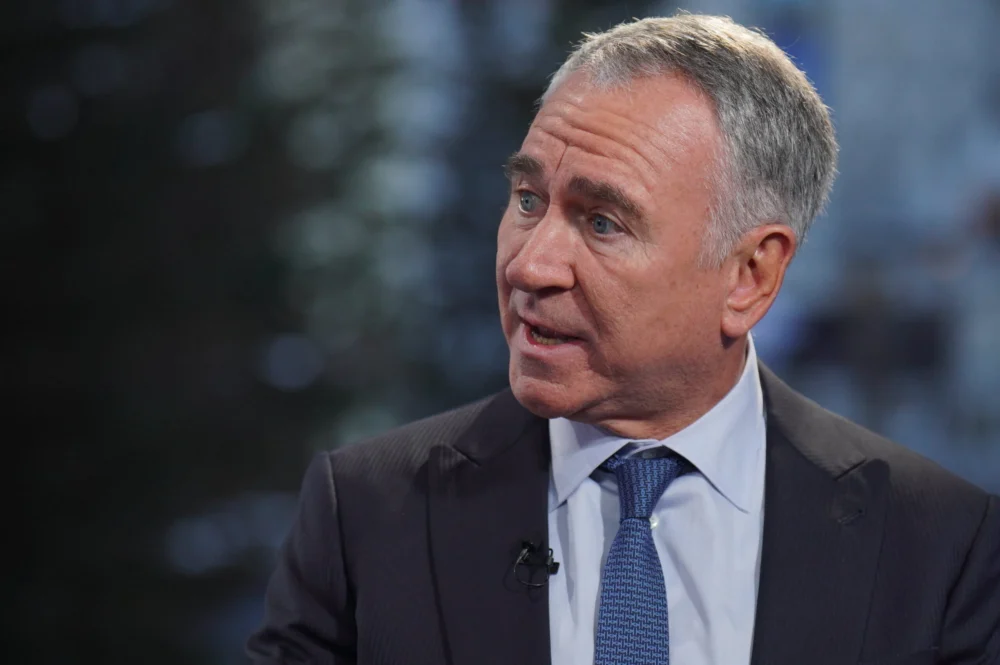
In a month characterized by significant market turbulence, driven by the dual forces of artificial intelligence disruption and escalating geopolitical uncertainty, Ken Griffin’s Citadel LLC has reported positive returns across its diverse range of hedge funds. The prominent investment firm, led by billionaire investor Ken Griffin, successfully navigated the volatile landscape of February, a period that saw asset prices whipsawed by macroeconomic concerns and the accelerating impact of AI technologies.
Citadel’s flagship multistrategy fund, the Wellington fund, demonstrated robust performance by rising 1.9% in February. This positive momentum contributed to a year-to-date gain of 2.9%, according to a source familiar with the matter who requested anonymity due to the private nature of the information. The breadth of this performance was a key highlight, with all five of Citadel’s core strategies—commodities, equities, fixed income, credit, and quantitative—concluding the month in positive territory. This widespread success across distinct asset classes underscores the firm’s diversified investment approach and its ability to identify opportunities across various market segments.
Beyond the flagship fund, other Citadel strategies also posted gains. The tactical trading fund advanced by 1.5% in February, further bolstering its year-to-date return to an impressive 3.5%. This segment of Citadel’s operations appears to be capitalizing on short-term market movements and strategic adjustments. The equities fund, while experiencing a more modest increase, still achieved a positive return of 1.0% for the month, bringing its year-to-date gain to 2.2%. This indicates a steady, albeit less pronounced, upward trend in its equity holdings. Meanwhile, the global fixed-income fund demonstrated resilience with a climb of 1.6% in February, contributing to a year-to-date increase of 2.9%. The performance of the fixed-income strategy suggests an ability to generate returns even within a potentially challenging interest rate environment.
The broader market context for February presented a stark contrast to Citadel’s positive performance. The S&P 500, a key benchmark for the U.S. equity market, experienced a decline of 0.9% during the month. This downturn was significantly influenced by renewed selling pressure in shares linked to artificial intelligence and software companies. Mounting investor apprehension surrounding the potential for automation to disrupt established business models and precipitate widespread layoffs cast a shadow over the technology sector. These concerns about the economic implications of AI, including potential job displacement and shifts in industry structures, dampened overall investor sentiment.
Adding to the market’s instability, a significant geopolitical event further pressured equity markets. The reported attack on Iran by the United States and Israel in early March triggered a surge in oil prices, exacerbating existing economic anxieties and contributing to renewed selling pressure in global markets. This confluence of factors—technological disruption and heightened geopolitical risk—created a challenging environment for investors, making Citadel’s ability to generate positive returns particularly noteworthy.
Citadel itself declined to provide an official comment on the performance figures. As of February 1, the firm reported overseeing a substantial $66 billion in assets under management. This significant asset base underscores Citadel’s position as a major player in the global investment landscape and highlights the scale of its operations and the impact of its investment strategies.
The performance of Citadel’s funds in February offers a glimpse into the firm’s strategic acumen and its capacity to adapt to a dynamic and increasingly complex global financial environment. The positive returns across its core strategies, in the face of significant headwinds from AI-driven market shifts and geopolitical instability, suggest a well-diversified portfolio and a sophisticated risk management approach. The broader market’s struggles, particularly within the technology sector impacted by AI concerns and the broader economic anxieties stoked by geopolitical events, further underscore the relative strength demonstrated by Griffin’s hedge funds. The firm’s ability to not only weather the storm but to generate positive returns across its diverse strategies positions it favorably as market participants continue to grapple with the evolving implications of artificial intelligence and the ever-present uncertainties of the global geopolitical landscape. The ongoing dialogue surrounding AI’s impact on employment and economic structures, coupled with the volatility introduced by international conflicts, will undoubtedly remain key themes for investors in the months ahead. Citadel’s consistent performance in such an environment will be closely watched as a barometer of successful navigation through these turbulent times.