 11
11
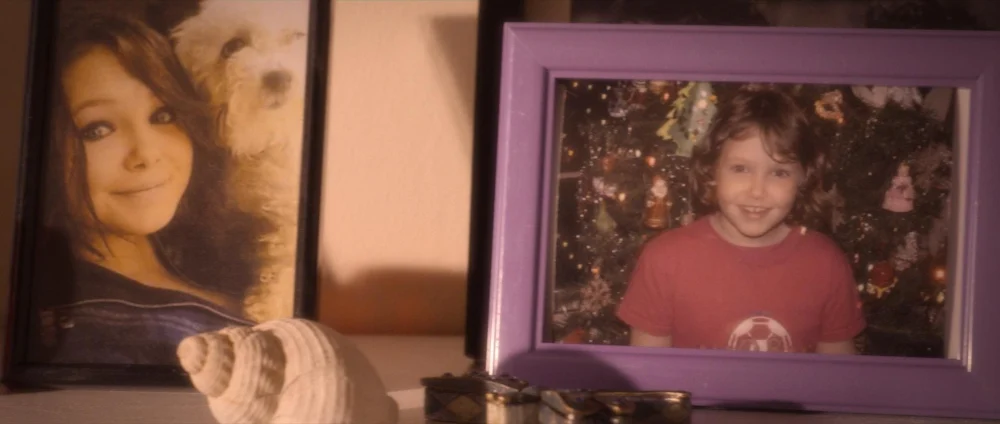
In 2012, a seemingly ordinary night in Star City, West Virginia, shattered the innocence of a community and brought to light a horrifying truth about teenage friendships. Sixteen-year-old Skylar Neese, a vibrant high school student, slipped out of her home, expecting a typical late-night adventure with two of her closest friends. Tragically, it was the last time she would be seen alive. Her killers were not strangers, but the very girls she trusted most. This case, which garnered national attention at the time, is now back in the spotlight with "Friends Like These: The Murder of Skylar Neese," a compelling new three-part docuseries on Hulu. The series meticulously reconstructs the events leading to Skylar’s disappearance and murder, while simultaneously attempting to unravel the complex ‘why’ behind such an unthinkable act.
Ahead of the series premiere, insights from key figures involved in the documentary and the original investigation shed light on its unique approach. Director Claire Titley, retired FBI special agent Rob Ambrosini, and Ariah Johnson, one of Skylar’s friends, offered perspectives that underscore the enduring relevance of Skylar’s story in an increasingly digital world. Their discussions revealed several profound themes, ranging from the power of a victim’s digital legacy to the unforeseen impact of nascent social media on adolescent dynamics.
Giving Skylar Her Voice Back Through a Digital Archive
One of the most significant challenges in true crime narratives is often the reduction of victims to mere plot devices, their lives summarized by names and dates, while the focus invariably shifts to the perpetrators. Director Claire Titley expressed a deliberate intention to subvert this common trope. "Too often you have films where the victim can very easily become kind of like a plot device," Titley explained. "It was really important for us to give her her voice back and allow her some agency—to have control of her own story again."
This crucial objective was made possible by Skylar Neese’s extensive digital footprint. As a teenager in 2012, Skylar, like many of her peers, was a prolific user of social media. Her life was meticulously, if unknowingly, documented through a stream of tweets, text messages, and online posts. Skylar’s parents, in a poignant act of trust and remembrance, granted the filmmakers access to this treasure trove of personal data. The docuseries, therefore, integrates Skylar’s actual words throughout, offering an intimate and authentic portrayal of who she was. Viewers are not merely told about Skylar; they hear directly from her, experiencing her humor, loyalty, and the typical rebellious spirit of a 16-year-old on the cusp of adulthood. This unique narrative choice transforms the documentary, allowing Skylar to emerge as a fully realized individual, rather than a passive subject of a tragic event. She would have turned 30 just weeks before the series premiered, a stark reminder of the future she was denied.
Ariah Johnson, a friend of Skylar’s, echoed the sentiment of wanting to preserve Skylar’s true identity. "I want people to see that Skylar was a person," Johnson stated simply and powerfully. "She was the kind of person who would stand up for you any chance she got. I want them to see how great of a person she was." This commitment to portraying Skylar’s humanity is a cornerstone of "Friends Like These," distinguishing it from many other true crime explorations.
Social Media: An Escalation Factor in a World Without Guardrails
By 2012, social media platforms were deeply woven into the fabric of teenage life. Yet, adults, the platforms themselves, and established institutions largely lacked a framework for comprehending the developmental and psychological implications of this new digital landscape. The interview revealed that while social media wasn’t deemed the cause of Skylar’s murder, it undeniably served as a significant "escalation factor" in the unraveling of her friendships.
Ariah Johnson vividly described how teenagers of that era utilized platforms like Twitter. "We used social media almost as our own diary," she recounted. "If you’re having a bad day, you’re going to go online and say ‘I hate everybody, my life is the worst.’ That was just normal." However, the critical distinction between a traditional paper diary and a public Twitter feed is immense. A paper diary remains private, its contents unseen and unchallenged. Social media, conversely, is inherently public and interactive. The responses—whether validating or hostile—possess the power to dramatically amplify whatever emotions an individual is already experiencing. Johnson articulated this feedback loop with clarity: "If somebody goes on there and says, ‘You’re right, today is awful’—then I’m like, yeah, today is awful. And if somebody says it could be worse, that makes me feel even worse."
Director Claire Titley directly linked this phenomenon to the deterioration of the bond between Skylar and her two friends. The public nature of their disputes, played out in digital spaces, intensified conflicts that might have otherwise dissipated in private communication. Titley emphasized that this generation of teenagers was essentially "experiments" in a new social paradigm. "Teenagers now have social media training. Their parents know what they’re looking for. Nobody was giving them any warnings," she observed. This absence of "guardrails" meant that adolescents were navigating complex emotional terrain in a highly public and reactive environment without guidance or foresight.

The core dynamic described—where social media validates and amplifies existing emotions—is not exclusive to teenagers. It is, in fact, fundamental to how these platforms operate for users of all ages. However, adolescents experience this dynamic without the benefit of the context or emotional regulation that typically accompanies maturity. In 2012, this was particularly acute, as the digital world was still being defined, and its users, especially the young, were figuring it out in real time. The conflict that tragically consumed Skylar’s life unfolded in a digital space largely invisible to adults, a situation that, despite advancements, remains a reality for many teenagers today as they constantly migrate to new, less-monitored platforms.
The Polygraph as a Conversation Tool, Not a Definitive Lie Detector
Retired FBI special agent Rob Ambrosini offered a particularly insightful perspective on the use of polygraphs in criminal investigations, a technology often viewed with skepticism due to its controversial admissibility in many courts and the possibility of manipulation. Ambrosini described its function not primarily as a definitive truth-detection device, but rather as a strategic tool to facilitate dialogue and expose inconsistencies.
"It’s really used as an avenue to verify information," he explained. "Ultimately, it was kind of like a launching pad for having a conversation. Let’s not talk about the test now. I can see there’s a problem here. Let’s talk about why." In Skylar’s case, the polygraph served to highlight discrepancies in the narratives presented by the suspects—changes in the reported time of Skylar’s drop-off, shifts in location details. These inconsistencies provided investigators with crucial threads to pull, guiding their inquiry. It was less about the machine definitively signaling a lie and more about the process of undergoing the test revealing the inherent difficulty in maintaining a fabricated story under pressure.
Ambrosini also referenced the "Hawthorne effect," a well-documented psychological phenomenon where individuals alter their behavior when they know they are being observed. This principle extends to interview rooms. Initially, suspects often present as guarded, carefully crafting their responses. However, as the interview progresses and rapport is established, they gradually become less conscious of being monitored, speaking more naturally. It is typically during this phase, when genuine conversation takes over, that the most valuable and revealing information emerges. This blend of subtle psychological observation and strategic questioning underscores the nuanced approach of experienced investigators.
The Elusive "Why": Beyond the Whodunit
"Friends Like These" is not a typical whodunit. The facts of Skylar Neese’s murder are known; the perpetrators were identified and convicted. The series deliberately aims to tackle the far more complex and elusive question: why. Director Claire Titley openly acknowledged the inherent difficulty in finding a definitive answer.
"There are no easy answers in terms of motive," she admitted. "That’s one of the most interesting and frustrating things about this case—from law enforcement, from her friends, from her family." This lack of a clear, simple motive is precisely what makes Skylar’s story so chilling and resonant. It challenges viewers to look beyond conventional explanations and delve into the intricate psychological and social dynamics that can fester within seemingly close relationships.
Titley expressed a hope that viewers will gain a more specific understanding: a genuine recollection of the intense emotional landscape of being 16. At that age, friendships are often everything, emotions are magnified, and decisions that appear patently bad in hindsight can feel utterly compelling in the moment. When these volatile conditions are combined with the then-new, poorly understood technology of social media—platforms inherently designed to maximize engagement, often at the expense of well-being—the environment becomes genuinely dangerous, even if its hazards were not recognized at the time.
The unsettling truth is that these conditions persist. Skylar Neese’s tragic story unfolded in 2012, yet the technological and social factors that shaped it have not vanished. Indeed, they have only grown more sophisticated. Teenagers continue to navigate an ever-evolving digital world, often a step ahead of adult comprehension. The platforms they use remain optimized for engagement, frequently prioritizing interaction metrics over the mental and emotional health of their young users. Skylar Neese’s story serves as a poignant, enduring warning, urging a deeper understanding of the complex interplay between adolescent development, intense social dynamics, and the powerful, often unseen, forces of the digital age.