 11
11
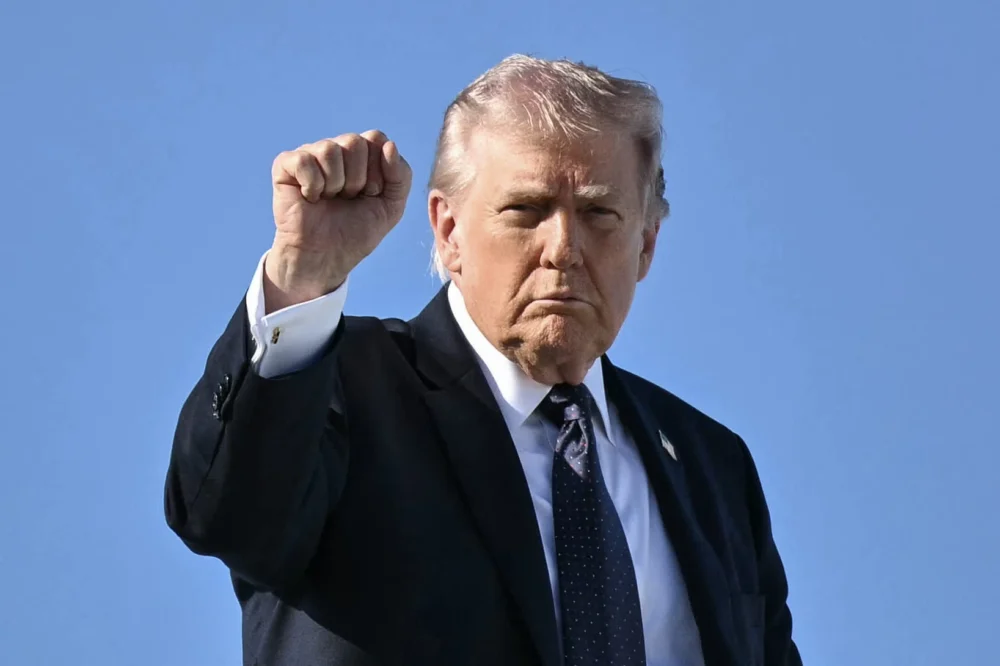
President Donald Trump has publicly aligned himself with cryptocurrency firms in their contentious dispute with U.S. banks over the ability of these digital asset companies to offer interest-like returns on stablecoins. The President’s intervention, delivered via a social media post late Tuesday, intensifies pressure on traditional financial institutions to concede on this critical point, which is currently hindering the passage of the Clarity Act in Congress. This legislative effort is intended to establish a regulatory framework for stablecoins, serving as a companion to the Genius Act approved last year.
In his statement, President Trump declared, "The Genius Act is being threatened and undermined by the Banks, and that is unacceptable." He further asserted, "They need to make a good deal with the Crypto Industry because that’s what’s in best interest of the American People." This endorsement had an immediate impact on the stock market, with Coinbase shares experiencing a surge of as much as 11% in early trading on Wednesday. Conversely, shares of major banking institutions JPMorgan Chase and Bank of America saw declines of less than 1%.
While President Trump’s backing could potentially influence Republican members of Congress, where the GOP holds the majority, the ultimate impact on the bill’s legislative journey remains uncertain. This development also brings to the forefront renewed questions regarding potential conflicts of interest, given reports indicating that the President and his family have amassed significant wealth, estimated in the hundreds of millions of dollars, through investments in entities including the crypto platform World Liberty Financial.
The core of the industry-wide disagreement revolves around whether crypto companies, such as Coinbase, should be permitted to offer yields on stablecoins. Proponents within the crypto sector view this as a consumer-centric innovation designed to enable individuals to generate returns on their idle digital assets. However, banks have expressed profound concerns, warning that such a competing financial product could divert trillions of dollars from their industry.
Executives from JPMorgan Chase and Bank of America, respectively the largest American lenders by asset size, have cited a Treasury Department study. This report indicated that U.S. banks could potentially experience a loss of up to $6.6 trillion in deposits if stablecoins were to offer competitive yields. Such a significant outflow of funds could have destabilizing effects on some financial institutions, particularly smaller banks, and could diminish the available capital for business loans nationwide.
Jamie Dimon, CEO of JPMorgan Chase, articulated the banking industry’s perspective in a recent interview with CNBC’s Leslie Picker on Monday. He stated, "It can’t be, you have these people doing one thing without any regulation, and these people doing another." Dimon cautioned, "If you do that, the public will pay. It will get bad."
In the preceding months, President Trump had facilitated a series of White House meetings aimed at mediating a resolution between the crypto industry and banking representatives. Despite these efforts, sources with knowledge of the discussions indicated that the banks had not shown a willingness to compromise.
The President’s latest public statement signifies a clear shift, as he is now explicitly lending his considerable political weight to the side of the cryptocurrency industry. President Trump concluded his social media post with the emphatic statement, "Americans should earn money on their money. This industry cannot be taken from the People of America when it is so close to becoming truly successful." This strong declaration underscores his belief in the potential of the crypto sector and his desire to see it flourish, free from what he perceives as undue obstruction from established banking interests.
The stablecoin yield issue has become a central battleground in the ongoing debate over cryptocurrency regulation in the United States. Stablecoins, designed to maintain a stable value relative to a fiat currency or other assets, have gained significant traction. The ability to offer yields on these stablecoins presents a compelling proposition for consumers seeking higher returns than traditional savings accounts, a prospect that directly challenges the business model of incumbent banks.
The Clarity Act, which has been stalled in Congress, aims to provide a clear legal and regulatory framework for stablecoins. Its passage is seen by many in the crypto industry as essential for fostering innovation and ensuring consumer protection. However, the contentious nature of the stablecoin yield provision has created a significant hurdle, with banks arguing that it poses systemic risks to the financial system.
The Treasury study referenced by bank executives highlights the potential magnitude of the disruption. A substantial withdrawal of deposits from banks could impact their liquidity and their capacity to lend, potentially leading to a contraction in credit availability for businesses and individuals. This concern is particularly acute for smaller community banks that may have a higher concentration of uninsured deposits, which are more susceptible to rapid withdrawal.
President Trump’s intervention injects a powerful political dynamic into the debate. His alignment with the crypto industry could galvanize support among a growing segment of the electorate that is interested in digital assets and concerned about the influence of large financial institutions. It also places lawmakers, particularly Republicans who often align with the President, in a position where they may need to consider his stated preferences when voting on the Clarity Act.
The White House meetings that preceded this public statement were intended to bridge the divide between the two industries. However, the persistent disagreement suggests that the fundamental interests and perceived risks associated with stablecoin yields remain significantly divergent. The banks’ insistence on regulatory parity and their concerns about financial stability appear to be at odds with the crypto industry’s push for innovation and its emphasis on consumer choice and market competition.
The President’s assertion that "Americans should earn money on their money" reflects a populist sentiment that resonates with many who feel that the traditional financial system has not adequately served their needs for investment returns. His framing of the issue as one of preventing the "People of America" from being denied success in a nascent industry further amplifies this message.
The implications of this endorsement extend beyond the immediate legislative battle. It signals a potential shift in the Trump administration’s approach to the cryptocurrency sector, moving from a more cautious stance to one of active support for its growth and integration into the broader financial landscape. The future of stablecoin regulation and the broader trajectory of digital assets in the U.S. may well be shaped by the political forces that President Trump has now brought to bear on this high-stakes debate.