 11
11 1
1 2
2 3
3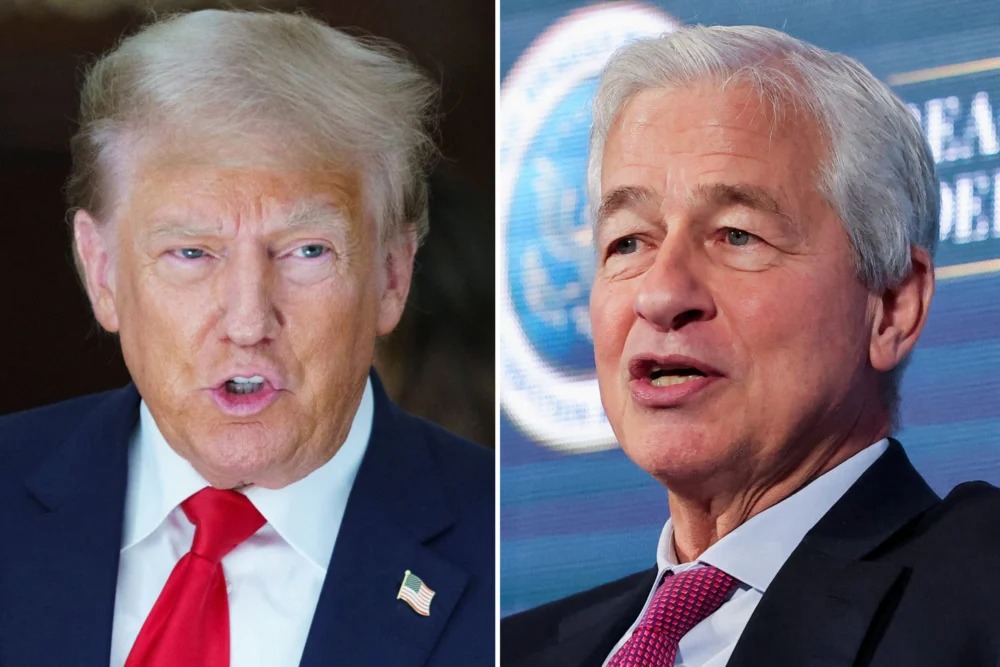
JPMorgan Chase CEO Jamie Dimon stated on Monday that President Donald Trump’s lawsuit seeking $5 billion in damages for the closure of his accounts is "without merit," yet he expressed empathy for the former president’s frustration regarding the situation. Trump has accused JPMorgan Chase and other financial institutions of terminating his accounts for political motivations, a move his conservative supporters have characterized as discriminatory.
"The case has no merit," Dimon told CNBC’s Leslie Picker in an interview conducted on the sidelines of a JPMorgan conference in Miami. However, he added, "But I agree with them. They have the right to be angry. I’d be angry, too. Like, why is a bank allowed to do that?"
Dimon explained that banks are compelled to close accounts of individuals to adhere to regulatory requirements. These regulations, he elaborated, are designed to prevent financial institutions from incurring reputational risk, which could lead to significant penalties from regulators. "We debank people because it causes legal, regulatory risk for us," Dimon said. "It’s been much easier for a bank to say, ‘I’m not taking the risk, let them go bank elsewhere.’"
The lawsuit against Dimon and JPMorgan Chase was filed in January, as part of a broader legal campaign initiated by Trump following his return to public life last year. His legal challenges extend beyond this instance; he has also filed suits against Capital One over similar "debanking" claims, against various media outlets for alleged defamation, and even against the Internal Revenue Service (IRS) concerning the leak of his tax information.
In recent court filings, JPMorgan Chase acknowledged that it had closed a number of accounts associated with Donald Trump in the weeks following the January 6, 2021, Capitol attack. While no specific statute explicitly mandates banks to sever ties with clients due to reputational risk, the financial industry operates within a complex web of regulations and guidance. This framework creates a substantial risk for lenders who engage with certain clients, making it a more prudent business decision to cease such relationships.
The legal action against JPMorgan Chase, which stands as the world’s largest bank by market capitalization, places Jamie Dimon in a particularly challenging position. As one of the most vocal and influential leaders in the financial sector, Dimon finds himself needing to defend both himself and his institution while simultaneously navigating the delicate situation of not further antagonishing President Trump. Trump’s influence, capable of moving markets through social media pronouncements, adds another layer of complexity to Dimon’s public statements.
Furthermore, the financial industry is currently in a phase of benefiting from deregulation efforts championed by Trump appointees. These initiatives are aimed at enhancing bank profitability and reducing capital reserve requirements for potential losses. Dimon expressed his hope that the ongoing situation would be resolved favorably. "There are a lot of misunderstandings here," Dimon remarked. "Hopefully the law will change, and hopefully it’ll get sorted out."
The context of Trump’s lawsuit highlights a growing tension between financial institutions’ compliance obligations and their relationships with high-profile or politically charged clients. Banks, under increased scrutiny from regulatory bodies, have become more risk-averse, often opting to close accounts that could potentially attract negative attention or regulatory penalties. This approach, while protecting the banks from financial and legal repercussions, can lead to accusations of political bias and discrimination from the affected individuals and their supporters.
The lawsuit against JPMorgan Chase is significant not only because of the parties involved but also due to the substantial damages sought. A $5 billion claim represents a considerable financial threat, underscoring the seriousness with which Trump views the account closures. The legal battle is expected to involve complex arguments concerning contract law, banking regulations, and potentially First Amendment rights, although the latter is unlikely to be the primary legal basis for the case.
Dimon’s public statements, acknowledging the lack of legal merit in Trump’s suit while simultaneously validating the former president’s emotional response, reflect a strategic attempt to manage the public relations fallout. By understanding Trump’s anger, Dimon may be seeking to de-escalate the situation and encourage a more conciliatory approach. However, the legal proceedings are likely to continue, with both sides presenting their arguments in court.
The broader implications of this lawsuit extend to the entire financial industry. If banks are perceived as being able to arbitrarily close accounts based on political considerations, it could erode public trust and create uncertainty for businesses and individuals. Conversely, if banks are seen as being forced to maintain relationships with clients who pose significant reputational or regulatory risks, it could lead to a less stable financial system.
The reference to the January 6th Capitol attack as a catalyst for account closures by JPMorgan Chase is a critical piece of information. This event, a highly contentious and politically charged incident, likely played a significant role in the bank’s decision-making process. Banks often have internal policies that guide their actions in response to such events, particularly when they involve potential legal or reputational ramifications.
The industry’s reliance on "reputational risk" as a justification for account closures is a key point of contention. While not explicitly defined in legislation, this concept is a widely accepted factor in risk management within the financial sector. Regulators often issue guidance and warnings that implicitly encourage banks to avoid clients who could damage their standing or lead to investigations. This creates a gray area where banks must make difficult judgment calls, often leading to situations like the one involving President Trump.
Dimon’s hope for a change in the law suggests that he believes the current regulatory framework is too restrictive or too ambiguous, forcing banks into difficult positions. He may be advocating for clearer guidelines or a less punitive approach to reputational risk management. The outcome of this lawsuit could have a significant impact on how banks approach client relationships in the future, particularly in the context of politically sensitive situations.
The lawsuit also underscores the power and influence that large financial institutions wield. Their decisions about who they do business with can have profound consequences for individuals and businesses. The ability of a bank to "debank" a customer can effectively cut them off from essential financial services, impacting their ability to operate and thrive. This power comes with a significant responsibility, and the ongoing legal battles highlight the challenges of balancing that responsibility with the need to manage risk and comply with regulations.
The interview with Leslie Picker provides a direct window into Dimon’s perspective on a highly publicized and politically charged issue. His comments, carefully worded to acknowledge Trump’s anger while firmly asserting the lack of legal basis for the lawsuit, are indicative of the complex communication strategies employed by major corporate leaders in such situations. The goal is often to appease powerful figures, defend the company’s actions, and maintain a degree of public goodwill, all while navigating ongoing legal disputes.