11
11
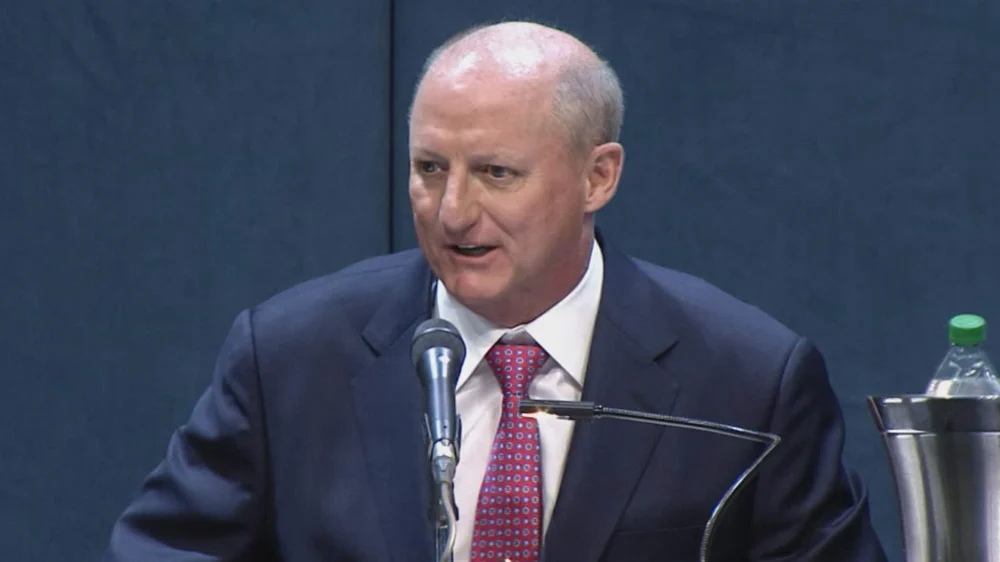
In his inaugural annual shareholder letter as Chief Executive Officer of Berkshire Hathaway, Greg Abel has delivered a resounding message of continuity, aiming to reassure investors that the conglomerate’s deeply ingrained culture of financial conservatism and disciplined investing, meticulously cultivated by Warren Buffett, will endure "into perpetuity." The 63-year-old executive, who officially succeeded the legendary 95-year-old Buffett as CEO at the beginning of 2026, with Buffett remaining as Chairman, articulated a clear framework for his leadership, emphasizing the preservation of the company’s robust financial strength and the unwavering maintenance of strict capital discipline.
"I am honored by our Board’s decision to appoint me CEO of Berkshire and humbled to succeed Warren as I write my first annual letter to you," Abel stated in the missive, which accompanied Berkshire’s annual report released on Saturday, alongside the company’s quarterly earnings. He candidly acknowledged the immense challenge of following Buffett’s illustrious tenure, remarking, "Warren is obviously a very hard act to follow."
Abel’s letter signaled a commitment to evolution rather than radical change as he assumes the helm. He outlined the foundational values that will guide his stewardship of the conglomerate, prioritizing the maintenance of a "fortress-like balance sheet" to ensure Berkshire’s bedrock is never compromised. This financial impregnability, he explained, is achieved through the judicious and sparing use of debt. "Our substantial liquidity enables us to meet our obligations even under the most adverse conditions and to respond swiftly when opportunities arise," Abel affirmed. Beyond financial fortitude, he also highlighted the importance of Berkshire’s decentralized management model and its long-standing "reputation for integrity" as cornerstones of its operational philosophy.
A significant point of focus in Abel’s address was Berkshire’s substantial cash reserves, which stood at an impressive $373.3 billion at the close of 2025. Abel characterized this considerable cash pile not as a sign of stagnation or a retreat from investing, but rather as strategic "dry powder." This financial cushion, he explained, empowers the company to act decisively and opportunistically when compelling prospects emerge, without jeopardizing its inherent resilience.
However, Abel also confirmed that Berkshire would continue its long-standing policy of not paying dividends to shareholders. He elaborated on this stance, stating, "Our approach to cash dividends continues to be that Berkshire will not pay dividends so long as more than one dollar of market value for shareholders is reasonably likely to be created by each dollar of retained earnings." He noted that this policy is subject to an annual review by the board.
Regarding the oversight of Berkshire’s extensive stock portfolio, Abel underscored that the conglomerate applies the same disciplined framework irrespective of whether it is acquiring an entire business, investing in publicly traded companies, or repurchasing its own stock. "We will assess value carefully, act patiently, and hold for the long term – preferably forever," he wrote, emphasizing a philosophy of enduring ownership.
He further indicated that Berkshire’s equity portfolio will remain concentrated in a select group of American companies that the company anticipates will compound in value over decades. Among these key holdings, Abel specifically mentioned Apple, American Express, Coca-Cola, and Moody’s. Notably absent from this list was Bank of America, which had been Berkshire’s third-largest holding at the end of 2025, suggesting a potential shift in strategic emphasis. Abel reaffirmed the commitment to this concentrated approach with limited trading activity, while acknowledging that Berkshire would "significantly adjust" a position if long-term economic prospects were to change substantially.
In settling a key question surrounding the leadership transition, Abel confirmed that he would directly assume responsibility for overseeing the equity portfolio. Ted Weschler will continue to manage approximately 6% of the portfolio, including investments previously managed by Todd Combs. Combs, an investment manager and former Geico CEO, recently departed Berkshire to join JPMorgan. "At Berkshire, equity investments are fundamental to our capital allocation activities; responsibility ultimately resides with me as CEO," Abel declared.
Abel, a Canadian executive born in Edmonton, Alberta, brings a wealth of experience to his role, having accumulated a 25-year tenure at Berkshire Hathaway. He joined the conglomerate in 2000 when it acquired MidAmerican Energy, where he eventually ascended to the CEO position in 2008. Prior to his tenure at MidAmerican, Abel played a pivotal role at CalEnergy, transforming the then-small geothermal firm into a diversified energy business.
He underscored that he views his CEO position as a long-term commitment, with the intention of stewarding Berkshire for decades to come. "Our owners’ time horizon extends beyond the tenure of any individual CEO," he stated. "I will not be your CEO for the next 60 years as simple arithmetic makes that – shall we say – an ambitious plan. However, 20 years from now, when I will have just a fraction of the tenure that Warren had, my intention is that you – or your descendants – will be proud that your company is even stronger."
Abel also provided an update on Warren Buffett’s continued involvement, noting that Buffett remains actively engaged as Chairman, coming into the office five days a week and providing ongoing input.
Finally, Abel clarified Berkshire’s approach to public communications, making it clear that the company would not adopt the typical quarterly earnings call cadence favored by Wall Street. "We concentrate on quality, not frequency," he wrote. "If a significant issue arises, you will hear from me, but it will not be through quarterly commentary, given our long-term horizon." This statement reinforces Berkshire’s enduring focus on long-term value creation over short-term market reactions.