11
11
For the past week, the global engineering community has been in a frenzy, meticulously dissecting a profound thread shared on X by Boris Cherny. As the visionary creator and head of Claude Code at Anthropic, a leading AI safety and research company, Cherny’s insights are not merely casual observations but a strategic blueprint for the future of software development. What began as a simple disclosure of his personal terminal setup has rapidly escalated into a viral manifesto, sparking widespread discussion and prompting industry insiders to label it a transformative "watershed moment" for the burgeoning startup. This sudden surge of attention positions Anthropic at the forefront of the AI-powered development revolution, potentially mirroring the impact of OpenAI’s ChatGPT moment.
The immediate and enthusiastic reception from the developer community underscores the significance of Cherny’s revelations. Jeff Tang, a prominent and influential voice among developers, explicitly stated, "If you’re not reading the Claude Code best practices straight from its creator, you’re behind as a programmer." Echoing this sentiment, industry observer Kyle McNease went further, declaring that with Cherny’s "game-changing updates," Anthropic is "on fire," indicating a rapid acceleration in its market presence and technological leadership. This level of excitement is fueled by a fascinating paradox: Cherny’s workflow, while seemingly straightforward in its components, enables a single human to achieve the output capacity traditionally associated with an entire small engineering department. As one user aptly commented on X after adopting Cherny’s setup, the experience "feels more like Starcraft" than conventional coding – a powerful analogy that shifts the mental model from laboriously typing syntax to strategically commanding and coordinating autonomous units, much like a real-time strategy game.
This shift represents a fundamental re-evaluation of how software is built, moving beyond incremental improvements to a wholesale transformation of the development process. The following analysis delves into the intricate details of this workflow, presented directly from its architect, Boris Cherny.
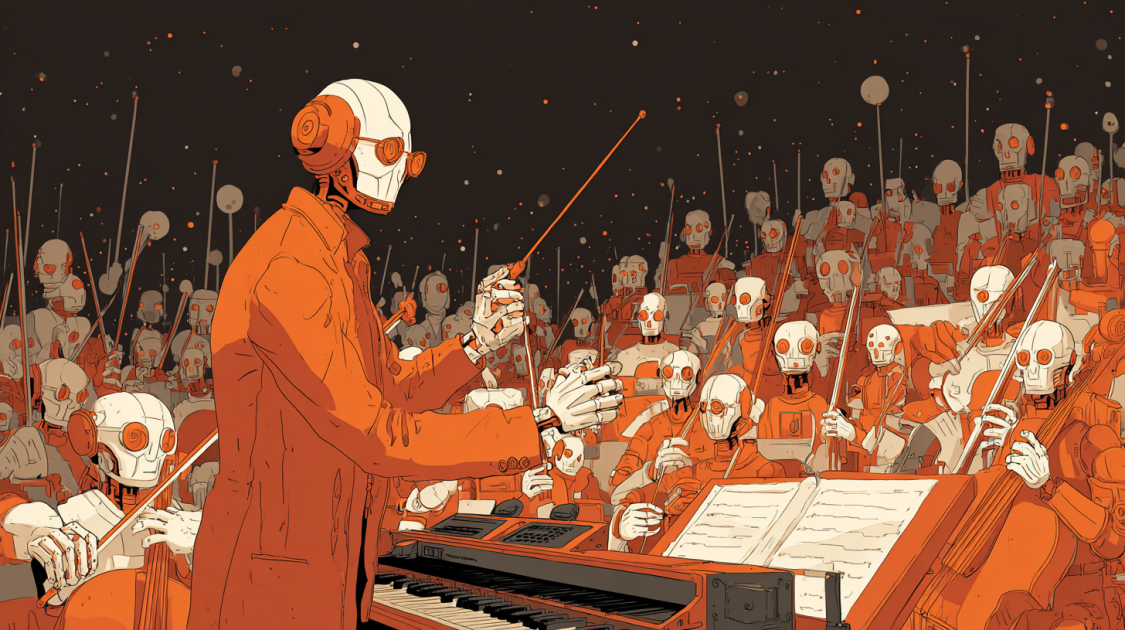
The most striking and immediate revelation from Cherny’s detailed disclosure is his departure from traditional, linear coding methodologies. In the conventional "inner loop" of software development, a programmer typically focuses on a single task: writing a specific function, rigorously testing it, debugging, and only then moving on to the next isolated component. Cherny, however, adopts an entirely different posture, operating more like a "fleet commander" orchestrating multiple simultaneous operations.
"I run 5 Claudes in parallel in my terminal," Cherny explained, detailing his unique setup. "I number my tabs 1-5, and use system notifications to know when a Claude needs input." This seemingly simple system of managing multiple AI agents concurrently is a game-changer. By leveraging advanced terminal emulators like iTerm2, which provide sophisticated system notifications, Cherny can seamlessly manage five distinct work streams without losing track or context. While one Claude agent might be diligently running a comprehensive test suite for a newly developed feature, another could be actively refactoring a complex legacy module, simultaneously a third might be drafting crucial technical documentation, a fourth debugging, and a fifth exploring alternative architectural designs. This parallel processing dramatically compresses development cycles and amplifies individual productivity.
Beyond his local terminal, Cherny further extends this multi-agent paradigm by running "5-10 Claudes on claude.ai" in his web browser. This flexible approach allows him to leverage the web interface for quick queries or exploratory tasks, utilizing a clever "teleport" command to smoothly hand off sessions between the web-based environment and his local machine. This integration of local and cloud-based AI agents creates a highly agile and responsive development environment. This innovative orchestration strategy provides tangible validation for the "do more with less" philosophy recently articulated by Anthropic President Daniela Amodei. In a competitive landscape where rivals like OpenAI are pursuing massive, multi-trillion-dollar infrastructure build-outs, Anthropic is demonstrating that superior, intelligent orchestration of existing, powerful AI models can yield exponential productivity gains, challenging the conventional wisdom that sheer computational scale is the sole determinant of success.
In an industry perpetually fixated on optimizing for speed and minimizing latency, Cherny’s choice of AI model presents a surprising, even counterintuitive, revelation. He disclosed that he exclusively utilizes Anthropic’s heaviest and, by conventional metrics, slowest model: Opus 4.5. This decision flies in the face of the common inclination to opt for lighter, faster models for coding assistance.
"I use Opus 4.5 with thinking for everything," Cherny explained on X. "It’s the best coding model I’ve ever used, and even though it’s bigger & slower than Sonnet, since you have to steer it less and it’s better at tool use, it is almost always faster than using a smaller model in the end." This insight is particularly critical for enterprise technology leaders navigating the complexities of AI adoption. Cherny’s rationale highlights a crucial bottleneck in modern AI-assisted development: the human time and effort expended correcting an AI’s mistakes. While a faster, smaller model like Sonnet might generate tokens more quickly, its higher error rate or lack of nuanced understanding often necessitates more human intervention and correction. Cherny’s workflow suggests that by proactively incurring the "compute tax" for a more intelligent, albeit slower, model upfront, developers can significantly reduce or even eliminate the much more costly "correction tax" later in the development cycle, leading to overall faster project completion and higher quality output.
One of the persistent challenges with large language models (LLMs) in a professional development setting is "AI amnesia." Standard LLMs typically lack a persistent memory of a company’s specific coding conventions, architectural decisions, or unique stylistic preferences from one interaction or session to the next. This necessitates repeated instruction and correction, eroding efficiency.
To ingeniously address this fundamental problem, Cherny’s team has implemented a remarkably simple yet profoundly effective solution: they maintain a single, dedicated file named CLAUDE.md within their project’s git repository. "Anytime we see Claude do something incorrectly we add it to the CLAUDE.md, so Claude knows not to do it next time," he wrote. This practice transforms the codebase itself into a dynamic, self-correcting organism. When a human developer reviews a pull request and identifies an error, they don’t merely fix the code; they proactively update the CLAUDE.md file, effectively tagging the AI with new instructions to prevent recurrence. As Aakash Gupta, a prominent product leader, perceptively noted while analyzing the thread, "Every mistake becomes a rule." This continuous feedback loop ensures that the AI agents collectively learn and adapt, making them progressively smarter and more aligned with the team’s specific requirements over time. The longer the team collaborates using this system, the more intelligent and reliable their AI "teammate" becomes.
The seemingly "vanilla" yet incredibly powerful workflow championed by Cherny is fundamentally powered by rigorous and intelligent automation of repetitive tasks. He extensively employs slash commands – custom shortcuts that are checked directly into the project’s repository – to execute complex operations with a single, streamlined keystroke. These commands encapsulate sequences of actions, turning multi-step processes into instantaneous directives.
Cherny highlighted a particularly impactful command, /commit-push-pr, which he invokes dozens of times throughout his daily workflow. Instead of manually typing out a series of git commands, carefully crafting a descriptive commit message, and then navigating to a platform to open a pull request, this single slash command enables the AI agent to autonomously handle the entire bureaucracy of version control. This significantly reduces cognitive load and frees up human developers to focus on higher-level problem-solving. Furthermore, Cherny strategically deploys specialized subagents – distinct AI personas tailored for specific tasks – to manage different phases of the development lifecycle. For instance, he utilizes a dedicated "code-simplifier" subagent to meticulously refactor and clean up architectural complexities after the core development work is completed. Similarly, a "verify-app" subagent is responsible for running comprehensive end-to-end tests, ensuring application integrity and functionality before any code is shipped to production. This modular approach allows for highly efficient and specialized AI assistance at every stage.
If there is a singular, overarching reason for Claude Code’s reported rapid ascent to a staggering $1 billion in annual recurring revenue, it is almost certainly its robust verification loop. Cherny’s system demonstrates that the AI is not merely a text generator or a coding assistant; it functions as an integrated tester and quality assurance specialist, profoundly elevating the reliability of its output.
"Claude tests every single change I land to claude.ai/code using the Claude Chrome extension," Cherny revealed. This critical capability allows the AI to operate with a high degree of autonomy. "It opens a browser, tests the UI, and iterates until the code works and the UX feels good." This self-correction mechanism is a paradigm shift. Cherny passionately argues that empowering the AI with the ability to verify its own work – whether through automated browser interactions, executing shell commands, or running extensive test suites – dramatically improves the quality of the final result by a factor of "2-3x." The agent doesn’t just generate code; it rigorously proves that the code functions as intended, providing a level of confidence that traditional AI coding assistants cannot match.
The overwhelming reaction to Boris Cherny’s thread on X strongly suggests a pivotal and irreversible shift in how developers conceptualize and execute their craft. For many years, the notion of "AI coding" primarily evoked images of intelligent autocomplete functions within text editors – a slightly faster, more convenient way to type existing code. Cherny, however, has conclusively demonstrated that AI can now function as a sophisticated operating system for labor itself, profoundly redefining the boundaries of individual productivity.
"Read this if you’re already an engineer… and want more power," Jeff Tang succinctly summarized on X, encapsulating the sentiment of many in the developer community. The tools and methodologies to multiply human output by a factor of five or more are not a distant future; they are already here and accessible. What is required, however, is a fundamental paradigm shift – a willingness to stop perceiving AI as a mere assistant that augments existing tasks and instead embrace it as an integral, autonomous workforce capable of handling complex, parallel operations.
The programmers who make this crucial mental leap first will not simply be more productive; they will be playing an entirely different game altogether. While others remain tethered to the keyboard, meticulously typing out lines of code, these forward-thinking engineers will be orchestrating intelligent agents, commanding fleets of digital workers, and pioneering a new era of software development. The future of coding is less about writing syntax and more about strategic command and control, a transformation that will leave those unwilling to adapt far behind.