 11
11 1
1 2
2 3
3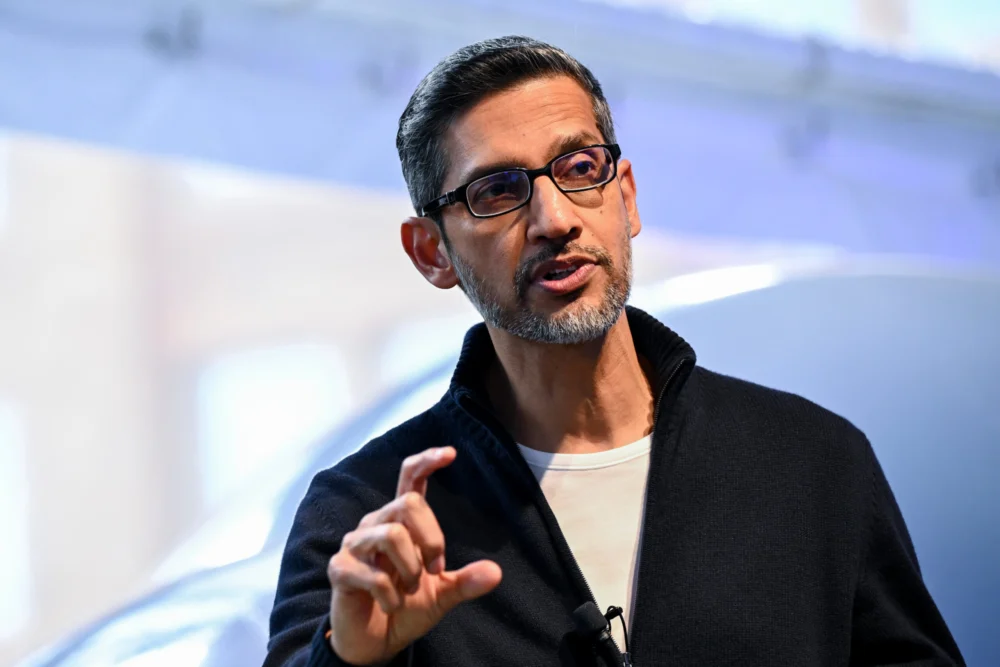
Alphabet, the parent company of Google, is strategically re-entering the debt market to finance its aggressive build-out of artificial intelligence (AI) infrastructure. This move is accompanied by a candid acknowledgment of new risks associated with the burgeoning AI landscape and the substantial capital investments required to support it. In its recently released annual financial report, the tech giant highlighted potential impacts on its core advertising business and the possibility of accumulating "excess capacity" from its significant infrastructure commitments.
The company’s filing with the U.S. Securities and Exchange Commission (SEC) detailed concerns regarding its substantial leasing arrangements with third-party operators to meet the compute capacity demands for AI training and inference, alongside traditional cloud computing services. Alphabet cautioned that these arrangements "may increase costs and operational complexity." Furthermore, the company noted that large commercial agreements could elevate "liabilities and obligations in the event of nonperformance by us, our counterparties, or vendors."
A key figure emerging from Alphabet’s earnings report is the projected capital expenditure for the current year, with the company indicating it could reach $185 billion at the high end of its estimates. This figure represents more than double the capital expenditures incurred in 2025, underscoring the scale of its AI ambitions.

To fuel these AI initiatives, Alphabet is reportedly planning to raise $20 billion through a U.S. dollar bond sale, according to sources familiar with the matter who requested anonymity due to the confidential nature of the details. The planned issuance is expected to encompass various tranches, including a 100-year bond in sterling. One source indicated that the deal is already five times oversubscribed, signaling strong investor demand. Bloomberg initially reported on the planned debt funding, which was initially anticipated to be $15 billion.
This planned debt issuance follows a substantial $25 billion bond sale conducted by Alphabet in November. The company’s long-term debt significantly increased in 2025, quadrupling to $46.5 billion. During the recent earnings call, Chief Financial Officer Anat Ashkenazi emphasized the company’s commitment to fiscal responsibility, stating, "we want to make sure we do it in a fiscally responsible way, and that we invest appropriately, but we do it in a way that maintains a very healthy financial position for the organization."
When questioned about the most pressing concerns for executives, CEO Sundar Pichai identified "compute capacity" as a primary worry. He elaborated on the challenges, stating, "power, land, supply chain constraints, how do you ramp up to meet this extraordinary demand for this moment?"
Alphabet is not alone in its significant capital investments in AI infrastructure. Together with Microsoft, Meta, and Amazon, these technology giants are projected to increase their capital expenditures by over 60% this year compared to the record levels seen in 2025. This surge in spending is driven by the acquisition of high-priced chips, the construction of new facilities, and the procurement of networking technology essential for connecting these advanced systems.

At the core of Google’s AI strategy is Gemini, its advanced large language model and AI assistant, which is positioned as a direct competitor to offerings from OpenAI and Anthropic. Pichai reported on the earnings call that the Gemini AI app has garnered over 750 million monthly active users, an increase from 650 million in the previous quarter.
The growing adoption of generative AI by consumers presents a potential challenge for Google’s core advertising business. The company has acknowledged the possibility that increased use of AI could lead to a decrease in traditional internet search activity, which could necessitate adjustments to its dominant ad revenue streams. This concern was newly incorporated into the risk sections of Google’s financial filing.
The filing stated, "We and our competitors are constantly adjusting to meet this shift and provide new and evolving advertising formats. There is no assurance that we will adapt effectively and competitively to meet this shift, and that such advertising formats, strategies, and offerings will be successful." Despite these emerging concerns, Google has so far demonstrated resilience in its search and advertising segments. In the fourth quarter, ad revenue saw a year-over-year increase of 13.5%, reaching $82.28 billion.
The significant capital expenditures by tech giants like Alphabet underscore the immense scale and rapid evolution of the AI landscape. While the pursuit of AI dominance requires substantial investment in infrastructure, companies are also navigating the inherent risks and uncertainties associated with this transformative technology. The strategic use of debt financing signals a long-term commitment to AI development, balanced with a focus on maintaining financial stability.