 11
11
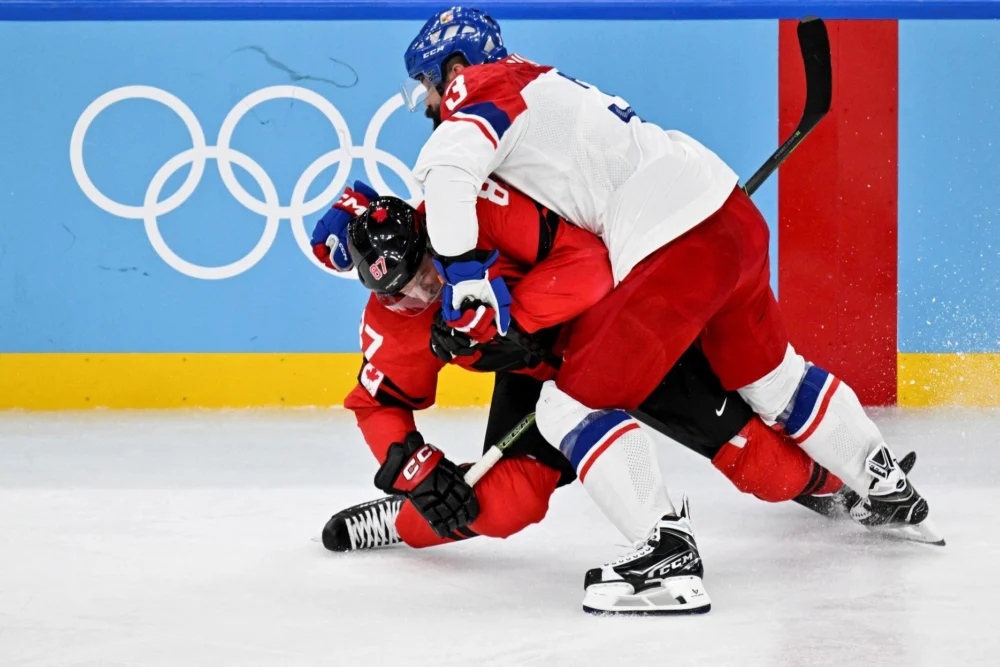
Milan, Italy – In a dramatic quarter-final clash at the 2026 Winter Olympic Games in Milan, Canada secured a hard-fought overtime victory against Czechia on Wednesday, February 18. However, the triumph was bittersweet, as the Canadian squad lost its revered captain, Sidney Crosby, to an injury that now threatens his participation in the remainder of the tournament. The incident, which occurred early in the second period, has sent ripples of concern through the Canadian camp and the wider hockey world, even as the team demonstrated remarkable resilience to advance.
The game, held at an electrified arena in Milan, saw Canada trailing 2-1 when the pivotal moment unfolded. Just minutes into the second frame, 38-year-old Crosby, a figure synonymous with Canadian Olympic hockey excellence, found himself entangled with Czech defenseman Radko Gudas. Gudas, known throughout his career for his punishing, physical style of play, delivered a significant hit that saw Crosby’s right leg appear to buckle as he braced for the impact. The sequence continued as Crosby was then crunched into the boards by Gudas and fellow Czech forward Martin Necas. Visibly wincing and shaking his right leg, Crosby struggled off the ice and headed directly to the locker room, his game, and potentially his tournament, abruptly concluded.
Associated Press reporter Stephen Whyno, reporting from Milan, detailed the sequence: “Crosby’s right leg appeared to buckle when he braced for contact on a big hit from Czechia defenseman Radko Gudas a few minutes into the second. Laboring as he stayed on the ice, Crosby got crunched into the boards by Gudas and Martin Necas and then left after shaking his right leg and wincing.” The sight of their captain, an undisputed leader and arguably Canada’s most iconic male hockey player in Olympic history, departing the ice under such circumstances was a gut punch to the team and its fervent fanbase.
Despite the significant setback and the immediate void left by Crosby’s departure, the Canadian players refused to be deflated. Instead, a palpable shift in resolve swept through the bench. Trailing in a crucial elimination game, the team rallied, drawing inspiration from their fallen leader. This collective determination was evident in their renewed intensity and focus. Nathan MacKinnon, a dynamic force throughout the tournament, scored a crucial goal to pull Canada even, followed by Nick Suzuki, who also found the back of the net to set the stage for overtime.

The turning point was underscored by comments from Canada’s coach, Jon Cooper, after the game. Speaking to Kyle Bukauskas of CBC, Cooper revealed the powerful sentiment within the locker room: “I know that was a big thing in the locker room after the second, into the third. We’re not making this Sid’s last game. So there was a lot of inspiration behind it.” This collective vow to fight for their captain fueled their comeback, culminating in Mitch Marner’s overtime goal that sealed the victory and ensured Canada would play at least two more games, guaranteeing them a chance to compete for a medal.
The irony of Crosby’s injury against Czechia was not lost on observers. Just over a week prior, on February 9, Canada’s most iconic female hockey player, captain Marie-Philip Poulin, was also sidelined by a hit against the same nation. Poulin’s injury forced her to miss Canada’s final two round-robin games, including a decisive 5-0 loss to the United States on February 10. However, "Captain Clutch" demonstrated her own remarkable resilience, returning to action on February 14 to score once in Canada’s 5-1 quarter-final win over Germany. She then further solidified her legendary status by netting both goals in their thrilling 2-1 semi-final victory over Switzerland on Monday, proving how a team’s spirit can be galvanized by the return of its leader.
Crosby, who had been enjoying another brilliant tournament through the round-robin play, now faces a significantly tighter timeline for recovery than Poulin. While Poulin had five days of recovery time before returning, the gold-medal game is scheduled for Sunday, February 22, meaning less than four days remain until puck drop at 8:10 a.m. ET / 2:10 p.m. local time in Milan. Crosby is reportedly set to undergo imaging in Milan to determine the severity of his injury, a critical step in assessing his potential availability. His history, however, suggests a fierce determination to play for his country. Fans will recall that he was believed to be questionable for the 4 Nations Face-Off one year ago, having missed NHL games, yet he drew into the lineup and performed flawlessly, showcasing his extraordinary commitment.
With Canada’s quarter-final victory, the stage is now set for a compelling semi-final round on Friday. All three other quarter-final matchups were equally dramatic, with Finland and the United States also requiring overtime to advance, highlighting the intense competition at this year’s Games. Only the surprising Slovaks cruised through their quarter-final without difficulty, dispatching seventh-ranked Germany with a commanding 6-2 scoreline.
The semi-final schedule is now confirmed:

The battle for Olympic gold is truly wide open. Coming into the tournament, the United States held the top spot in the IIHF’s men’s world ranking, having triumphed at the 2025 World Championship last May. Canada was ranked third, Finland sixth, and Slovakia ninth. While Canada earned the top seed in the preliminary round and is the defending champion from last February’s 4 Nations Face-Off, each of the other three semi-finalists presents a compelling argument for why they should be considered a gold-medal favorite.
Team USA, with its No. 1 world ranking, has been formidable, remaining undefeated at the 2026 Olympics. They secured the second seed after the preliminary round, primarily due to a slightly lower goal differential. A cornerstone of their success has been a flawless penalty kill, which boasts an impeccable 10-for-10 record through four games, showcasing their defensive discipline and special teams prowess.
Team Finland, the defending Olympic gold medalists from 2022 (a tournament without NHL player participation), demonstrated remarkable resilience. They began their Olympic campaign inauspiciously with a 4-1 loss to Slovakia and have been playing without their best player, the injured Florida Panthers captain Aleksander Barkov. Despite these challenges, the Finns rebounded strongly, securing decisive wins over Sweden and Italy to claim second place in Group B. This earned them an extra day of rest, which likely proved crucial in their ability to mount a late comeback from a 2-0 deficit to beat Switzerland 3-2 in overtime in their quarter-final.
Slovakia, the dark horse of the tournament, has been a revelation. By winning Group B, they earned a direct bye into the quarter-finals, where they impressively dispatched a fatigued German side with a 6-2 victory. Backstopped by the undrafted 24-year-old Samuel Hlavaj, currently playing for the Iowa Wild in the AHL, the Slovaks are playing with the confidence of a team with nothing to lose, putting immense pressure on the traditional favorites. Slovakia also boasts a strong Olympic pedigree, having claimed the bronze medal in 2022. Several key players from that roster have returned for 2026, including Beijing tournament MVP Juraj Slafkovsky. The 21-year-old Montreal Canadiens power forward has been outstanding, accumulating seven points in four games so far, making him the top-scoring non-Canadian still active in the tournament.
Even with the uncertainty surrounding Crosby’s availability, Canada’s offensive firepower remains formidable. The team boasts the top two scorers in the tournament to date. Connor McDavid, a generational talent, continues to lead the charge, having recorded two more assists on Wednesday to bring his tournament total to 11 points. This remarkable tally matches the previous best totals from one Olympics in the NHL era, set by Finland’s Teemu Selanne and Saku Koivu in Turin in 2006, highlighting McDavid’s dominant performance. Close behind is 19-year-old wunderkind Macklin Celebrini. With three more points on Wednesday, including the primary assist on Mitch Marner’s overtime winner, Celebrini has amassed an astonishing nine points in just four games, showcasing his incredible potential on the world stage.

This potent offensive duo has also contributed to Canada possessing the top-ranked power play in the tournament, a crucial asset in high-stakes games. Should Crosby be unable to play in the semi-final on Friday, his absence would likely open up a spot for 2025 Stanley Cup MVP Sam Bennett. Bennett, known for his tenacious play and a longstanding reputation for elevating his game when it matters most, would provide a valuable presence. Bennett’s absence from Canada’s practice on Tuesday was described by Coach Cooper as merely "maintenance," suggesting that he is ready to be called upon if needed.
As the Canadian team prepares for its semi-final clash, the focus will inevitably remain on Sidney Crosby. His potential return hinges on the results of his imaging and his own remarkable pain tolerance. ESPN’s Emily Kaplan reported on Crosby’s impending medical evaluation, a development eagerly awaited by fans and teammates alike. Regardless of whether he can physically hit the ice with his teammates in Friday’s semi-final, Sidney Crosby’s calm leadership, unwavering presence, and profound influence are expected to continue setting the tone for Canada. His quest to add a 2026 gold medal to the nation’s titles from the last two times NHL players participated in the Olympics, in 2010 and 2014, remains a powerful narrative driving Team Canada forward.