 11
11
XAI owner Elon Musk has launched a renewed and aggressive assault on rival artificial intelligence companies, including OpenAI, Google, and Anthropic, branding them as "woke" and culturally biased. The billionaire’s accusations coincide with the public beta rollout of Grok 4.2, the latest iteration of the AI model powering his chatbot, Grok. Musk unequivocally stated that Grok "must win" the burgeoning AI race, framing the competition as a battle against what he perceives as politically charged and "sanctimonious" AI.
The controversial entrepreneur took to his social media platform, X (formerly Twitter), on Tuesday to announce the test launch of Grok 4.2. He invited "critical feedback," emphasizing the chatbot’s rapid learning capabilities and promising weekly improvements. However, within hours of the beta’s release, Musk shifted his focus from soliciting feedback to directly attacking competitors. He began sharing a series of screenshots on X, directly comparing Grok 4.2’s responses to those of Google’s Gemini, OpenAI’s ChatGPT, and Anthropic’s Claude, specifically highlighting differences on sensitive cultural and political topics.
Musk’s primary contention is that rival AIs exhibit a pervasive "woke" bias, offering nuanced or evasive answers on issues where he believes a straightforward, often conservative-aligned, response is warranted. One prominent example he cited involved the question of whether the United States was built on "stolen land." In the comparisons shared by Musk, Grok 4.2 was depicted as providing a direct "No," while the other chatbots offered more complex or contested explanations, acknowledging historical perspectives on indigenous displacement and territorial acquisition. Musk leveraged this comparison to declare Grok 4.2 "BASED," asserting that it "doesn’t equivocate when asked if America is on stolen land…others are weak sauce." The term "based" is internet slang often used, particularly in conservative circles, to praise someone for holding an opinion perceived as uninfluenced by mainstream or "woke" ideologies.
Further solidifying his narrative, Musk amplified other posts showcasing Grok’s alignment with right-wing viewpoints. He shared a post from Katie Miller, wife of former White House Deputy Chief of Staff Stephen Miller, who lauded Grok for being the only chatbot to respond "No" when asked if "Critical Race Theory" (CRT) should be taught in schools. CRT, an academic framework examining how race and racism have shaped legal systems and societal structures, has become a major flashpoint in American culture wars, vehemently opposed by many conservatives who view it as divisive and unpatriotic. Grok’s direct rejection of CRT in schools resonates strongly with this political stance.
The pattern continued with other examples. Musk boosted posts that highlighted Grok’s willingness to misgender Caitlyn Jenner, a prominent transgender celebrity. In contemporary discourse, deliberately misgendering an individual is often seen as a sign of disrespect and a rejection of evolving societal norms around gender identity, a position frequently adopted by social conservatives. Another controversial comparison showed Grok giving a "yes" response to a question about whether "White Pride" was acceptable, while other AIs reportedly demurred or provided cautious answers. "White Pride" is a phrase heavily associated with white supremacist and nationalist movements, making its affirmation by an AI particularly contentious. Additionally, Grok was shown labeling affirmative action as "racist," mirroring another popular talking point on the political right, which often argues that policies designed to address historical inequalities through preferential treatment constitute reverse discrimination.

Musk explicitly articulated his vision and the high stakes he perceives in the AI race. "Grok must win or we will be ruled by an insufferably woke and sanctimonious AI," he tweeted. This statement accompanied a screenshot comparing Grok’s and Claude’s responses regarding the Canadian government’s decision to de-bank truckers protesting COVID-19 restrictions. Grok was shown stating the government’s action was wrong, while Claude reportedly said it was not. This particular example taps into libertarian and anti-government sentiments prevalent among some segments of the population, who viewed the Canadian government’s use of the Emergency Act to freeze bank accounts of participants in the "Freedom Convoy" as an overreach of state power.
Musk’s current offensive against rival AI companies is not an isolated incident but rather the latest chapter in his long-standing and often acrimonious public feuds. His rivalry with OpenAI and its CEO, Sam Altman, is particularly well-documented. Musk was a co-founder of OpenAI in 2015, initially envisioning it as a non-profit entity dedicated to developing open-source Artificial General Intelligence (AGI) for the benefit of humanity. However, he departed the company in 2018, citing potential conflicts of interest with Tesla’s own AI endeavors.
The animosity escalated significantly in 2024 when Musk filed a lawsuit against OpenAI and its leadership, alleging that the company had abandoned its founding mission by pivoting to a "for-profit" model and prioritizing financial gain over its original humanitarian goals. He claimed OpenAI was now effectively a "closed-source" subsidiary of Microsoft. OpenAI quickly countersued, presenting evidence that Musk himself had, in 2017, pushed for OpenAI to become a "for-profit" entity, even suggesting he should take the helm as CEO and merge it with Tesla. Since then, Musk and Altman have engaged in frequent public spats, with Musk often questioning OpenAI’s safety protocols and ethical considerations. A notable instance occurred when Musk reposted an unsubstantiated claim linking ChatGPT to suicides, warning users, "Don’t let your loved ones use ChatGPT."
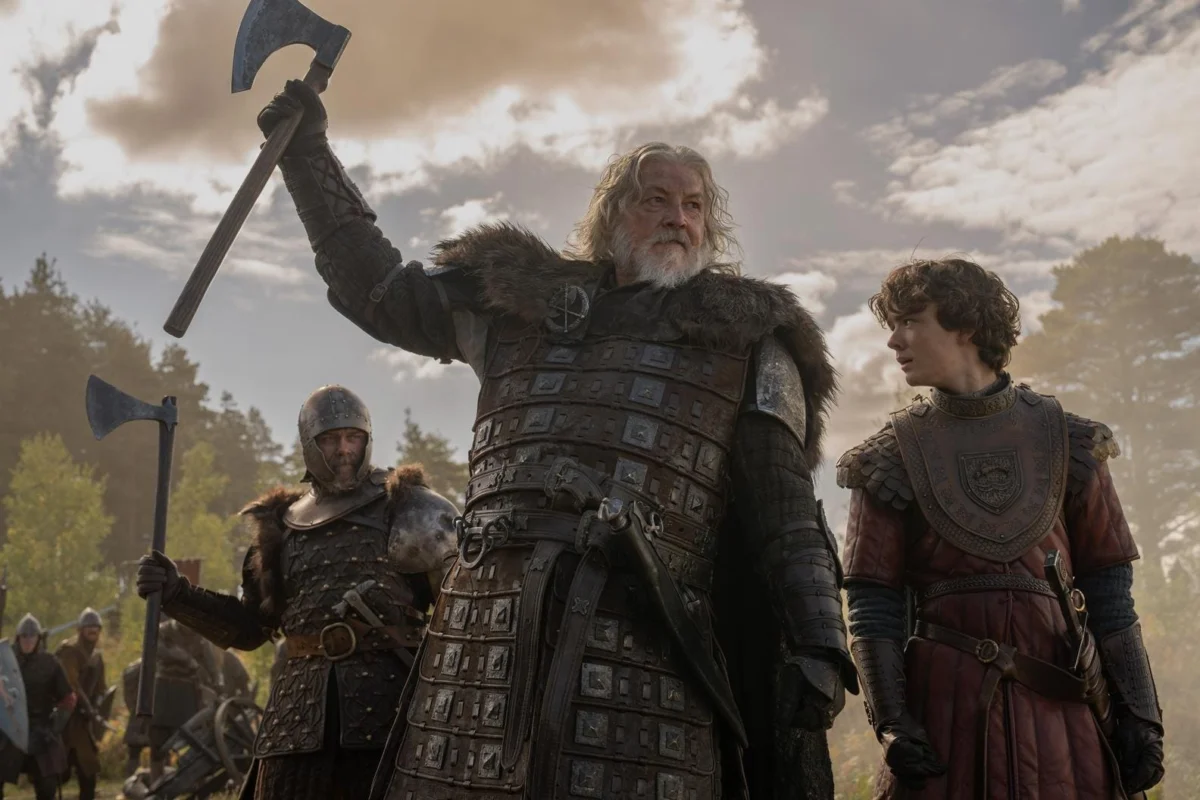
Google’s Gemini has also been a target of Musk’s criticism, particularly following its image generation tool’s rocky rollout in early 2024. Gemini faced widespread backlash for generating historically inaccurate and culturally insensitive images, such as Black Vikings, an Asian woman in a German World War II-era military uniform, and a female Pope. These errors led to accusations of "wokeness" and overcorrection in attempting to promote diversity, sometimes at the expense of historical accuracy. Musk seized upon this controversy, publicly attacking Google. He stated he was "glad that Google overplayed their hand with their AI image generation, as it made their insane racist, anti-civilizational programming clear to all." This statement underscored his belief that Google’s AI was imbued with a biased, politically correct agenda.
More recently, Anthropic, another significant player in the AI landscape, has drawn Musk’s ire. Initially, Musk had largely dismissed Anthropic as a serious competitor, remarking last year that "Winning was never in the set of possible outcomes for Anthropic." However, as Anthropic’s AI models, particularly Claude, gained traction and demonstrated strong capabilities in areas like coding with products like Claude Cowork, Musk’s tone shifted. He complained that xAI engineers were being "cut off" by Anthropic’s platform, suggesting a competitive blockade, and adding, "It was a helpful motivator that they cut us off @xAI and not good for their karma." The rivalry intensified dramatically earlier this week when Anthropic announced it had secured an additional $30 billion in funding, valuing the company at $380 billion. In response, Musk launched a scathing attack, leveling unsubstantiated allegations that Anthropic’s AI was "misanthropic and evil," and claimed it "hates Whites & Asians, especially Chinese, heterosexuals and men." These extreme accusations, devoid of concrete evidence, further illustrate Musk’s strategy of framing the AI competition in stark ideological terms.
Musk’s consistent theme throughout these attacks is the imperative to develop AI that is "unbiased" and "common sense," which, in his framing, often translates to aligning with conservative social and political perspectives. By positioning Grok as the antidote to "woke" AI, he aims to carve out a distinct niche for his product, appealing to users who feel alienated by what they perceive as political correctness or liberal biases in mainstream technology platforms. This strategy not only serves to promote Grok but also plays a significant role in the broader culture war debates currently shaping public discourse around technology, ethics, and societal values. The ongoing battle for AI supremacy, therefore, appears to be as much about technological advancement as it is about ideological alignment.