 11
11
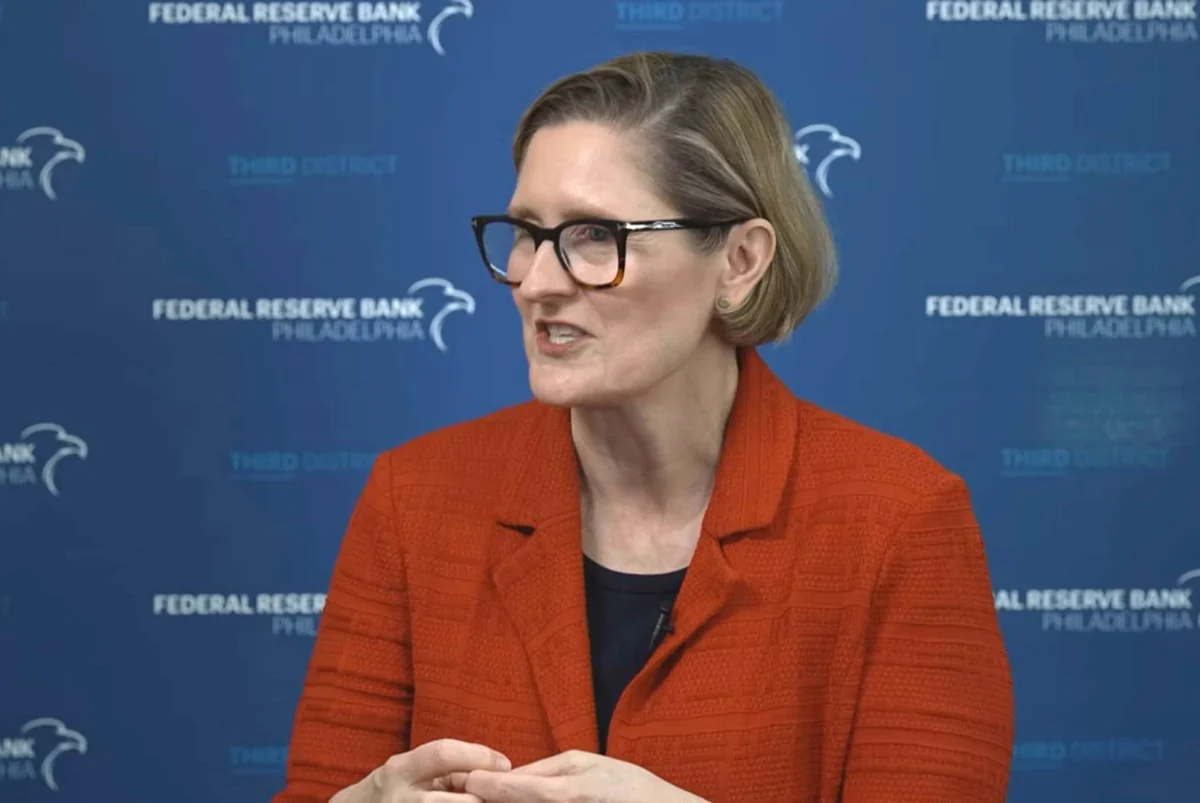
Philadelphia Federal Reserve President Anna Paulson stated on Tuesday that she believes the current level of interest rates is adequately positioned to guide inflation towards the central bank’s 2% target. In her inaugural interview with CNBC, Paulson conveyed a readiness to consider various monetary policy approaches while expressing confidence in her recent vote to maintain the Federal Reserve’s benchmark borrowing rate within its current target range of 3.5% to 3.75%.
"I think we need… policy that’s mildly restrictive, and I think policy has been mildly restrictive to get underlying inflation back down to 2% in an acceptable time period," Paulson articulated during a "Squawk Box" interview with CNBC’s Steve Liesman. "I need to see progress from here."
The degree of economic restriction imposed by the current monetary policy stance is a focal point of ongoing discussions among Federal Reserve officials. The Fed has maintained steady interest rates throughout the year, even as inflation figures have consistently remained above the 2% objective.
At the Federal Open Market Committee’s (FOMC) meeting last week, where Paulson holds voting rights, the committee decided by a 9-3 margin to keep rates unchanged. However, dissenting voters raised concerns that the prevailing interest rate level might not be sufficiently restrictive to effectively curb inflation.
Despite the dissent, Paulson characterized her decision to align with the majority as straightforward. "For me, it was not a close call," she remarked, estimating that underlying inflation, excluding volatile components like energy price swings, tariffs, and other external factors, is currently hovering around 2.4% to 2.8%. The Commerce Department reported on Thursday that the core inflation rate, which the Federal Reserve closely monitors as its primary forecasting metric, stood at 3.3% in June.

Paulson indicated that if this core inflation metric fails to show a sustained downward trend, she would be open to reassessing and potentially adjusting interest rates. "Maybe there was a little bit of mild progress over the last several months, but I want to see more progress on that, and that’s what I’m really focused on," she emphasized. "If we don’t see that progress, then we have to be open to recalibrating monetary policy. You know, we need to get to 2%."
Furthermore, Paulson stated that she is maintaining an "open mind" regarding potential procedural changes discussed by Fed Chairman Kevin Warsh, including the possibility of reducing the frequency of FOMC meetings from the current schedule of eight per year. "It’s healthy to have a discussion about that," she commented.
The Federal Reserve’s commitment to achieving its 2% inflation target remains a paramount objective. Officials are closely scrutinizing economic data to gauge the effectiveness of current monetary policy and to determine the appropriate course of action in the coming months. The nuanced debate among policymakers highlights the delicate balance the Fed must strike between combating inflation and supporting economic growth.
Paulson’s remarks underscore the Fed’s data-dependent approach, where future policy decisions will hinge on observed progress in bringing inflation back to its target. The current stance of "mildly restrictive" policy is viewed by Paulson and the majority of the FOMC as a necessary measure to cool inflationary pressures without unduly stifling economic activity. However, the persistence of inflation above the target necessitates continued vigilance and a willingness to adapt policy as economic conditions evolve.
The Philadelphia Fed President’s comments also shed light on the internal discussions within the Federal Reserve regarding the operational framework of monetary policy. The consideration of reducing the frequency of FOMC meetings suggests a potential re-evaluation of how the central bank communicates and implements its policy decisions, aiming for greater efficiency and clarity.
In essence, Paulson’s interview signals a cautious optimism about the current policy trajectory, tempered by a clear demand for further evidence of disinflationary progress. Her openness to adjustments and procedural reforms indicates a forward-looking and adaptable mindset within the Federal Reserve as it navigates the complex economic landscape. The coming months will be critical in observing whether the current "mildly restrictive" policy proves sufficient or if further recalibration becomes necessary to achieve the Fed’s inflation mandate. The dissenting votes at the last meeting serve as a reminder that a segment of the FOMC believes a more aggressive stance may be warranted, adding another layer of complexity to the ongoing policy debate. The economic outlook remains subject to a multitude of factors, and the Federal Reserve’s response will be closely watched by markets and policymakers alike.