 11
 1
 2
 3
The landscape of online search is undergoing a seismic shift with the advent of AI Overviews and generative AI capabilities. Understanding the nuances of how these technologies impact click-through rates, citation patterns, and the very mechanics of information retrieval is crucial for anyone navigating the digital realm. This report highlights the 25 individuals at the forefront of original research in AI search, providing a valuable guide to those shaping our understanding of this rapidly evolving field.
The compilation of this list involved a rigorous process, starting with an initial pool of 87 recommended experts in AI-driven search engine optimization (AEO) and generative engine optimization (GEO), as well as researchers from AI visibility companies. Each individual was then evaluated based on the number of original AI search studies they have published since 2023. Over 17,000 pages were meticulously reviewed from each person’s primary publishing sites. A page was considered a study if it met four specific criteria, and credit was given only for bylined or co-authored work, excluding company research without named authors. The final ranking was determined by the number of studies, with ties broken by the number of websites linking to those studies.
The Top 25 AEO/GEO Experts
The leading experts in AI search research are identified by their significant contributions in analyzing the impact of AI on search behavior and visibility.
Kevin Indig (Growth Memo) leads the list with 36 studies, focusing on data-driven LLM citation and AI search behavior. His research explores how factors like retrieval rank, content depth, and brand popularity influence AI citations, and how AI Overviews and AI Mode are altering search habits. His work is primarily published on growth-memo.com, with significant contributions to searchenginejournal.com and sell.g2.com.
Xibeijia Guan (Ahrefs) follows with 31 studies, specializing in AI search citations and click impact. Her research has quantified the click reduction caused by AI Overviews (34.5%) and analyzed the ranking of AI-cited pages within Google’s top 10.
Dan Petrovic (DEJAN) ranks third with 20 studies, investigating AI grounding and citation mechanics. His research delves into how search engines like Google and OpenAI source their answers, examining word counts from sources, content filtering, and the influence of formatting and intent matching on AI visibility. His work is predominantly published on dejan.ai.
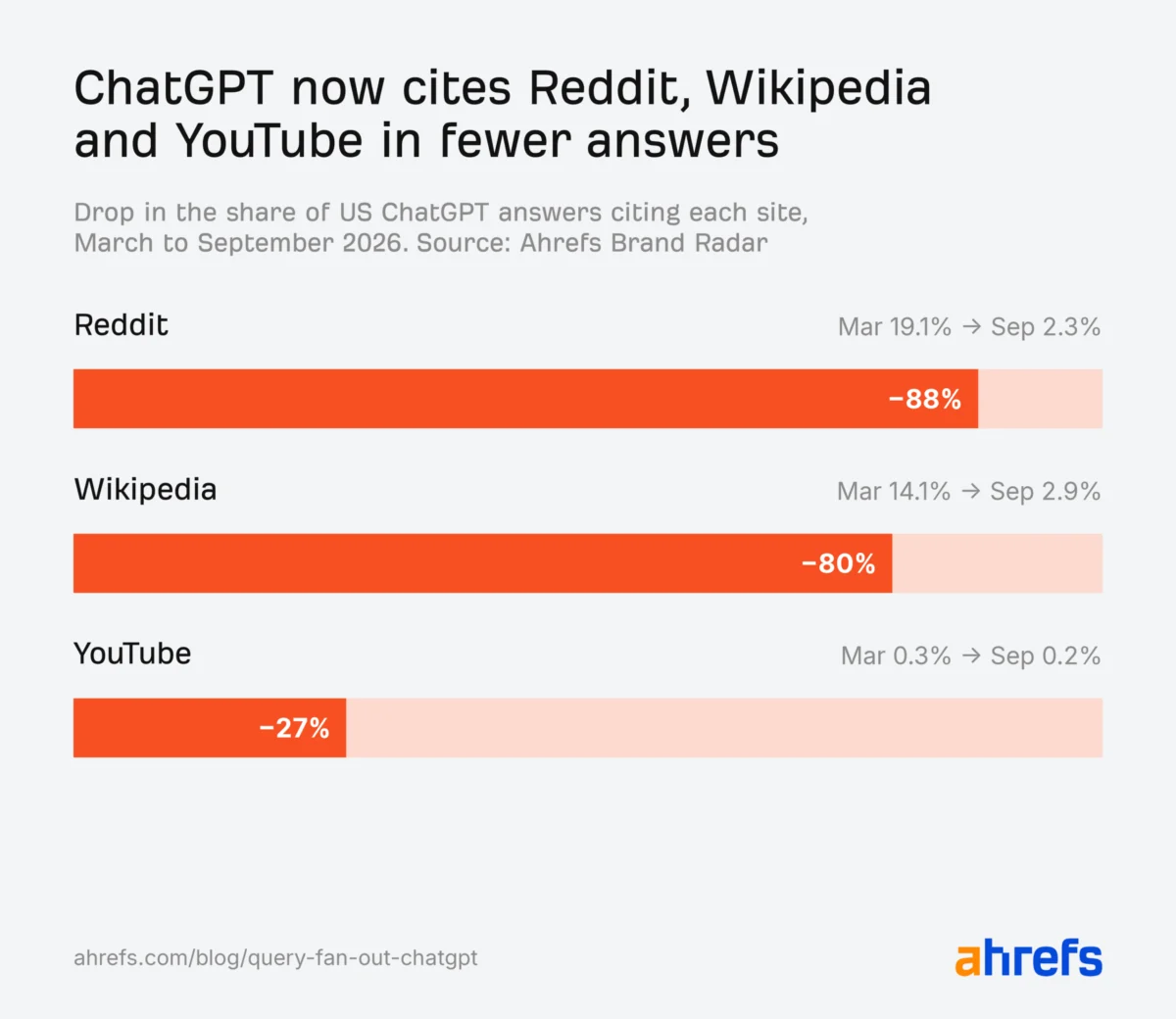
Louise Linehan (Ahrefs) is fourth with 19 studies, contributing significantly to data-driven AI search citation research. Her work includes analyses of AI Overview and ChatGPT citation patterns, a study of 75,000 brands, and an investigation into the minimal impact of schema markup on AI citations.
Johannes Beus (SISTRIX) is fifth with 14 studies, known for large-scale AI citation and visibility data. His research under the SISTRIX banner examines how AI Overviews, AI Mode, and ChatGPT select and modify cited sources, and their subsequent effects on click-through rates and brand visibility. His studies are published across sistrix.com, sistrix.de, and sistrix.fr.
Metehan Yeşilyurt (Peec AI) also holds 14 studies, focusing on reverse-engineering AI search citation and retrieval behavior. His experimental and data-driven analyses explore how ChatGPT, Perplexity, and Google AI Overviews source information, noting instances like extensive GPTBot crawling and shifts in ChatGPT’s citation patterns for shopping queries. His work appears on metehan.ai, peec.ai, and metehanai.substack.com.
Manick Bhan (Search Atlas) has published 13 studies on large-scale LLM citation behavior. His research, based on extensive citation datasets, suggests that LLM citations are only loosely correlated with Google rankings and domain authority, and that schema markup and specific file types have no measurable impact on visibility. His studies are mainly found on searchatlas.com.
Josh Blyskal (Profound) is eighth with 11 studies, investigating AI citation behavior across answer engines. His large-scale studies, utilizing datasets of billions of citations, reveal the dynamic nature of cited domains across different AI platforms and the limited explanatory power of traditional SEO metrics. His research is published on tryprofound.com and joshblyskal.com.
Ryan Law (Ahrefs) rounds out the top ten with 9 studies, focusing on large-scale AI Overviews and AI citation studies. His work includes an analysis indicating AI Overviews reduce clicks by 34.5% across a significant keyword set and an examination of the triggers for AI Overviews.
Aleyda Solís (Orainti) also has 9 studies, focusing on data-driven AI search citation and traffic research. Her studies explore how AI search functions and its traffic implications, finding that third-party sources are highly influential for SaaS brands and that AI search represents a small fraction of overall website visits. Her research is primarily on aleydasolis.com.
Mitul Gandhi (seoClarity) contributes 9 studies, analyzing AI citations versus organic rankings. His research leverages seoClarity’s data to compare AI Overviews, AI Mode, and ChatGPT citations with traditional Google rankings.
Suganthan Mohanadasan (Snippet Digital) has 7 studies on how AI search engines select sources. His research investigates network traffic, API responses, and server logs to understand how AI models identify and cite information. His work is published on suganthan.com.
Davis McCain (Profound) also has 7 studies, focusing on large-scale AI citation and search behavior. His research highlights the relatively short "half-life" of AI citations and identifies LinkedIn as a frequently cited domain for professional queries. His studies are found on tryprofound.com.
Tomek Rudzki (Peec AI / ZipTie) has 6 studies, examining AI citations, fan-out queries, and tracking. His recent work maps cited domains in AI search, analyzes how ChatGPT constructs fan-out queries, and addresses the under-tracking of AI Overviews. His research appears on peec.ai and ziptie.dev.
Chris Long (Nectiv) also has 6 studies, focusing on fan-out queries and AI crawling research. His work analyzes the query expansion in ChatGPT and Google, OpenAI’s crawl activity, and the significant rise in AI citations for certain brands. His studies are published on nectivdigital.com and botify.com.
Tom Capper (Moz / STAT) has 6 studies comparing AI search results with organic rankings. His research uses large keyword samples to analyze the differences and positions of AI Overviews relative to traditional search results. His work is found on moz.com and getstat.com.
Lily Ray (Amsive) contributes 5 studies on AI search citations and source reliability. Her research investigates self-promotional content in AI Overviews, the correlation between organic visibility losses and AI citation declines, and the propensity of LLMs to repeat misinformation. Her work is published on lilyraynyc.substack.com and lilyray.nyc.
Hanns Kronenberg (GPT Insights) has 5 studies, focusing on German AI search and brand visibility. His research includes large prompt datasets, analyses of AI Overviews using Sistrix data, and brand visibility studies across various AI platforms. His work is published on gpt-insights.de.
Rand Fishkin (SparkToro) has 4 studies measuring AI search against traditional search. His research uses device panels and volunteer prompt runs to assess brand recommendation consistency across AI tools, comparing search volumes between Google and ChatGPT. His studies are published on sparktoro.com.
David Bell (Previsible) also has 4 studies on LLM referral traffic measurement. His annual reports analyze GA4 data to quantify traffic generated by AI assistants and identify leading platforms. His research appears on previsible.com and searchengineland.com.
Ethan Smith (Graphite) has 4 studies on data-driven AEO measurement and AI search research. His work tests claims about AI-generated content in search results, analyzes SEO traffic trends, and explores methods for estimating brand visibility in AI responses. His studies are published on graphite.io.
Mark Traphagen (seoClarity) contributes 4 studies on the impact of AI Overviews on organic search. His research uses seoClarity’s datasets to measure the influence of AI Overviews on search performance. His work is found on seoclarity.net.
Andy Crestodina (Orbit Media) also has 4 studies on AI search traffic, conversion, and visibility data. His research includes surveys on AI search adoption, conversion rates for AI visitors, and analyses of AI crawler behavior, indicating that AI visitors convert at a higher rate. His studies are published on orbitmedia.com.
Jan Ehrlinspiel (Peec AI) has 4 studies on AI brand visibility measurement and research. His work examines how listicle position affects brand visibility in AI responses and the impact of a company’s name on how AI models describe it. His research appears on peec.ai.
Ross Hudgens (Siege Media) rounds out the top 25 with 4 studies on data-driven generative engine optimization. His research, often based on client and multi-site studies, analyzes how AI Overviews and LLMs influence traffic, identifying factors that predict AI search traffic and enhance AI visibility. His studies are published on siegemedia.com.
Bonus: The 10 Most Popular AEO/GEO Studies
These studies have garnered the most attention and links from other websites, underscoring their significant impact and recognition within the field.
These experts and their research provide invaluable insights into the evolving dynamics of AI search, offering critical data and analysis for marketers, SEO professionals, and anyone seeking to understand the future of information discovery.