 11
11
Five years after the fervent initial public offering (IPO) boom of 2021, the landscape of public markets has undergone a significant transformation, with an increasing number of companies opting to remain private for extended periods. In 2021, public markets witnessed a surge in new listings. The Nasdaq reported hosting 743 IPOs that year, while the New York Stock Exchange announced adding over $1 trillion in new market capitalization, marking the second consecutive year of record-breaking new listings. Prominent IPOs from that era spanned diverse industries and included technology giants like Coinbase and Roblox, automotive innovators like Rivian, and direct-to-consumer brands such as Warby Parker. Research from Morningstar highlighted that companies going public in 2021 collectively raised nearly $500 billion, a figure roughly double the deals and capital raised in 2020, a year characterized by profound uncertainty due to the pandemic and diminished consumer and investor confidence.
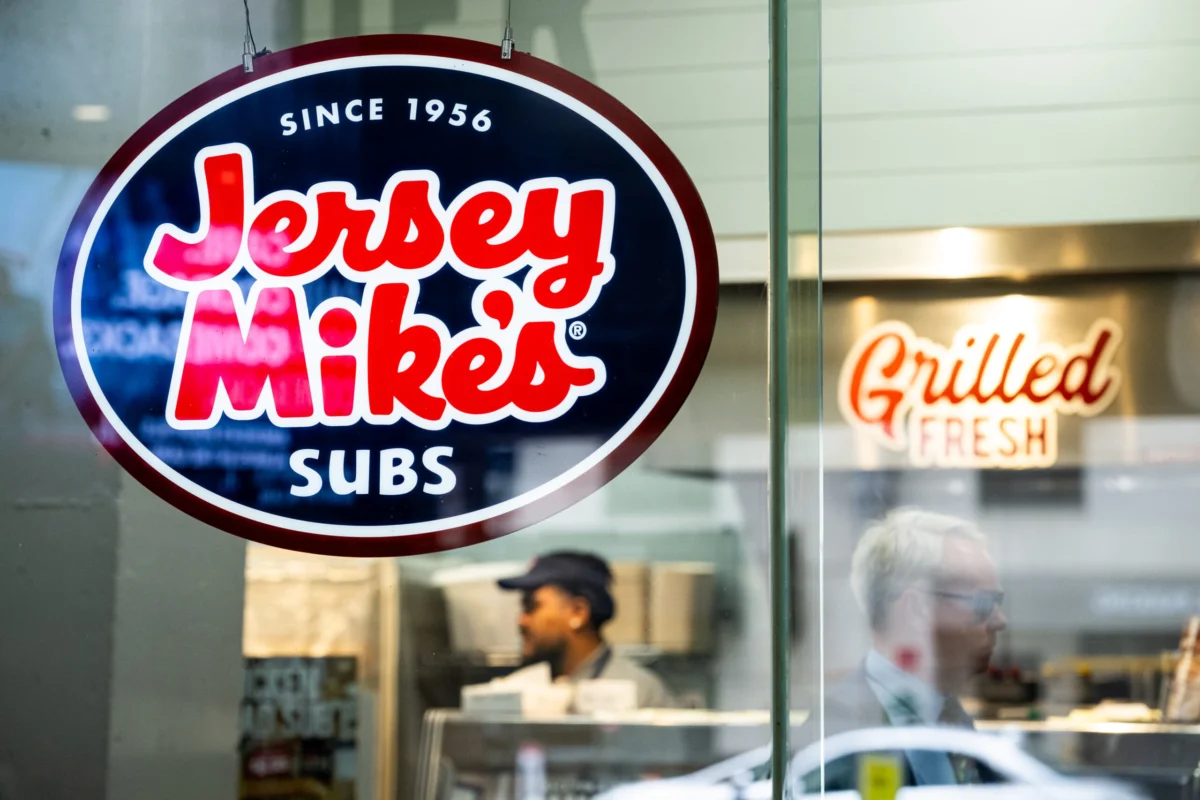
However, the IPO market has cooled considerably since then. Despite a highly anticipated and reportedly blockbuster IPO from Elon Musk’s SpaceX, far fewer companies are choosing to enter the public domain. Furthermore, some of those that do pursue an IPO have struggled to gain traction in the current economic climate. This trend was underscored by the recent public debuts of two consumer-focused companies: the sandwich chain Jersey Mike’s and the clothing retailer Reformation, both of which went public on a Thursday in late July 2026. Their IPOs were largely unremarkable, with Reformation’s stock remaining virtually unchanged for the day, and Jersey Mike’s opening $2 below its IPO price and closing down nearly 6%. These instances place them among a small cohort of consumer companies that have gone public in 2026, representing a minuscule fraction of the overall IPO market, according to Renaissance data.
Experts attribute this shift to a confluence of factors that are prompting companies to re-evaluate their strategies regarding liquidity and capital access. Mike Dinsdale, CEO of Powerlaw, a publicly listed fund specializing in private company investments, observed a significant decline in the number of publicly traded companies. "There’s under 4,000 public companies today, whereas 30 years ago, there was just under 8,000," Dinsdale stated. He attributes this decline to "access to capital, and then the idea that staying private and not having any transparency into what’s happening, and then higher valuations on the public side." Dinsdale, who previously held executive roles at DoorDash and DocuSign, believes that enhanced access to capital and liquidity in nonpublic markets, coupled with the emergence of megafunds, has diminished the imperative to "rush to go public." He notes this trend has been developing over the past three decades, but the accelerated interest from family offices in private companies over the last five years has significantly contributed to this phenomenon, as ultra-wealthy individuals’ private investment vehicles seek new avenues for capital deployment.
The burgeoning secondary markets are playing a crucial role in this dynamic. Many prominent consumer and retail companies, such as Publix Super Markets, Sephora, and Chick-fil-A, have successfully maintained their private status. Sunaina Sinha Haldea, Global Head of Private Capital Advisory at Raymond James, explains that private companies are capitalizing on the growth of secondary markets. "The secondaries market is acting as this pressure release valve to this artificial clock of having to go public," she commented. "Nobody has to go public now because of the depth of this private secondaries market."
Venture capital has also experienced robust growth. Jason Yeh, co-founder of Patron, a venture capital firm focused on consumer companies, noted that the volatility in public markets, combined with the stagnant performance of public consumer and retail companies, has likely contributed to a hesitation to transition to the public sphere. "There are very large asset managers, hedge funds and other types of investors that want to buy these later-stage stakes in these large companies, and they’re able to push out having to go public longer, and you can get liquidity for earlier stage investors through that," Yeh elaborated. His firm has forged partnerships with various consumer companies, including Sweatpals, Board, and System Labs. Yeh anticipates that a strong liquidity environment will make both IPOs and acquisitions attractive exit strategies. "It feels like we’re on the cusp of a handful of companies that, theoretically, on paper, should have been able to go public over the last couple of years, but will be going public ideally in the next 12 to 18 months," he predicted.
Despite the prevailing trend towards remaining private, compelling reasons still exist for some companies to pursue an IPO. An IPO can be a significant moneymaking event, as evidenced by SpaceX’s substantial fundraising efforts upon going public. "I do think for companies with a really strong business model of generating a lot of cash flow, eventually they will go public," Yeh stated. "Hopefully, the overall macroeconomic conditions are better when that happens, versus doing it into a weaker market."
One of the primary incentives for staying private is the avoidance of the intense pressure associated with quarterly earnings reports. Public companies are compelled to disclose their financial performance to investors, which can lead to negative market reactions. "In general, founders don’t want to go public, the majority don’t, because all of a sudden they have more visibility into what they’re doing," Dinsdale explained. "The public now has access to numbers and it has opinions on what they’re doing versus being more in control." Dinsdale suggests that for the IPO market to regain its appeal, a dual approach of "the carrot and the stick" would be necessary, making it more challenging to remain private while simultaneously implementing regulatory changes to incentivize public offerings.
President Donald Trump has previously proposed ending mandatory quarterly earnings reports, a concept that the Securities and Exchange Commission (SEC) had indicated support for earlier in 2026, suggesting companies could report semi-annually instead. In a statement issued in May 2026, SEC Chairman Paul Atkins cited the current rules as overly "rigid" for both companies and investors. Sinha Haldea of Raymond James identified regulatory compliance as a significant "headwind" for companies considering going public. "If you are a CEO of a fast-growing company and there’s plenty of capital available, and you don’t have to deal with the governance and the reporting structures and the quarterly clock of being a public company, why would you put yourself through that?" she queried.
Sinha Haldea emphasized that the decision to go public entails both financial and resource costs, which can be avoided by leveraging secondary markets for capital access. However, as the benchmarks for corporate success evolve and IPOs carry less weight, the rationale for going public is no longer as straightforward as it once was. For this equation to shift and for more companies to emulate the IPO surge of 2021, Sinha Haldea believes that the "operational burden of being public" must be addressed. "There is a lot of reporting compliance, litigation, dilution of management time that goes into being a public company," she stated. "That equation needs to change through regulation for the decision between private and public to become more neutral."