 11
11
WASHINGTON – The Federal Reserve, in a closely watched decision on Wednesday, voted to maintain its key interest rate at its current range of 3.5% to 3.75%. However, the decision was not unanimous, revealing a notable split within the Federal Open Market Committee (FOMC) as three regional presidents expressed dissent, advocating for a rate hike to combat persistent inflation.
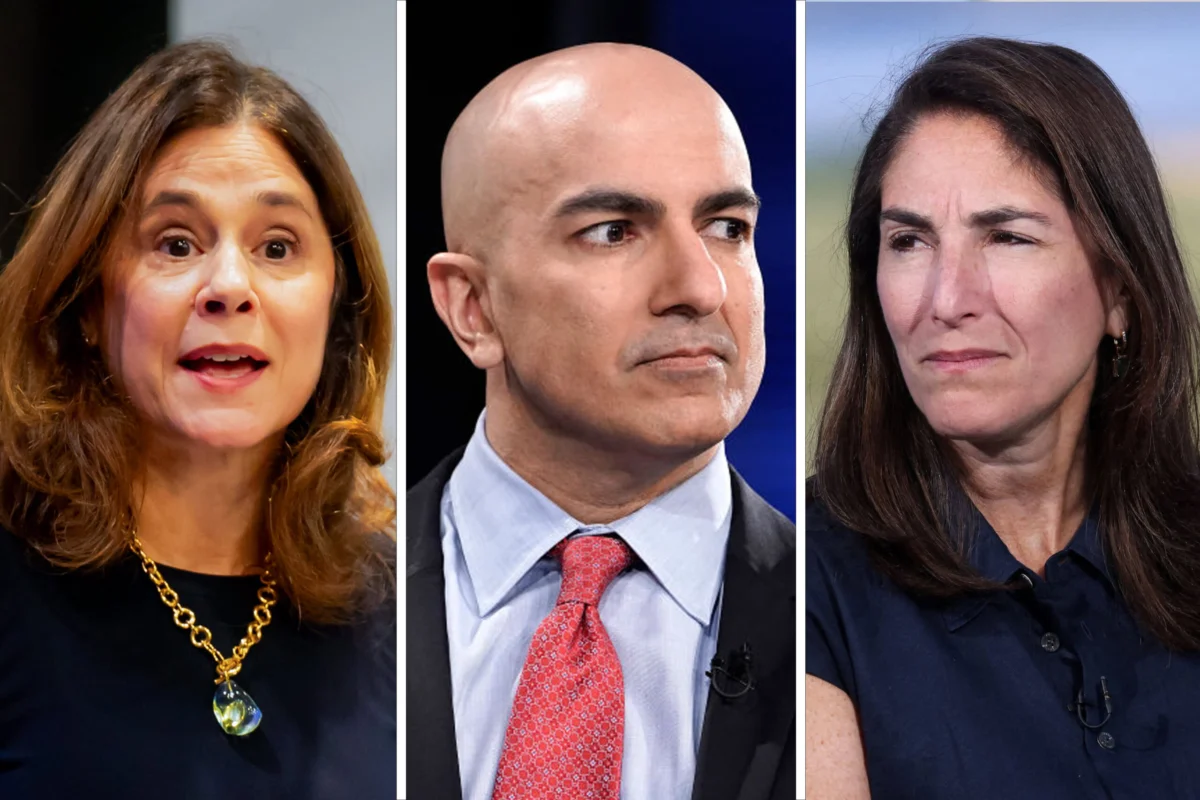
The FOMC ultimately voted 9-3 to keep the federal funds rate unchanged. The dissenting votes came from three prominent regional Fed presidents: Beth Hammack of Cleveland, Neel Kashkari of Minneapolis, and Lorie Logan of Dallas. These officials have been the most vocal proponents of raising interest rates to bring inflation, which has remained above the Fed’s 2% target for over five years, back under control. The post-meeting statement explicitly noted that these three dissenters "preferred to raise the target range for the federal funds rate by ¼ percentage point at this meeting."
This marks the first time since September 2016 that three policymakers have dissented with a unified stance on the direction of interest rates, signaling a growing hawkish sentiment within the committee. "We’re reading this as a Committee with vocal hawks," commented Ian Lyngen, head of U.S. rates at BMO Capital Markets.
The dissent also presents an early challenge for Federal Reserve Chairman Kevin Warsh. Warsh, who has recently adopted a communication strategy that emphasizes the conditions for policy action rather than providing explicit forward guidance, faced an unusually high level of uncertainty heading into this meeting. While markets had largely anticipated a hold on rates, there was a discernible, albeit lower, probability of a surprise rate hike, estimated at around a 1-in-3 chance according to the CME Group’s FedWatch tool. Prediction markets, however, indicated a higher degree of certainty that the Fed would maintain its current stance.
Warsh has previously articulated a preference for the Fed to focus less on signaling future policy moves and more on outlining the economic conditions that would necessitate specific actions. Yet, Wednesday’s statement offered neither explicit guidance nor a clear roadmap, even as markets widely expected a rate hike in September. The post-meeting statement itself was remarkably similar to the one issued after the June 17 decision, reflecting the Fed’s consistent policy actions throughout the year, which followed a series of three rate cuts in the latter half of 2025.
The committee’s assessment of the economy remained largely unchanged, noting that "Economic activity is expanding at a solid pace despite elevated uncertainty that owes, in part, to the conflict in the Middle East." The statement also indicated that job growth has "kept pace with the workforce and the unemployment rate has changed little," even with a contraction in the U.S. labor force. Echoing the sentiment from the June meeting, the statement concluded with the straightforward declaration: "The Committee will deliver price stability."

Kay Haigh, global head and chief investment officer of fixed income and liquidity solutions at Goldman Sachs Asset Management, observed, "The Fed appears to be running out of patience with above-target inflation, despite recent data coming in cold. The committee’s growing hawkish sentiment, shown by the three dissents against today’s hold, has also likely been exacerbated by the recent flare-up in hostilities in the Middle East."
Officials advocating for tighter monetary policy have pointed to inflation as a significant burden on households, noting that it is not showing clear signs of abating. Recent price pressures have been attributed to a combination of tariffs imposed by President Donald Trump and higher energy costs linked to the ongoing conflict in the Middle East. In June, the full committee had projected one quarter-percentage-point increase in rates by the end of 2026.
Governor Christopher Waller, while expressing concerns about inflation and suggesting that higher rates might be necessary if progress falters, ultimately voted in favor of holding rates steady at this meeting. Warsh, meanwhile, has characterized inflation as a "choice" and has consistently emphasized the imperative of controlling prices in recent congressional hearings.
From a policy perspective, Warsh has been critical of the Fed’s historical practice of providing forward guidance on its interest rate expectations. Aligning with Warsh’s first meeting as chairman, the FOMC statement was notably shorter than in previous periods. Warsh has prioritized a shift in the Fed’s communication strategy, establishing five task forces, one of which is dedicated to addressing this very issue.
In the weeks leading up to this meeting, Warsh’s FOMC colleagues had articulated a range of policy views. New York Fed President John Williams stated his belief that current policy is "well positioned" to bring inflation back to the target. However, Logan countered this, arguing that "modestly" higher rates would be necessary. Hammack, also an inflation hawk, cited the strain on households from persistently high prices across various sectors.
Earlier in the week, President Trump expressed his support for Warsh, describing him as "fantastic" and suggesting that other Fed officials harbored "bad intentions" and potentially political motivations. This statement from the President underscored the high-profile nature of the Fed’s policy decisions and the political landscape in which they are made. The internal divisions within the FOMC, highlighted by the three dissenting votes, suggest that the path forward for monetary policy will continue to be a subject of intense debate and scrutiny.