11
11
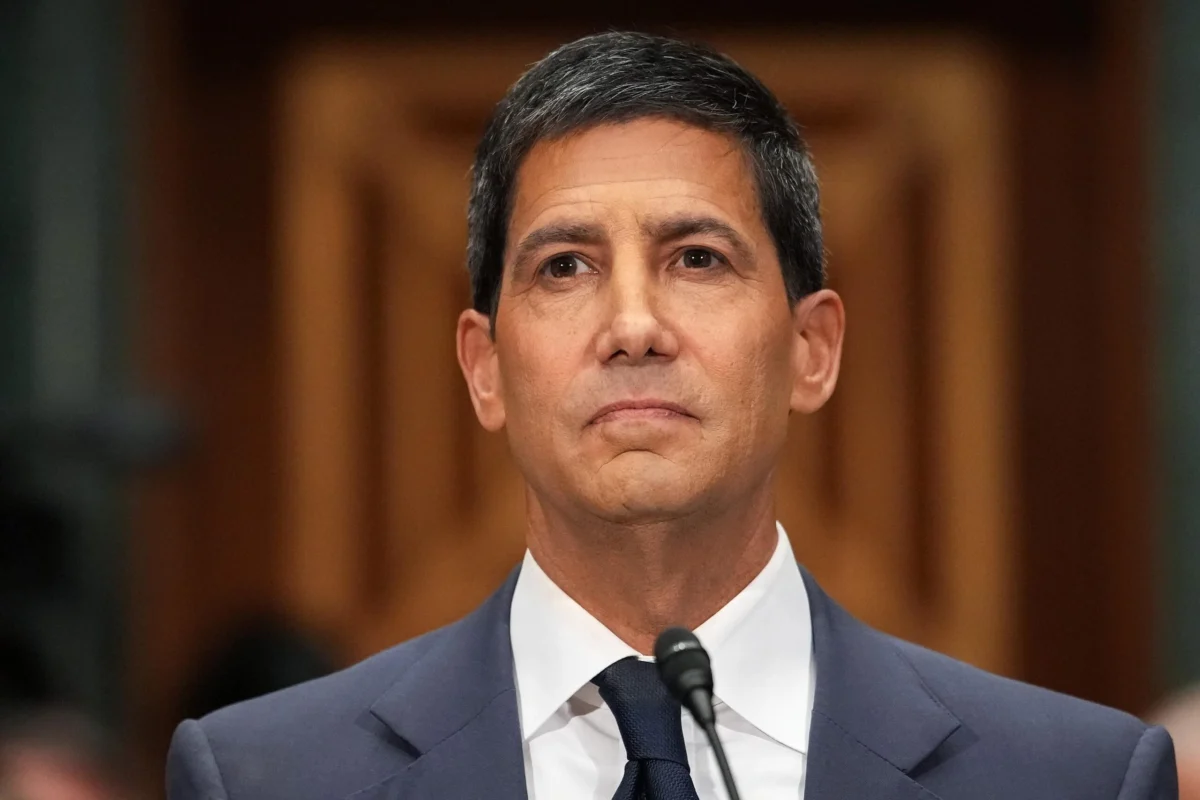
Kevin Warsh, a prominent figure and former member of the Federal Reserve Board of Governors, has emerged as a significant contender for the Chairmanship of the Federal Reserve, a position for which he was formally nominated by U.S. President Donald Trump, as indicated by his Senate confirmation hearing on April 21, 2026. This nomination comes at a critical juncture, with Warsh slated to potentially replace current Chair Jerome Powell amidst bipartisan concerns stemming from a Justice Department criminal investigation into the central bank’s present leadership. Warsh’s public pronouncements and philosophical leanings suggest a profound re-evaluation of the Federal Reserve’s traditional role, leading some observers to ponder whether his outspoken views might inadvertently undermine his own pursuit of the prestigious post.
At the core of Warsh’s expressed philosophy is a preference for markets to operate more smoothly when they are primarily responding to economic data, rather than attempting to anticipate the Federal Reserve’s reactions to that data. This perspective highlights a desire for a less interventionist central bank, one that allows market forces to dictate economic outcomes with minimal official guidance or manipulation. While Warsh’s emphasis on economic data, which by its nature is often backward-looking, might be seen by some as overstating its immediate utility, his apparent inclination for markets not to live in fear of a backward-looking Fed’s policy shifts is widely perceived as a positive stance. Such an approach suggests a fundamental shift towards a more transparent and predictable economic environment, where market participants can make decisions based on intrinsic economic signals rather than parsing cryptic central bank communications.
The implications of a "do-nothing" Fed, or at least a significantly less active one, are a central theme in discussions surrounding Warsh’s potential leadership. The argument posits that such a shift would not drastically alter fundamental economic realities, just as abolishing the Fed would not magically usher in perpetual prosperity, as some adherents of the Austrian School of economics might metaphorically suggest. This perspective challenges the widely held belief that the Federal Reserve possesses omnipotent control over interest rates, suggesting that the institution’s actual power in this regard has always been considerably overstated.
The very fact of Warsh’s interest in the job serves as a paradoxical piece of evidence for this claim. If the Fed genuinely controlled interest rates to the extent commonly assumed, the U.S. economy would likely be far less significant on the global stage. The reasoning behind this assertion is rooted in the inherent inefficiencies of central planning. History consistently demonstrates that central planning, particularly over crucial economic variables, invariably leads to economic disaster. If one of the most vital prices in the global economy—credit—were truly controlled from what are termed the "Commanding Heights" of a central bank, the distortions and misallocations of capital would render the economy severely stunted and dysfunctional. Instead, the vast, complex, and dynamic global credit markets, driven by countless individual decisions and interactions, are the true determinants of interest rates, with the Fed’s influence being more localized and temporary.
Beyond interest rates, the article delves into another critical price: the dollar. Critics, particularly those from the Austrian School who often attribute most global economic woes to the Fed, frequently claim that the central bank controls and persistently devalues the dollar. However, this assertion is strongly refuted. The dollar’s exchange value has, by both design and historical practice, never been a primary component of the Federal Reserve’s mandate. Instead, major devaluations of the dollar have historically been the prerogative of the executive branch. Concrete evidence supports this, citing the actions of Presidents Roosevelt in 1933 and Nixon in 1971. In both instances, these presidents unilaterally devalued the dollar, facing only "toothless pushback" from the then-incumbent Fed Chairs, Eugene Meyer and Arthur Burns, respectively. This historical record underscores that the ultimate authority over the dollar’s external value rests largely outside the Fed’s direct control, influenced more by broader governmental policy, international trade balances, and global market confidence in the U.S. economy.

Warsh’s perceived "quietude" regarding these complex matters is presented as a sign of wisdom, especially when considering the limited and often misunderstood statutory powers of the Federal Reserve. The institution is legally mandated to oversee banks, yet historical precedent suggests that the Fed’s regulators are consistently among the last to identify problems within financial institutions. This outcome is deemed logical: if they were routinely the first to spot issues, their talents would likely be more highly valued in the private sector. This critique highlights an inherent limitation in regulatory oversight, where market participants, driven by profit and risk assessment, often possess more timely and accurate information than government bodies.
The concept of "price stability," another core tenet often attributed to the Fed’s mandate, also comes under scrutiny. The very notion, according to the article, "insults market logic." Prices, in a healthy, dynamic economy, are inherently supposed to be erratic. They serve as vital signals, reflecting the constantly shifting tapestry of consumer wants, needs, and priorities. Prices are the remarkably sophisticated aggregate effect of an infinite number of decisions made by billions of humans and machines every millisecond of every day. To attempt to centrally manage or stabilize such a complex, emergent phenomenon is deemed an impossible task. The Fed, regardless of its intentions, could not achieve "price stability" – whatever that nebulous term might truly entail – even if it possessed the political will and technical capacity to try.
Similarly, the Fed’s role in influencing interest rates, specifically the overnight lending rate among banks, is critically examined. While the Fed does use resources extracted from the private sector to exert influence over this particular short-term rate, the article contends that such an overnight lending rate is ultimately a price like any other, and as such, "hardly requires the Fed" for its determination. Market mechanisms, driven by supply and demand for short-term liquidity, could theoretically establish this rate without central bank intervention.
The function of the Federal Reserve as a "lender of last resort" is also challenged. The health and resilience of the banking system, it is argued, fundamentally depend on myriad private actors making independent decisions about which financial institutions are viable and which are not. This perspective advocates for market discipline as the primary mechanism for maintaining banking sector stability, implying that a central bank acting as a backstop can create moral hazard and reduce the incentive for prudent risk management among private banks.
Finally, the article addresses "monetary policy" and the concept of "money supply," particularly in the context of Milton Friedman’s monetarism. Some who subscribe to Friedman’s ideas might hope that Warsh would take control of the "money supply." However, the article dismisses this notion as "comical if it weren’t so sad," asserting that money in circulation is purely a "reflection of production, nothing else." It is argued that the Federal Reserve could not possibly mirror the dynamism of the global economy, nor could it effectively pursue policies related to money supply that even Friedman himself eventually admitted were problematic in practice. The complexity and organic nature of money creation and circulation in a modern economy render any attempts at central control largely futile.
In summation, the overarching argument presented is that Warsh is fundamentally correct in his belief that markets function more capably in the absence of government intervention, particularly the kind represented by the Federal Reserve. This raises a profound paradox: if the Fed, as argued, was never truly necessary for the healthy functioning of the economy, then what is Warsh’s ultimate aim in seeking to lead it? It is difficult to imagine Warsh becoming the first Fed Chair in history to laudably diminish the central bank’s vastly overstated reputation and influence. This uncertainty leads to a legitimate concern about the direction Warsh might take a central bank he has "politicked so heavily to run." The future, and specifically Warsh’s actions should he assume the Chairmanship, will ultimately reveal whether he intends to fundamentally reshape the Fed’s role or if his criticisms merely serve as a prelude to a more nuanced, yet still interventionist, approach.