 11
11
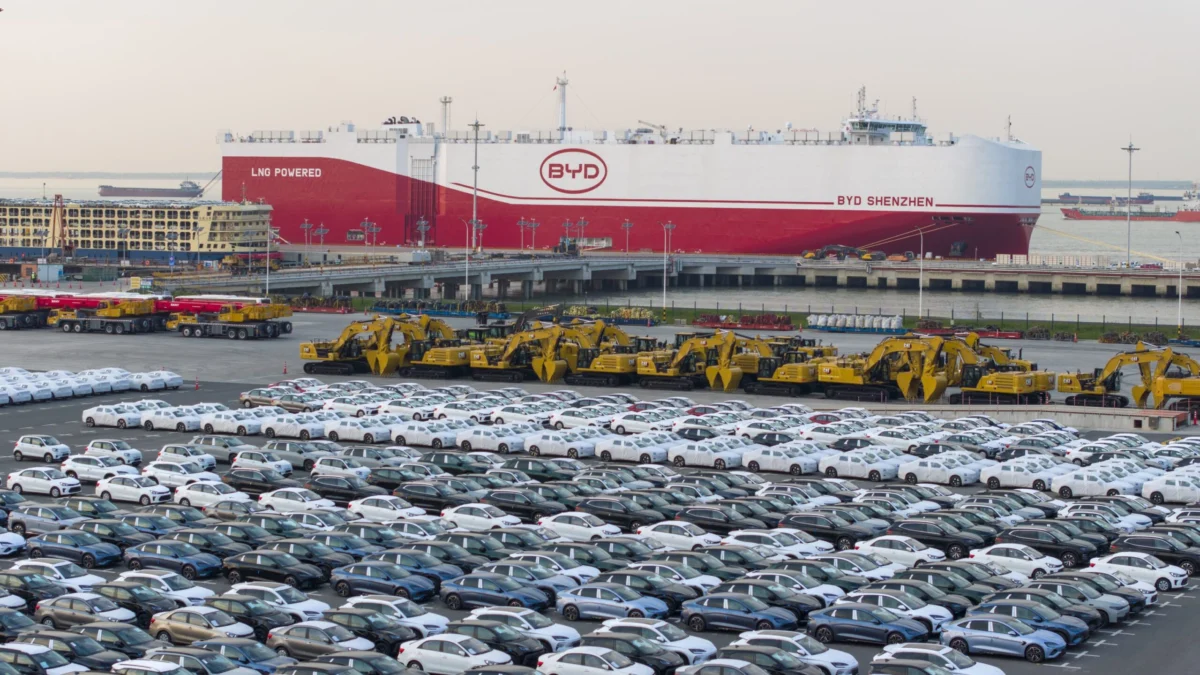
The Chinese automotive market is confronting its most challenging year since 2021, as consumer appetite for passenger vehicles significantly declines following a period of record-breaking sales in 2025. The China Passenger Car Association (CPCA) has revised its full-year retail sales projection for 2026 downward to a 14% decrease, a stark contrast to its earlier forecast of flat year-on-year sales. This adjustment comes after passenger vehicle sales experienced a substantial drop of 20.2% in the first half of the year. The CPCA now anticipates a final delivery volume of 20.4 million units by the end of 2026, a notable decrease from the record 23.7 million units sold in the previous year. As of the first half of 2026, cumulative sales stand at 8.7 million units.
Adding to the somber outlook, Xiao Feng, head of Hong Kong/China Industrials Research at Citic CLSA, projects an even bleaker scenario, forecasting cumulative auto sales to fall by 20% year-on-year, surpassing the CPCA’s full-year estimate. However, Feng remains cautiously optimistic about the new energy vehicle (NEV) segment, which includes electric and hybrid cars and vans, expecting NEV sales to decline by a more moderate 5% to 6% year-on-year. Tu Le, founder of Sino Auto Insights, described the current market conditions as "brutal," attributing the struggles to intensified competition among original equipment manufacturers (OEMs) vying for a shrinking pool of consumer demand.
Several key factors are contributing to the downturn. Rising fuel costs and a reduction in electric vehicle subsidies have dampened consumer enthusiasm. Data from China’s National Bureau of Statistics reveals that transportation energy costs soared by 15.3% year-over-year in June, directly impacting demand for internal combustion engine (ICE) vehicles. In June alone, retail sales of ICE vehicles plummeted by 39% year-on-year, with pure gasoline models seeing a 42% decline, accounting for a significant 78% of the total decrease in passenger vehicle sales for that month. Furthermore, Beijing’s decision to scale back NEV subsidies, which had previously stimulated consumer purchasing, has further tempered demand in 2026. Feng suggests that this slowdown might be a consequence of "frontloaded demand from last year," where consumers purchased vehicles in anticipation of policy changes or price increases.
On the production side, Chinese automakers are facing pressure from escalating raw material and component costs. The prices of battery-related inputs, including lithium and memory chips, have surged, leading to a significant contraction in industry-wide sales profit margins. For the period between January and May 2026, margins fell to 3.4%, and industry profits saw a 20% year-on-year decline, according to CPCA Secretary General Cui Dongshu. The situation is further exacerbated by a more than 1% year-on-year drop in passenger vehicle prices in June, squeezing already tight profit margins.

Feng anticipates that these razor-thin margins will trigger a market consolidation, potentially reducing China’s fragmented EV market to seven or eight major players by 2030. He predicts that American automakers may not survive the intense competition in the Chinese market, leaving domestic brands like BYD, Geely, and Leapmotor, alongside German manufacturer Volkswagen and Japan’s Toyota, as the likely survivors. Even Volkswagen, despite its pivot towards electric vehicles in China, reported a 25.9% year-on-year decline in deliveries for the first half of 2026.
Analysts emphasize that maintaining sales at scale is critical for survival in the current competitive landscape of the EV race. Feng estimates that automakers in China need to achieve annual sales of 500,000 units to break even, 1 million units for sustainable profits, and 2 million units to attain full economies of scale. Smaller players failing to meet these benchmarks are expected to be largely eliminated from the market. Among the major domestic players, BYD reported 1.8 million sales in the first half of 2026, followed by Geely with 1.4 million and Leapmotor with 356,000 deliveries. For foreign companies, Volkswagen Group recorded 973,000 deliveries during the same period, while Toyota reported 579,000 deliveries between January and May.
Despite the current pessimism surrounding the industry’s outlook for the remainder of 2026, Feng anticipates a rebound in 2027, driven by expected improvements in economic conditions and a natural cyclical recovery as vehicle fleets age and owners seek replacements. He remains confident in a market resurgence next year, especially with the potential for even stronger growth in the NEV market.
This anticipated recovery could be further bolstered by a surge in exports, as Chinese automakers leverage rising fuel costs in overseas markets. In June, total passenger vehicle exports saw a 11.5% month-on-month increase and an impressive 82.3% year-on-year surge, reaching 877,000 units, according to CPCA data. Fengming Lu, Assistant Professor at The Australian National University, suggests that overseas consumers are increasingly turning to Chinese-made EVs due to their lower operating costs. The ongoing geopolitical situation in the Middle East, which has led to shipping disruptions and soaring global fuel prices, is cited as a significant motivator for consumers to consider EVs.