 11
11
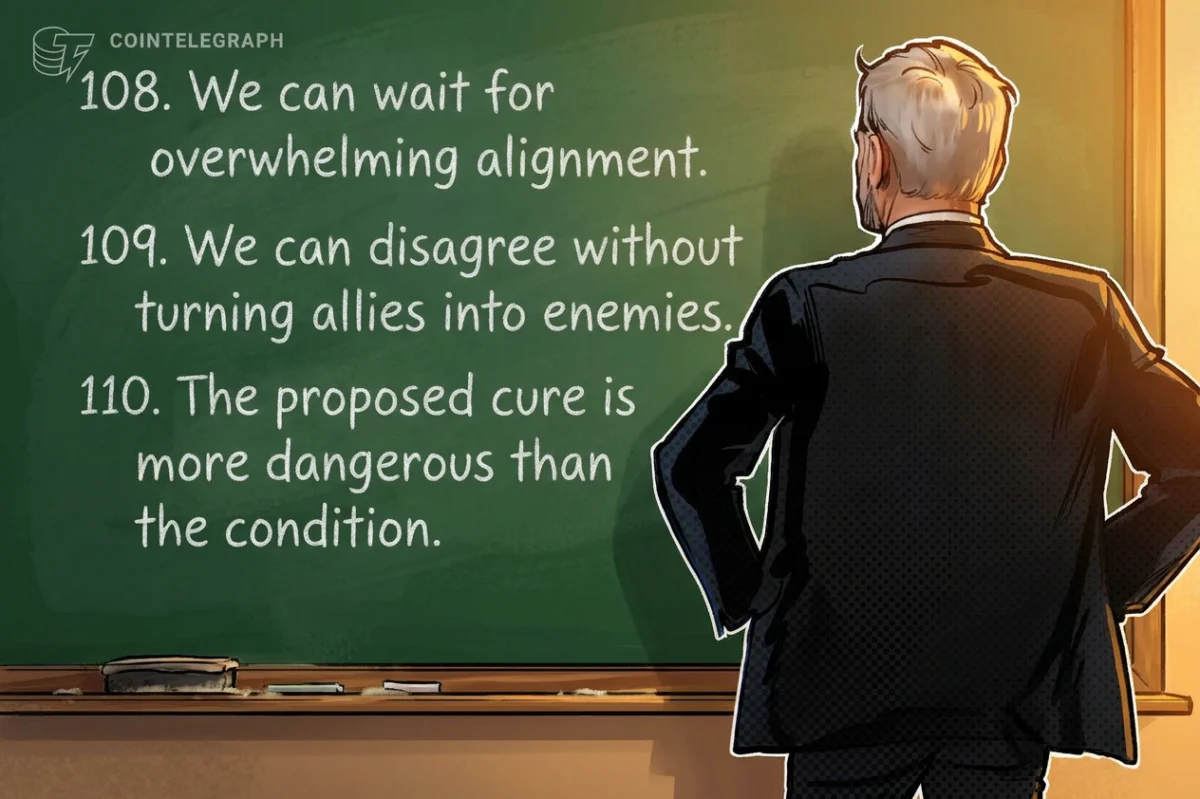
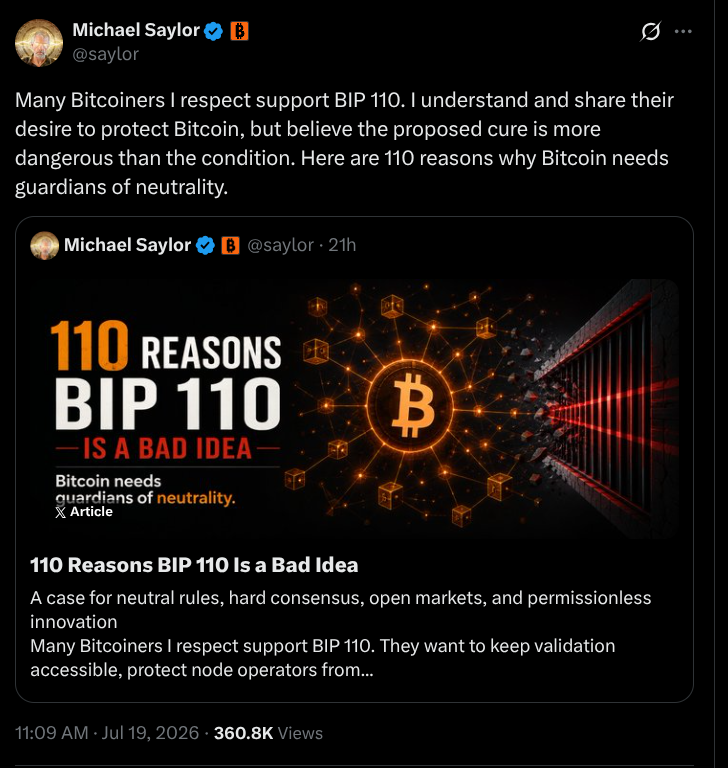
Michael Saylor, executive chairman of MicroStrategy, has publicly articulated his strong opposition to Bitcoin Improvement Proposal 110 (BIP-110), a proposed temporary fork aimed at limiting non-monetary transactions on the Bitcoin network. On Sunday, Saylor took to social media platform X.com to detail his "110 reasons" why he believes this proposal is detrimental to Bitcoin.
BIP-110, introduced in December 2025, seeks to address concerns about the Bitcoin network being "spammed" by non-fungible token (NFT)-like Ordinals inscriptions and other arbitrary data. The proponents of BIP-110 argue that such activities detract from Bitcoin’s primary function as a peer-to-peer cash system and can impose undue costs on node operators and users.
In a comprehensive post on X.com, which spanned approximately 3,700 words, Saylor, whose company holds the largest corporate treasury of Bitcoin (BTC), outlined his counterarguments. He championed principles he described as "neutral rules, hard consensus, open markets, and permissionless innovation."
The visual accompanying Saylor’s post depicted a screenshot of his detailed critique, illustrating the extensive nature of his response to the proposal. The source of this visual was credited to Michael Saylor’s X.com account.
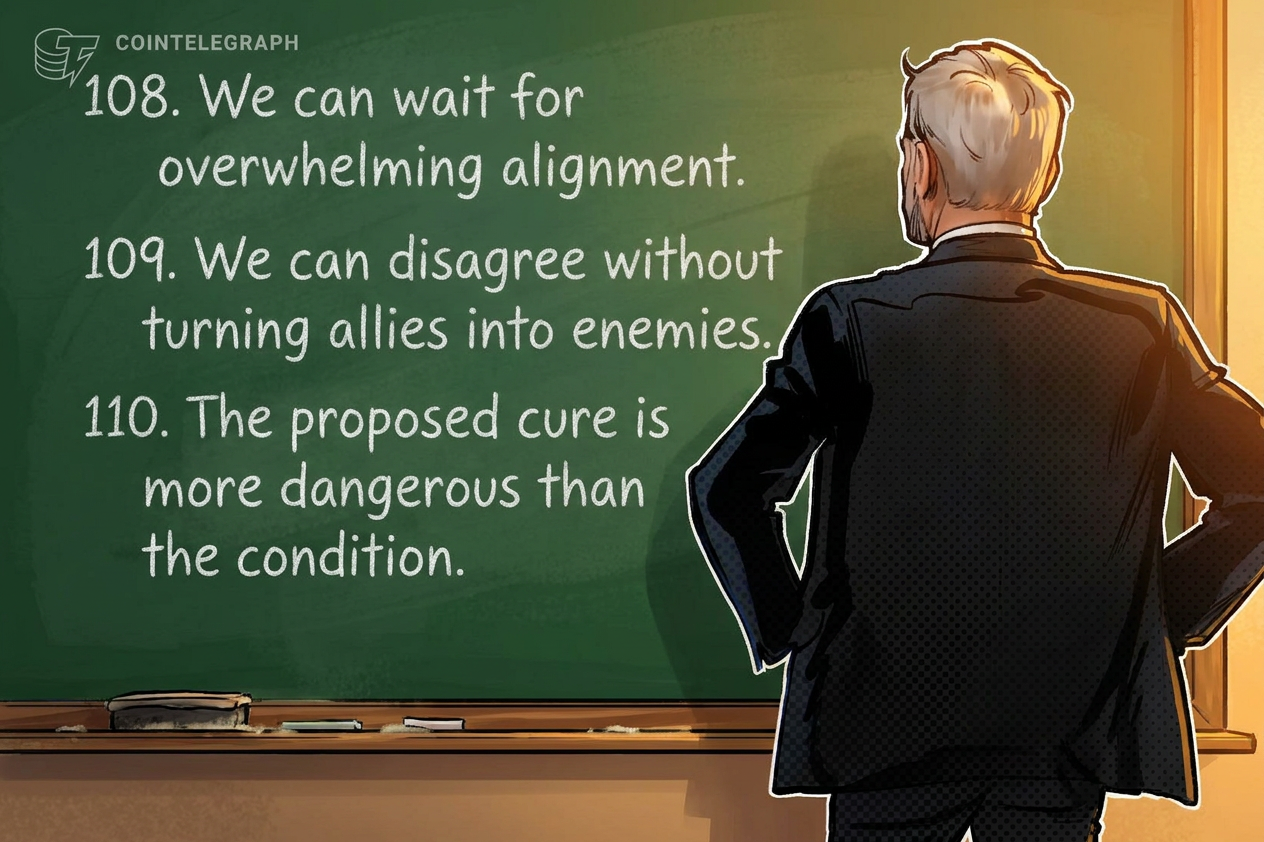
Saylor acknowledged the valid concerns raised by proponents of BIP-110, stating, "Many Bitcoiners I respect support BIP 110. They want to keep validation accessible, protect node operators from unwanted costs and content, preserve affordable payments, and keep Bitcoin focused on sound money rather than general-purpose data storage. Those are serious concerns. I share the objectives. I disagree about the remedy." He emphasized that his critique was directed at the proposal itself, not the individuals advocating for it, and that he assumes good faith, believing Bitcoin is strongest when disagreements are handled without animosity.
As of Sunday at 12 p.m. ET, Saylor’s post had garnered significant attention, with over 879,000 views, 692 replies, and 852 retweets, indicating the substantial interest and debate surrounding BIP-110 within the Bitcoin community.
The dispute over BIP-110 is considered one of the more prominent protocol-level disagreements in the Bitcoin development community since the Blocksize Wars of 2015-2017. During that period, participants debated the merits and risks of increasing the block size limit to enhance scalability, a discussion that ultimately led to significant debates and potential chain splits.
BIP-110 was put forward by a pseudonymous Bitcoin developer known as "Dathon Ohm," with support from Luke Dashjr, the founder of Ocean protocol. Notable figures opposing the proposal include Adam Back, CEO of Blockstream.
Uncertainty Surrounds BIP-110 Approval
The activation of BIP-110 is contingent on achieving broad consensus. Specifically, the proposal will only be enacted if 55% of Bitcoin nodes validating blocks signal their support across a designated "period." However, data from the most recent period, number 475, which spanned blocks 955,584 to 957,599, indicated a significantly lower level of support, with only 1% of blocks in favor of the proposal.
This debate occurs at a time when activity related to Ordinals inscriptions has decreased considerably. In the past month, fewer than 10,000 Ordinals have been inscribed daily on the Bitcoin blockchain, a stark contrast to the peak of over 400,000 daily inscriptions observed in August 2023. A chart illustrating the change in daily Ordinals inscriptions since December 2022, sourced from Dune Analytics, visually represents this decline.
Adam Back has previously voiced his criticism of BIP-110, characterizing it as a "quest to police other people." He argued that Bitcoin’s decentralized nature implies that no single entity can impose its views on others, asserting that such an approach is incompatible with Bitcoin’s cypherpunk ethos of permissionless and censorship-resistant money.
Conversely, Luke Dashjr and other supporters of BIP-110 have described the "bloat" caused by Ordinals as a "serious threat" to the network, necessitating an urgent solution. They contend that BIP-110 would not precipitate a chain split, as some fear, and that its proposed temporary one-year limitation would not invalidate fee-paying transactions in the long term.
Cointelegraph remains committed to providing independent and transparent journalism. This report adheres to Cointelegraph’s Editorial Policy, aiming for accuracy and timeliness. Readers are encouraged to conduct their own independent verification of information.