11
11
The cryptocurrency treasury market is anticipated to undergo a period of consolidation this year, a trend fueled by the ongoing market downturn and a strategic imperative for companies with active operating businesses to merge with or acquire entities trading below their net asset value (NAV). This outlook was shared by Wojciech Kaszycki, chief strategy officer at BTCS, a prominent crypto infrastructure and treasury company.
Kaszycki elaborated on the distinct advantage held by crypto treasury firms that operate active businesses, such as providing validator services for blockchain networks or offering both public and private credit instruments. These operational activities, he explained to Cointelegraph, generate consistent cash flow. This financial stability provides a significant edge over companies whose primary strategy revolves solely around accumulating cryptocurrency assets.
This financial resilience, Kaszycki posits, empowers these operating businesses to strategically acquire companies that are currently struggling, perhaps due to underperforming crypto investments or valuations that have fallen below the inherent value of their digital asset holdings. He articulated this dynamic with a compelling analogy: “If you consolidate with another player, sometimes two plus two equals six or more, you can win faster, because everybody in this market trading below net asset value is struggling.”
The crypto treasury sector experienced a significant market-wide downturn in 2025, a period characterized by a widespread decline in stock prices for many companies, with valuations often dipping below the market value of the cryptocurrencies held on their balance sheets. This decline in the crypto treasury market preceded the broader crypto market crash that occurred in October of the same year.
Tokenized Credit Instruments Emerge as a Key Revenue Stream for Crypto Treasuries
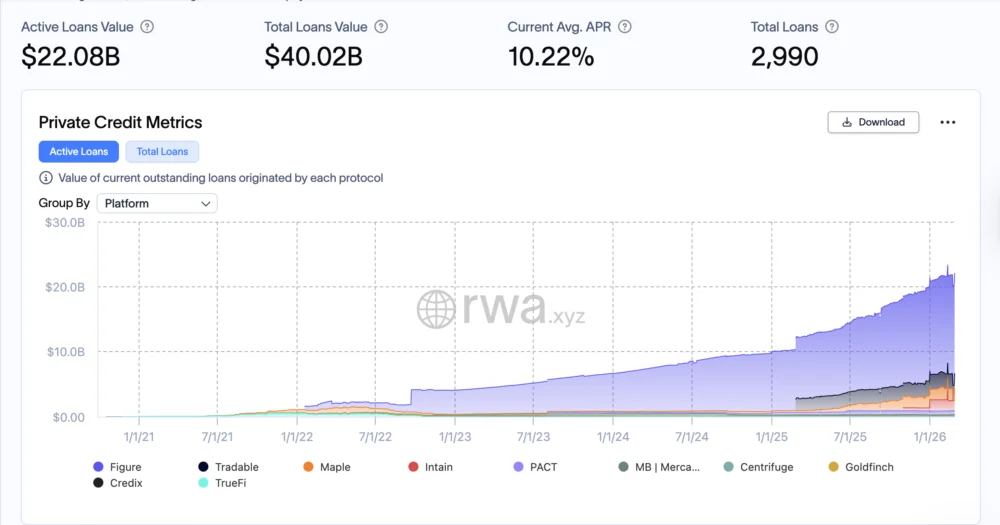
The evolving landscape of the crypto treasury market is increasingly highlighting the potential of tokenized public and private credit instruments as a significant revenue stream. Kaszycki emphasized the global importance of credit instruments, stating, “In today’s world, credit instruments are one of the biggest financial instruments used worldwide.”

The integration of blockchain technology offers a novel approach to these traditional financial tools. Kaszycki suggested that public and private credit instruments can be effectively tokenized on blockchain networks. He expressed a strong conviction in the growth potential of tokenized real-world assets (RWAs), particularly the tokenization of public and private credit, predicting substantial expansion in this area over the next 24 months.
These tokenized RWAs hold significant promise for integration within decentralized finance (DeFi) platforms. They can serve as collateral for a variety of DeFi applications, including lending and borrowing protocols, thereby unlocking new avenues for liquidity and financial innovation.
Strategy Leads the Way with Innovative Credit Offerings
Strategy, recognized as the world’s largest Bitcoin treasury company, exemplifies this forward-thinking approach by offering credit-like and fixed-income instruments directly to the investing public. The company has cited its innovative fixed-income offerings as a key factor supporting its argument for inclusion in major stock indexes by providers like MSCI.
In its formal response to MSCI, Strategy articulated its treasury operations as being meticulously designed to provide investors with diverse degrees of economic exposure to Bitcoin. This is achieved through a comprehensive suite of securities, encompassing both equity and fixed-income instruments. This diversified approach aims to cater to a broader range of investor preferences and risk appetites within the burgeoning digital asset market.
The strategic integration of traditional financial instruments, such as credit and fixed-income products, with the underlying digital asset holdings, positions companies like Strategy to navigate market volatility more effectively and to present a more robust and attractive investment proposition to a wider audience. This move towards offering more sophisticated financial products underscores a maturing crypto treasury sector, seeking to bridge the gap between traditional finance and the innovative possibilities of blockchain technology.
The broader implications of this trend suggest a future where crypto treasury companies are not merely holders of digital assets but active participants in the financial ecosystem, leveraging their operational capabilities and innovative product offerings to drive value and achieve sustainable growth, even amidst market fluctuations. The consolidation predicted by Kaszycki is likely to favor those entities that can demonstrate tangible business operations and revenue generation, moving beyond the speculative accumulation of digital assets.