 11
11 1
1 2
2 3
3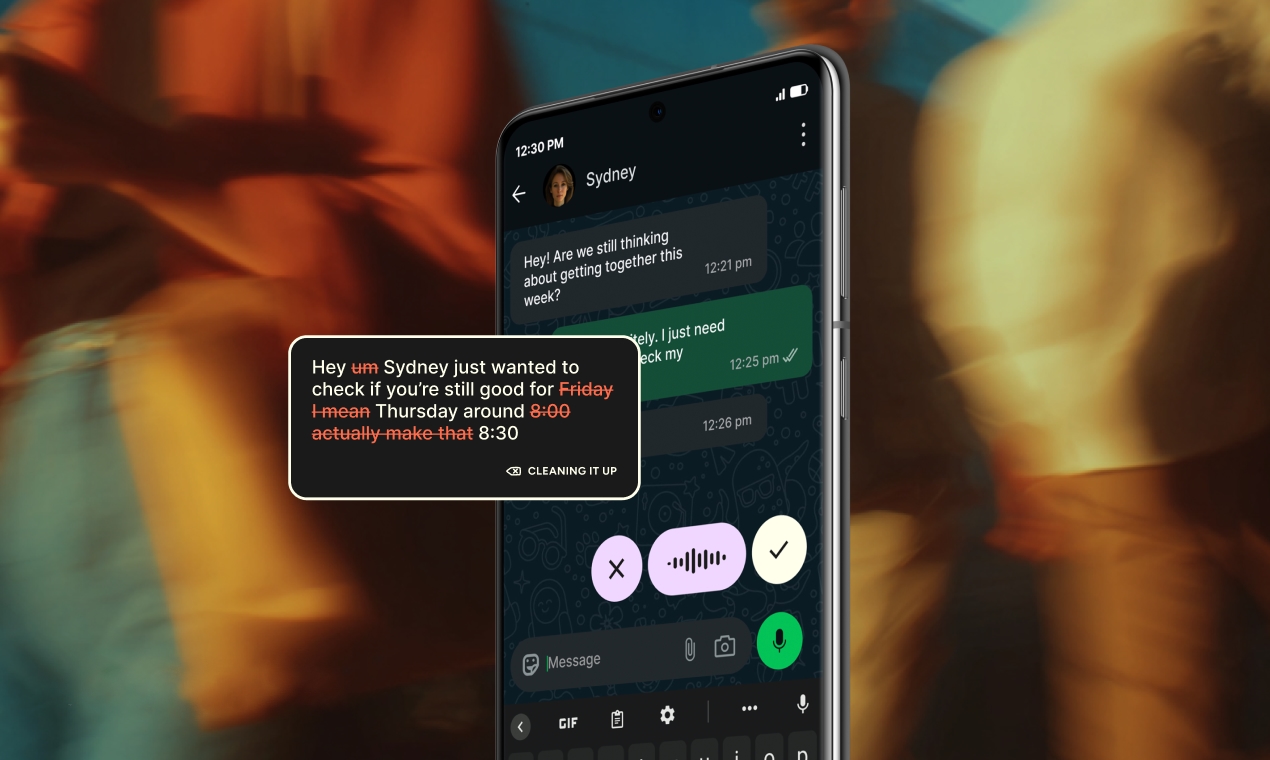
Wispr Flow, the innovative AI-powered dictation startup, today announced the official launch of its highly anticipated Android application, marking a significant expansion of its effortless dictation technology to the world’s largest mobile operating system. This release follows the company’s initial rollout on Mac and Windows platforms, and its subsequent introduction to iOS devices in June 2025, demonstrating a strategic progression towards comprehensive cross-platform availability. The Android launch is poised to address a notable gap in the market for sophisticated AI dictation solutions on the platform.
The user experience on Android introduces a distinct interface designed to optimize mobile voice input. Unlike the dedicated keyboard approach utilized on iOS, Wispr Flow for Android leverages a versatile floating bubble. This intuitive design allows users to access the dictation functionality seamlessly across various applications without disrupting their workflow. Users can initiate dictation by simply holding the floating bubble, speaking their content, and then releasing it to stop. Alternatively, a single tap on the bubble can commence the dictation process, with a subsequent tap on a designated close button concluding the recording. This flexible interaction model aims to provide an unobtrusive and highly efficient method for converting speech to text on Android devices.
Beyond mere transcription, Wispr Flow’s core strength lies in its advanced AI capabilities. Consistent with its offerings on other platforms, the Android app incorporates sophisticated algorithms that go beyond basic speech recognition. It actively cleans up common "filler words" – such as "um," "uh," and "like" – resulting in polished, professional-sounding text. Furthermore, the application intelligently formats the transcribed content, adapting it based on the context of the specific app in use and the spoken material. This contextual formatting ensures that dictated text appears naturally integrated, whether composing an email, drafting a message, or writing notes, significantly reducing the need for manual editing.
Tanay Kothari, co-founder and CEO of Wispr Flow, emphasized the pivotal role of the Android platform in realizing the company’s long-term vision. "Android finally gave us the freedom to build the voice experience we always wanted," Kothari stated. He elaborated on the potential of this development, adding, "Only when the platform gets out of the way can we truly expect voice to replace typing on mobile." This statement underscores Wispr Flow’s ambition to fundamentally transform how users interact with their mobile devices, moving beyond traditional keyboard input to a more natural and efficient voice-first paradigm.
A key highlight of the Android application, and a testament to Wispr Flow’s commitment to global accessibility, is its robust multilingual support. The app is capable of facilitating translation in over 100 languages, making it an invaluable tool for users operating in diverse linguistic environments. This extensive language capability, combined with its seamless functionality across a multitude of other applications, positions Wispr Flow as a versatile communication aid for professionals, students, and everyday users alike. This cross-app integration ensures that users can leverage Wispr Flow’s powerful dictation capabilities wherever they need them, from messaging platforms to productivity suites.

In conjunction with the Android app’s release, Wispr Flow also announced a significant underlying technological advancement. The company has undertaken a comprehensive infrastructure rewrite, resulting in a remarkable 30% increase in dictation speed. This enhancement translates directly into a more responsive and efficient user experience, further solidifying Wispr Flow’s position as a leader in high-performance AI dictation. Faster processing times mean less waiting for transcription, allowing users to maintain their flow of thought and productivity without interruption.
The launch on Android also places Wispr Flow among a select few advanced AI-powered dictation apps available on the platform. While the market is rich with such applications for desktop and iOS environments, the Android ecosystem has seen fewer entrants offering the same level of sophistication and feature set. Typeless, another notable player, launched its Android app just last month, indicating a burgeoning interest in this segment. Wispr Flow’s entry significantly enhances the options available to Android users seeking cutting-edge voice-to-text solutions. This competitive landscape highlights the growing demand for intelligent dictation tools that can keep pace with modern communication needs.
Further demonstrating its commitment to serving diverse linguistic communities, Wispr Flow has also unveiled a groundbreaking new model specifically tailored for Hinglish. Hinglish is a unique blend of Hindi and English, commonly spoken by millions in India who code-switch between the two languages in their daily conversations. This specialized model addresses a critical need for accurate transcription in this mixed-code context. Kothari shared the personal motivation behind this innovation: "If you’re someone like me, English and Hindi weave together when I’m chatting with family and colleagues back home. This is one of those times when I just had to build something for me: the first voice model to actually support transcription in Hinglish instead of traditional Hindi script." This bespoke model represents a significant leap forward in making AI dictation truly inclusive and reflective of real-world language use, particularly in regions where linguistic mixing is common. The ability to transcribe Hinglish accurately, rather than forcing users to choose between two distinct languages, removes a major barrier for a vast user base.
Early indicators suggest a strong reception for Wispr Flow’s technology. Even during early rollout phases to a select group of users, the company reported an impressive metric: over 1.3 million words were spoken in English within just a few days. This robust early adoption underscores the utility and demand for Wispr Flow’s effortless dictation capabilities. The company is also slated to participate in the upcoming TechCrunch event in Boston, MA, on June 9, 2026, where it may further elaborate on its technological advancements and market strategy, including its global expansion efforts and future product roadmap.
Wispr Flow has rapidly emerged as a prominent startup in the highly competitive AI-powered dictation space, attracting substantial venture capital investment. In June 2025, the company successfully secured $30 million in a funding round led by Menlo Ventures, signaling strong investor confidence in its technology and market potential. Just a few months later, in November 2025, Wispr Flow further solidified its financial position by securing an additional $25 million in a round led by Notable Capital. These significant investments have contributed to a total of $81 million raised by the startup to date, with its last funding round reportedly valuing the company at an impressive $700 million. This substantial backing provides Wispr Flow with the resources necessary to continue its rapid innovation, expand its global reach, and further refine its leading-edge AI dictation solutions, solidifying its trajectory as a major player in the future of human-computer interaction.