 11
11 1
1 2
2 3
3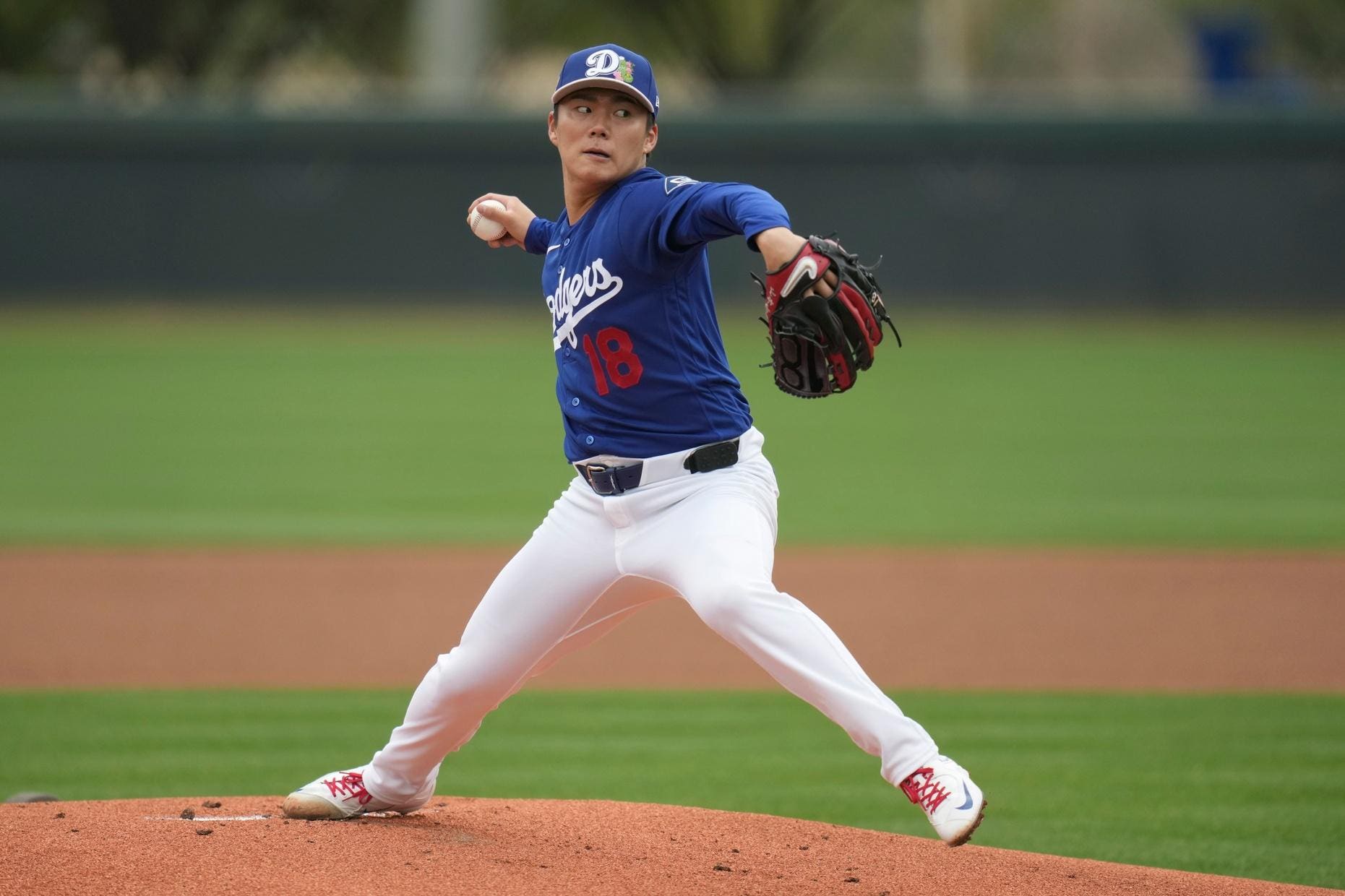
The "Best Pitches" series continues its deep dive into the nuanced world of Major League Baseball’s most effective offerings, having meticulously analyzed changeups, curveballs, and cutters in previous installments. Today, the spotlight shifts to the split-fingered fastball, a deceptive pitch known for its late downward break and ability to generate weak contact and swings-and-misses. This comprehensive evaluation identifies the game’s premier splitters from the 2025 season, based on rigorous analytical criteria.
The series systematically dissects the arsenals of all starting pitchers who achieved the significant benchmark of 135 or more innings pitched in the preceding season. This innings threshold ensures a robust sample size, providing a reliable foundation for assessing the consistent performance and true efficacy of each pitch. The core of this analytical framework rests on two primary performance indicators: a pitcher’s bat-missing capability, quantified by whiff rate, and their proficiency in contact management, measured through pitch-specific Adjusted Contact Scores. Each individual pitch is then benchmarked against the league average for both its swing-and-miss rate and its Adjusted Contact Score.
At the heart of this evaluation lies the Adjusted Contact Score (ACS), a sophisticated metric designed to gauge the relative production a pitcher "should have" allowed based on the precise exit speed and launch angle characteristics of every batted ball yielded. On this scale, 100 represents the Major League Baseball average, meaning a lower score indicates superior contact management and a more effective pitch. For instance, an ACS of 70 signifies a pitch that limits batted ball outcomes to 30% better than the league average. An average pitch, by definition, is assigned a "B" grade, with a sliding scale applied to each pitcher’s results to approximate a bell curve, allowing for a nuanced differentiation of performance from "A+" to "D-". This objective, data-driven methodology ensures a fair and consistent assessment across all pitches and pitchers.
In the 2025 season, the changeup narrowly edged out the splitter as the most effective overall pitch type among all pitchers, demonstrating a superior Adjusted Contact Score (86.6 for changeups versus 91.1 for splitters). However, the splitter showcased a slightly higher overall whiff rate (15.5% compared to the changeup’s 14.6%), underscoring its inherent bat-missing potential. This indicates that while changeups might have been slightly better at mitigating damage when contact was made, splitters were marginally more successful at preventing contact altogether. The splitter, often referred to as a "forkball" in some pitching circles, is prized for its ability to mimic a fastball out of the hand before dramatically dropping as it approaches the plate, making it particularly difficult for hitters to track and square up.
For the 2025 season, a select group of 12 pitchers met the stringent minimum criteria to earn a pitch grade for their splitters, highlighting its specialized nature and the skill required to command it effectively. Among this elite dozen, three right-handed pitchers distinguished themselves by earning coveted "A" grades: Yoshinobu Yamamoto of the Los Angeles Dodgers, Dean Kremer of the Baltimore Orioles, and Kevin Gausman of the Toronto Blue Jays. Notably, all three of these top-tier splitter users also incorporated a cutter into their repertoire at least 20% of the time, with Gausman leading all qualifiers by throwing his cutter an impressive 37.6% of the time. This suggests a potential synergistic relationship between the two pitches, where the cutter’s lateral movement complements the splitter’s vertical drop, further confusing opposing batters.
RHP Yoshinobu Yamamoto (Dodgers) – A Grade
(69 Adjusted Contact Score, 21.1% Whiff Rate)
Los Angeles Dodgers right-hander Yoshinobu Yamamoto, captured in an image throwing live batting practice during spring training in Phoenix on February 13, 2026, quietly emerged as one of baseball’s most effective starting pitchers in the 2025 season, with his exceptional splitter serving as the linchpin of his success. His splitter was not only the second-best in terms of contact management with an outstanding 69 Adjusted Contact Score but also ranked second in bat-missing capability with a formidable 21.1% whiff rate. These metrics illustrate a pitch that not only generates swings and misses at an elite level but also severely limits the quality of contact when hitters do connect. A truly remarkable aspect of Yamamoto’s splitter was its otherworldly 72.2% groundball rate, significantly surpassing the qualifiers’ average of 47.7%. This high groundball percentage is invaluable for run prevention, as ground balls are far less likely to result in extra-base hits or home runs. Yamamoto delivers this pitch with impressive velocity, averaging 90.9 mph. Despite only average spin (1429 rpm) and horizontal movement (6.6 inches), the key to its effectiveness lies in its dramatically below-average vertical movement, registering a mere 0.1 inches – the lowest among all qualified splitters. This lack of vertical movement, combined with its velocity, creates the illusion of a fastball that suddenly "dies" at the plate, making it incredibly challenging for hitters to make solid contact.
RHP Dean Kremer (Orioles) – A Grade
(77 Adjusted Contact Score, 21.3% Whiff Rate)
Often overlooked and perhaps unfairly categorized as a "5th starter type," Baltimore Orioles right-hander Dean Kremer consistently performs above expectations, largely thanks to his elite splitter. His splitter ranked first among all qualified pitchers in whiff rate, at an impressive 21.3%, and third in pitch-specific Adjusted Contact Score (77), firmly establishing it as one of the game’s best. Stylistically, Kremer’s splitter offers a stark contrast to Yamamoto’s. While Yamamoto relies on extreme vertical drop, Kremer’s pitch features above-average vertical movement (4.4 inches) and average horizontal movement (6.2 inches), but with below-average velocity (81.8 mph) and spin (1131 rpm). This unique combination of characteristics allows it to achieve similar elite results through a different approach. Kremer’s splitter also generated a 12.5% pop-up rate, nearly double the qualifiers’ average of 6.5%. Pop-ups are effectively "automatic" outs, further enhancing the pitch’s contact management prowess. Moreover, he effectively muted fly-ball authority with the pitch, evidenced by an excellent 77 Adjusted Fly Ball Contact Score, ranking third among all qualifiers. This ability to suppress dangerous aerial contact, coupled with its high whiff rate, underscores why Kremer’s splitter is a true weapon that elevates his overall performance beyond common perception.

RHP Kevin Gausman (Blue Jays) – A Grade
(78 Adjusted Contact Score, 19.7% Whiff Rate)
For years, Kevin Gausman of the Toronto Blue Jays has been widely regarded as the "long-reigning king" of the splitter, and his performance in 2025 reaffirmed this reputation. Gausman’s consistent excellence with the pitch is well-documented; since pitch grades were first issued in 2016, he has earned "A+" grades in 2016 and 2021, "A" grades in 2018 and 2022, "B+" grades in 2017 and 2023, and a "B" grade in 2024. This remarkable track record demonstrates sustained elite performance over nearly a decade. In 2025, his splitter ranked third in whiff rate (19.7%) and fourth in pitch-specific Adjusted Contact Score (78), maintaining its status among baseball’s best. Gausman throws his splitter more frequently than any other qualified pitcher, a testament to his confidence in its effectiveness. His splitter boasts plenty of spin (1691 rpm) and horizontal movement (9.0 inches), alongside average velocity (84.8 mph) and below-average vertical movement (1.4 inches). This profile allows Gausman to effectively "throttle" groundball authority, as evidenced by his 70 Adjusted Grounder Contact Score, which was the second-best among all qualifiers. This ability to induce weak ground balls, combined with a high strikeout rate, makes Gausman’s splitter an incredibly challenging pitch for opposing hitters to handle, contributing significantly to his enduring success as a top-tier starter.
Just Missed: Shota Imanaga’s Strong Showing
One pitcher narrowly missed the "A" grade threshold, earning a commendable "B+" for his splitter: Cubs’ left-hander Shota Imanaga. While his 85 Adjusted Contact Score was in the league-average range, his 18.7% whiff rate was well above average, showcasing his ability to generate swings and misses. It’s worth noting that Imanaga earned an "A+" grade for his splitter in 2024, indicating a slight dip in overall effectiveness, particularly in his bat-missing ability. In 2024, his contact management performance (83 ACS) was similar to 2025, but his pitch-specific whiff rate was a markedly higher 26.0%. The decrease in whiff rate in 2025 suggests that while he maintained good contact management, the pitch lost some of its swing-and-miss bite, possibly due to minor adjustments or hitters adapting to his arsenal. Imanaga’s inclusion highlights the effectiveness of southpaws with elite splitters, a relatively rare commodity among the top performers.
The Worst Splitter of 2025: Joe Ryan’s Struggles
On the opposite end of the spectrum, Minnesota Twins right-hander Joe Ryan’s splitter unfortunately earned the distinction of being the least effective among qualified pitchers in 2025, receiving a "D+" grade. This marked a continued struggle for Ryan with the pitch, as he also brought up the rear with a "C" grade in 2024. In 2025, his 122 Adjusted Contact Score tied for the worst among qualifiers, indicating that when hitters made contact, they did so with significantly higher quality than the league average. Compounding this issue was his alarmingly low 8.1% whiff rate, which stood alone in last place, demonstrating a profound inability to induce swings and misses. While his performance with the splitter in 2024 was marginally better (99 ACS, 11.8% whiff rate), his 2025 results underscore a pitch that is consistently ineffective in both contact management and bat-missing, making it a liability in his repertoire.
Former "A" Grade Recipients: The Impact of Injuries
It’s important to acknowledge that the landscape of elite pitches can shift due to various factors, including injuries. Beyond Shota Imanaga, who transitioned from an "A+" in 2024 to a "B+" in 2025, two other right-handers who received "A" grades for their splitters in 2024 were unable to qualify in 2025 due to injuries. Logan Gilbert of the Seattle Mariners and Frankie Montas, who was with the Mets and became a free agent, both demonstrated elite splitter performance in the previous season. Their absence from the 2025 qualifiers underscores how health and consistent innings pitched are crucial for maintaining a presence among the league’s top-graded pitches. Their past performance, however, serves as a reminder of the potential impact a dominant splitter can have on a pitcher’s overall success.
In conclusion, the 2025 season showcased a fascinating array of elite split-fingered fastballs, with Yoshinobu Yamamoto, Dean Kremer, and Kevin Gausman leading the charge. While their individual pitches varied significantly in terms of velocity, spin, movement profiles, and the types of batted balls they generated, a common thread united them: an exceptional ability to miss bats and effectively manage contact. These analytical insights, derived from objective metrics like Adjusted Contact Score and whiff rate, not only highlight the best pitches in baseball but also deepen our understanding of what makes them so profoundly effective against the game’s most skilled hitters. The splitter, whether it’s Yamamoto’s high-velocity sinker, Kremer’s pop-up inducer, or Gausman’s consistent groundball machine, remains a crucial weapon in the modern pitcher’s arsenal, proving its enduring value in preventing runs and dominating opposing lineups.