 11
11 1
1 2
2 3
3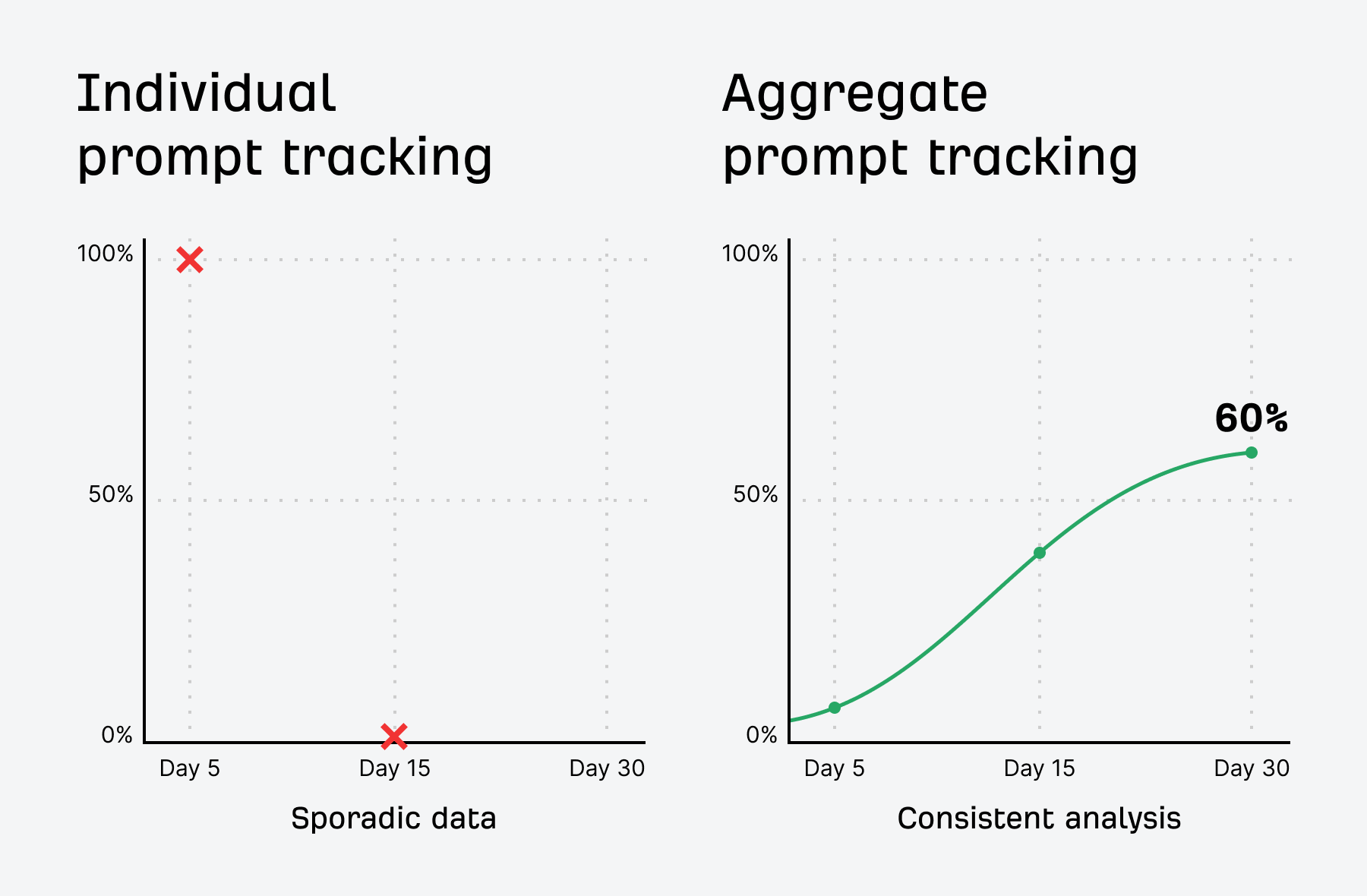
In the rapidly evolving digital landscape, understanding how your brand is perceived and mentioned across all platforms is paramount. While traditional search engines and social media offer established metrics for tracking brand presence, the burgeoning influence of Artificial Intelligence (AI) chatbots like ChatGPT presents a new frontier—and a significant challenge. With millions of users relying on ChatGPT for product recommendations and information daily, its impact on consumer decisions is undeniable. However, unlike conventional search engines, ChatGPT offers no direct impressions data, no Search Console equivalent, and no built-in analytics, leaving brands in the dark about their visibility within these conversational AI interfaces.
This guide delves into the critical importance of monitoring brand mentions within ChatGPT, outlining a strategic approach from free, manual methods to sophisticated automated tools, and detailing how to leverage the insights gained.
The Unique Challenge of ChatGPT Brand Mentions
Unlike search engines that provide ranking data, social media platforms that reveal reach, or review sites that display ratings, ChatGPT offers no direct performance indicators for brand mentions. Yet, its substantial user base—reportedly reaching hundreds of millions of weekly active users—makes it a powerful influencer in consumer research and purchasing decisions.
This AI-driven interaction differs fundamentally from traditional search. There is no "page one" to climb, no search results page to optimize for. It also diverges from social listening, where public conversations can be monitored and engaged with. ChatGPT conversations occur privately, and brands are not active participants in these exchanges. Instead, ChatGPT synthesizes information from its extensive training data and, increasingly, from live web sources through a process known as Retrieval Augmented Generation (RAG). This means a brand’s presence in ChatGPT answers is contingent on its meaningful representation within the authoritative sources the AI draws upon. Consequently, monitoring ChatGPT mentions necessitates a distinct and tailored strategy.
Defining a "Brand Mention" in the ChatGPT Context
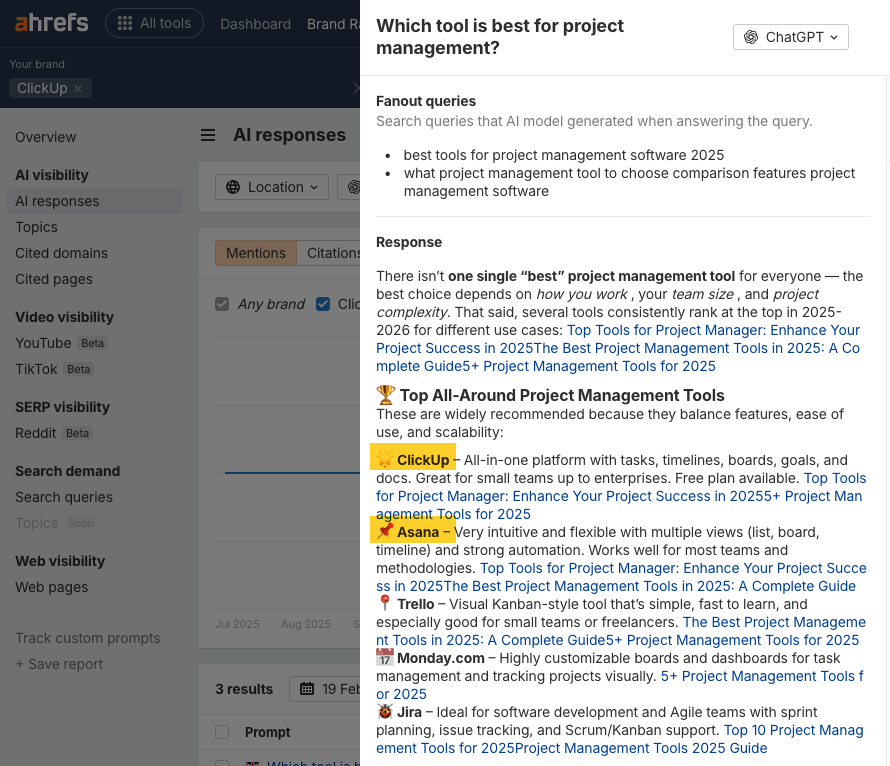
A brand mention in ChatGPT occurs when a brand’s name is explicitly included in the AI’s generated response to a user’s query. For example, if a user asks, "What is the best project management tool?" and ChatGPT replies, "ClickUp and Asana are commonly used for this purpose," both ClickUp and Asana have received inline brand mentions.
These mentions originate either from the vast corpus of text ChatGPT was trained on or from real-time information retrieved via RAG, where the AI actively consults search engines like Google and Bing. A strong presence in authoritative industry comparisons, review content, and other informational sources significantly increases the likelihood of a brand being mentioned.
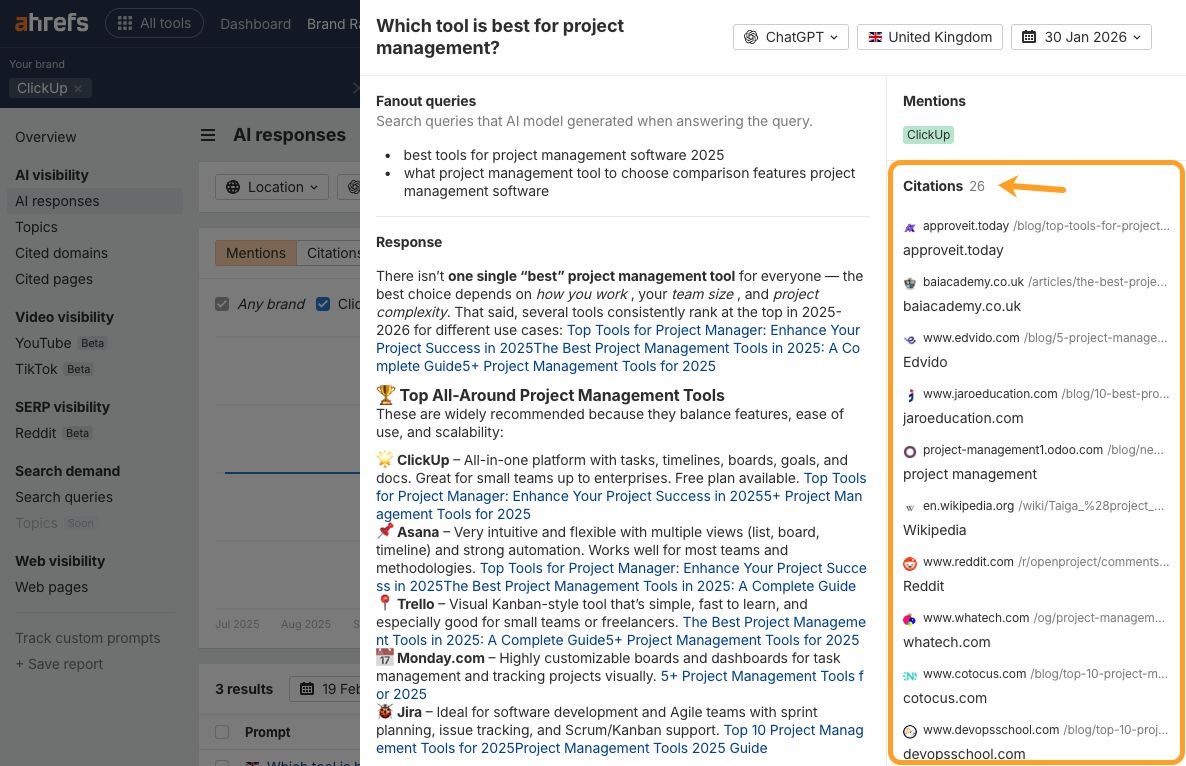
It is crucial to distinguish between a brand mention and a citation. ChatGPT often retrieves and cites external web sources to support its answers, providing links to the original content. While citations indicate that a brand’s content was referenced, they are not direct brand mentions within the AI’s narrative. This distinction is vital for strategic planning. Addressing a lack of inline mentions typically involves expanding a brand’s footprint in authoritative third-party content, such as industry roundups and comparison pieces, and ensuring content is optimized for LLM training data. Improving citations, conversely, aligns more closely with traditional SEO practices, focusing on content freshness, crawlability, and the publication of clear, authoritative resources.
Manual Audit: A Free Starting Point for Monitoring
The most accessible method for assessing your brand’s ChatGPT presence is a manual audit. This involves directly querying ChatGPT with relevant prompts. To ensure unbiased results, it is essential to log out of your account and use an incognito browser window. This prevents personalized responses based on your chat history, saved memory, or custom instructions.
Effective prompting is key. A range of brand-specific and category-focused questions can reveal your brand’s visibility. Examples of brand-related prompts include: "What is [Your brand] and what is it used for?", "What do people think about [Your brand]?", and "How does [Your brand] compare to [Competitor A] and [Competitor B]?". For category-focused queries, consider: "What are the best tools for [your category]?", "What should I look for in a [product/service type]?", and "Give me a shortlist of options for [solving X problem]."
The DEJAN methodology, developed by Dan Petrovic, offers a structured approach by repeating specific queries. After gathering responses, it’s crucial to systematically document findings: Does your brand appear? Is the description accurate regarding features, pricing, and positioning? What is the tone of the mention (positive, neutral, or negative)? And which competitors are mentioned when your brand is absent?
It is also recommended to run these prompts with ChatGPT’s web search functionality both enabled and disabled. With search off, ChatGPT relies solely on its training data. With search on, real-time web sources influence the output. This distinction can reveal whether visibility issues stem from broader branding problems within the training data or content-related gaps in the RAG data. For instance, a brand might not be recognized as an "AI visibility tool" with search off but might be with search on, indicating a need to strengthen its association with AI topics in its core training data. This analysis provides insight into how a brand is represented, its strongest topic associations, and what the model inherently "knows" beyond search results.
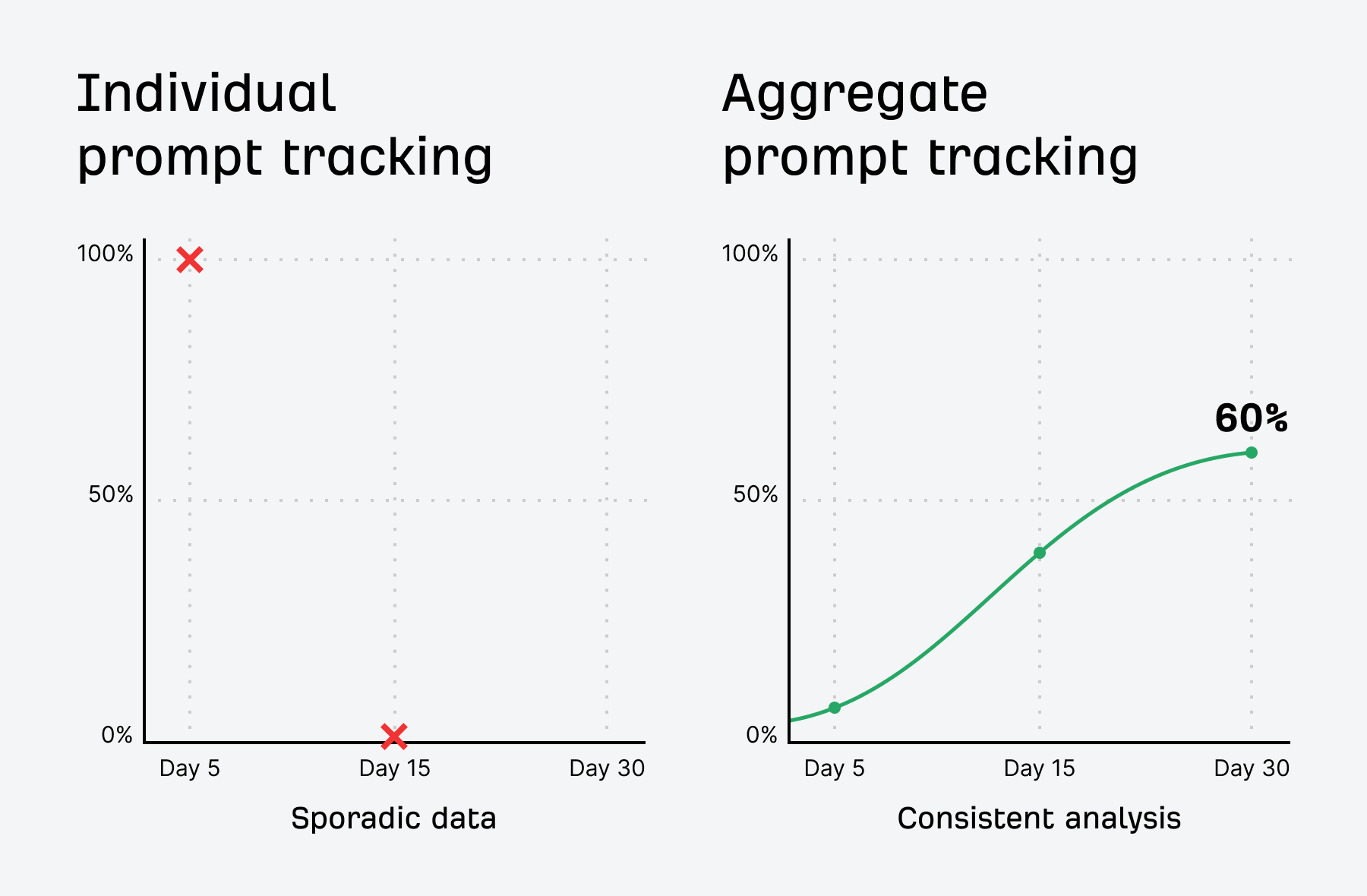
The primary limitation of manual auditing is its lack of scale. ChatGPT responses are not deterministic; running the same prompt multiple times can yield different answers. Therefore, collecting a large volume of responses over a chosen period is necessary for reliable average mention visibility. Manual audits are best suited for establishing an initial benchmark, after which automated tools are recommended for ongoing, scaled tracking.
Automated Monitoring with Ahrefs Brand Radar
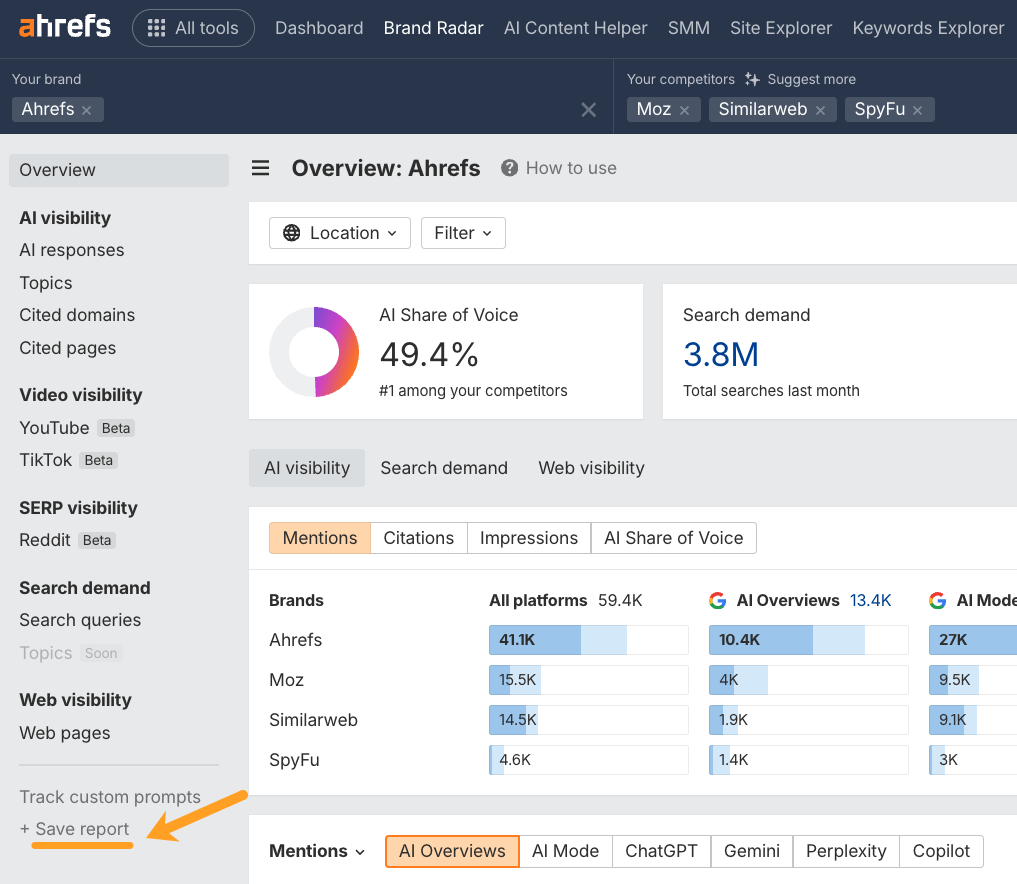
For continuous and scalable monitoring, tools like Ahrefs Brand Radar offer dedicated solutions. This platform allows users to track brand mentions across various channels, including the ChatGPT index.
1. Monitoring Overall Visibility:
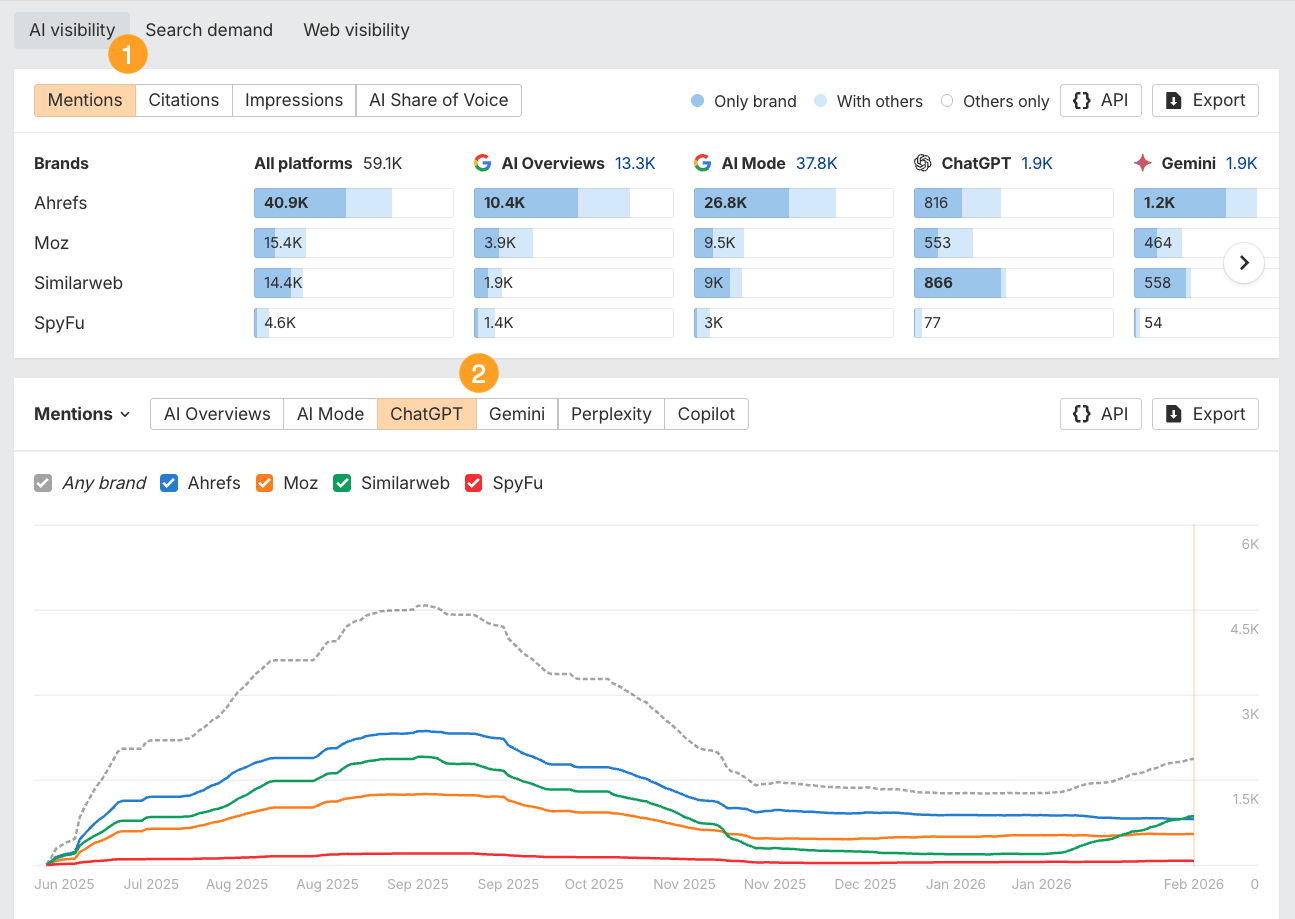
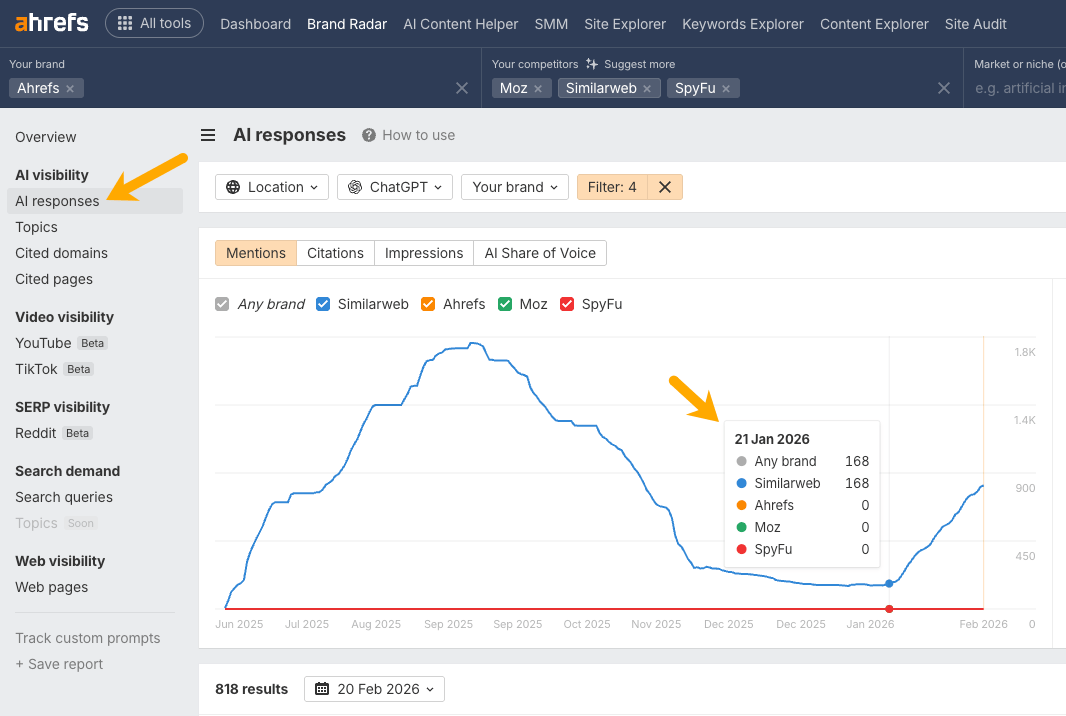
Begin by assessing your brand’s overall performance against the entire Brand Radar database. Input your brand name and any relevant competitors into Brand Radar and save the report for future reference. Ensure you are viewing mentions on the "AI visibility" chart and select the "ChatGPT" index. This provides a historical view of your brand’s mention trends compared to competitors. For example, if Similarweb (represented in green) shows a sharp increase in ChatGPT mentions, it warrants investigation.
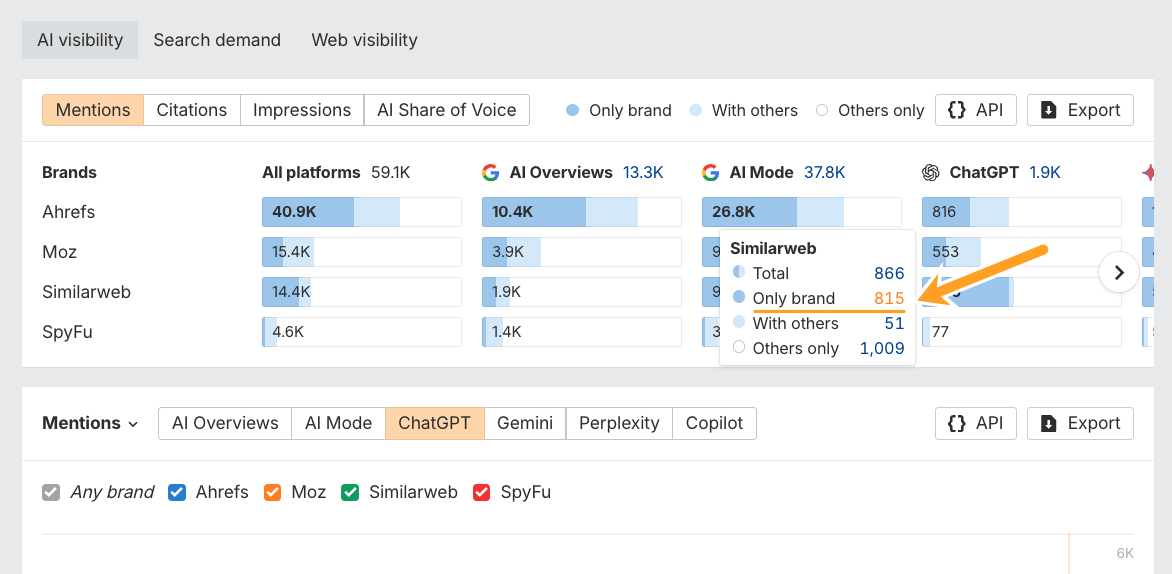
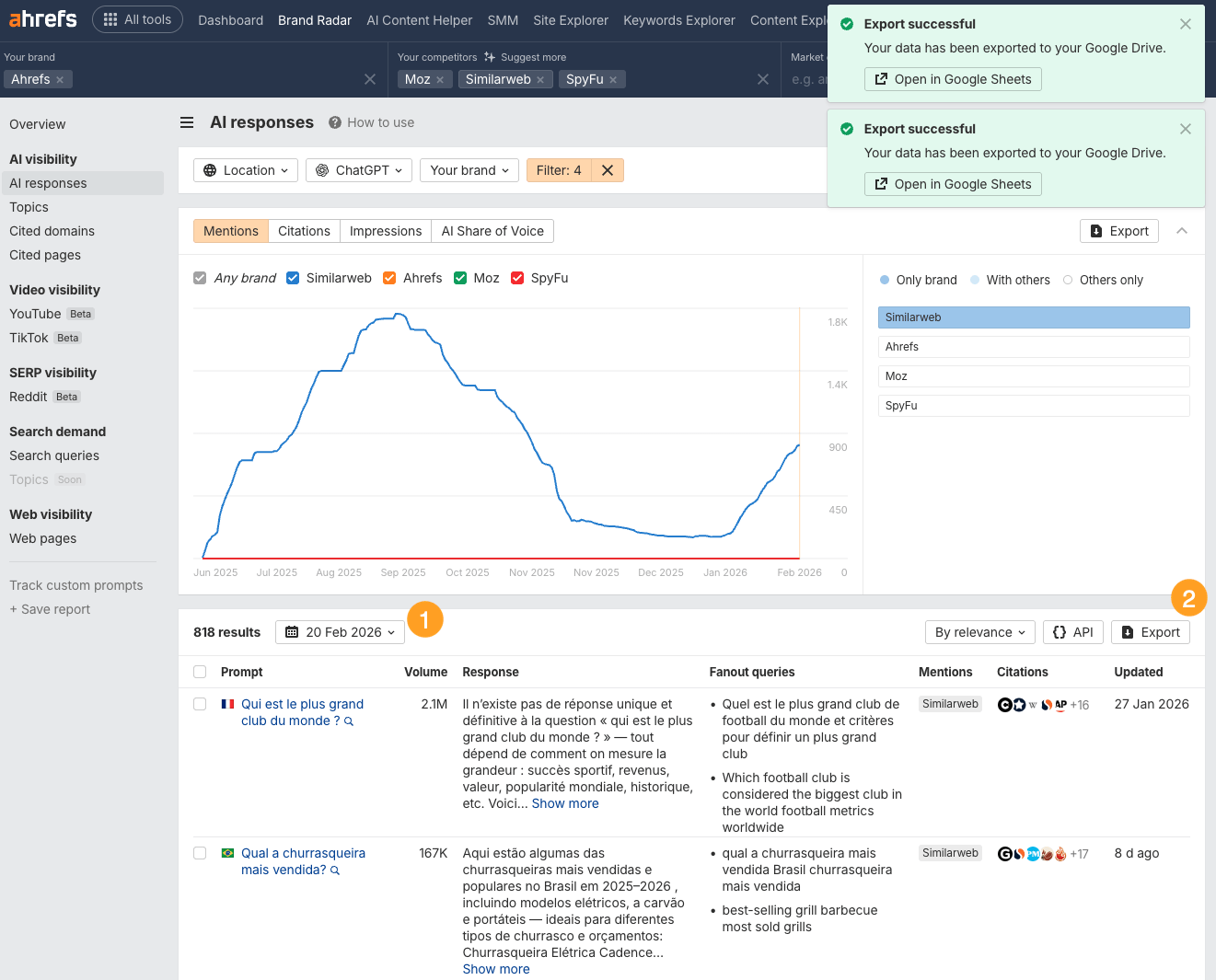
By hovering over a competitor’s ChatGPT mentions and selecting "Only brand," you can isolate their performance within the AI Responses report. Exporting the prompts, responses, and citations associated with mention spikes allows for analysis. Feeding this data into ChatGPT with a prompt like, "What kinds of prompts has [Competitor Brand] gained visibility for?" can reveal strategic insights, such as Similarweb’s increased visibility in market share and e-commerce topics. This analysis helps determine whether a competitor’s strategy is worth replicating.
2. Monitoring Specific ChatGPT Mentions with Custom Prompts:
Beyond broad analysis, it’s crucial to track conversations that directly influence revenue, positioning, product perception, or campaigns. Custom prompts in Brand Radar enable this focused monitoring. Start with broad categories like "Bottom of funnel" prompts and define specific intent angles within them. For each angle, create 3-5 phrasing variations to mitigate wording bias and account for model randomness.
Setting up custom prompts involves selecting a project, defining the monitoring cadence (daily, weekly, or monthly), and specifying platforms, locations, tags, and competitors. After approximately 24 hours, response and brand mention data for your tracked ChatGPT prompts will populate the dashboard. This allows for comparison of ChatGPT visibility over time, identifying trends such as growing, flat, or declining mentions.
Acting on Your ChatGPT Monitoring Data
The insights gained from monitoring should translate directly into actionable strategies.
Zero Mentions: If your brand is absent from AI responses, it likely lacks sufficient representation in trusted content sources. The solution involves increasing your brand’s footprint in authoritative third-party content, such as industry comparisons and comparison pieces, and ensuring your content is discoverable and valuable for LLM training data. This also entails updating your website’s content for accuracy and crawlability.
Inaccurate Mentions: Inaccuracies suggest that ChatGPT is drawing from outdated information. Addressing this requires updating outdated pricing pages, product information, and articles. Focus on publishing clear, authoritative content that front-loads key insights, making it easier for ChatGPT to surface current and accurate information.
Competitors Outranking You: To understand why competitors are favored, analyze the content and context of their mentions. Using the "Others only" filter in the AI Responses report can reveal prompts, responses, and fan-out queries where your brand is excluded but competitors are present. This intelligence guides content creation and outreach efforts to boost your own mentions.
General ChatGPT Visibility Improvements: Regardless of the specific scenario, general improvements can be made by ensuring your brand is consistently mentioned in authoritative, high-quality content. This includes industry reviews, comparison articles, and expert opinions. Maintaining up-to-date and easily accessible information on your website is also crucial.
Conclusion
The initial step in navigating the AI landscape is to establish a baseline understanding of your brand’s ChatGPT presence through manual prompt audits. Documenting findings will clarify whether the primary challenge is awareness, accuracy, or competitive positioning. Once the core problem is identified, implementing targeted strategies using automated tools like Ahrefs Brand Radar becomes significantly more effective. By proactively monitoring and adapting to the evolving dynamics of AI-driven information discovery, brands can ensure their relevance and influence in this critical new communication channel.