 11
11 1
1 2
2 3
3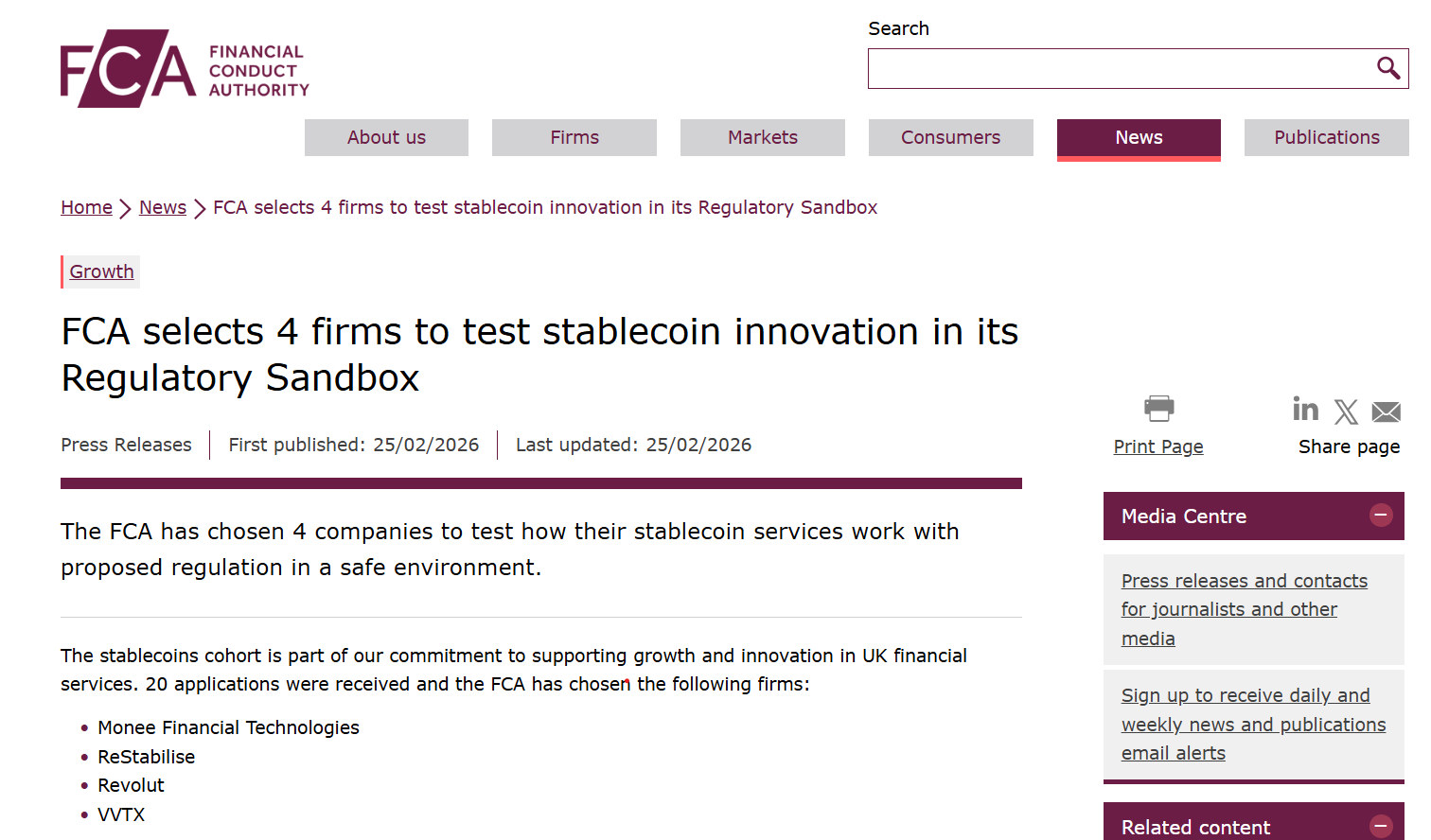
The cryptocurrency landscape is abuzz with significant regulatory and legal developments. In the United Kingdom, the Financial Conduct Authority (FCA) has selected four pioneering companies—Monee Financial Technologies, ReStabilise, Revolut, and VVTX—to participate in a dedicated stablecoin testing cohort within its established Regulatory Sandbox. This initiative, slated to commence in the first quarter of 2026, aims to rigorously assess the issuance and payment functionalities of stablecoins under the UK’s proposed regulatory framework in a controlled environment. Simultaneously, in the United States, financial services powerhouse Payoneer has formally filed for a national trust banking charter, signaling its intent to deepen its involvement in the digital asset space by potentially issuing its own stablecoin and offering a suite of crypto-related services. Meanwhile, Binance, the world’s largest cryptocurrency exchange, is reportedly considering legal recourse against media outlets, specifically citing reports from the Wall Street Journal that allege the exchange facilitated the movement of substantial digital assets to entities in Iran, in potential violation of sanctions.
The FCA’s decision to include stablecoins in its Regulatory Sandbox represents a proactive step towards understanding and governing this burgeoning sector of the digital economy. From an initial pool of 20 applicants, the chosen four—Monee Financial Technologies, ReStabilise, Revolut, and VVTX—will engage in practical testing of their stablecoin services. This rigorous evaluation will focus primarily on the issuance of stablecoins and will encompass a diverse range of potential use cases, including payment systems, wholesale settlement processes, and cryptocurrency trading platforms. The findings generated from these trials are expected to be instrumental in shaping the UK’s definitive regulatory policies for stablecoins.

Matthew Long, Director of Payments and Digital Assets at the FCA, articulated the regulator’s commitment to fostering a trustworthy environment for stablecoin operations. He emphasized that the FCA’s support aims to ensure that UK stablecoin issuers can be relied upon for critical financial functions such as payments, settlement, and trading. According to Long, this testing initiative is poised to deliver tangible benefits to consumers and enhance the efficiency of financial transactions, aligning with the FCA’s broader strategic objectives and the UK Government’s National Payments Vision. The inclusion of established financial technology firms like Revolut, known for its extensive user base and digital banking services, alongside specialized stablecoin infrastructure providers, suggests a balanced approach to testing the viability and security of these digital assets.
In parallel, the financial services firm Payoneer has joined a growing cohort of companies seeking to establish a stronger foothold in the traditional financial system through the acquisition of bank charters in the United States. Payoneer formally submitted its application to the Office of the Comptroller of the Currency (OCC) to establish PAYO Digital Bank. This strategic move, if approved, would empower Payoneer to issue its own stablecoin, tentatively named PAYO-USD. Beyond stablecoin issuance, the OCC charter would grant Payoneer the authority to manage the reserves backing PAYO-USD, offer custodial services for digital assets, and facilitate seamless conversion of stablecoins into users’ local fiat currencies.
Payoneer CEO John Caplan expressed his conviction that stablecoins are destined to play a significant role in the future of global commerce, underscoring the strategic importance of this filing. This application follows a recent partnership between Payoneer and stablecoin infrastructure firm Bridge, which aimed to enhance Payoneer’s stablecoin capabilities. Payoneer’s pursuit of a national trust banking charter is part of a broader trend among fintech and crypto-native companies seeking to integrate more deeply into the regulated financial sector. Other prominent entities, including Coinbase, World Liberty Financial, and Laser Digital, have also filed for similar charters with the OCC, which has indicated a willingness to welcome fintech innovators into the federal banking system. Notably, crypto exchange Crypto.com recently received conditional approval for its bank charter.

The third major development concerns Binance and potential legal repercussions stemming from reports of sanctions violations. Binance CEO Richard Teng publicly addressed allegations made by the Wall Street Journal, which claimed that investigators at the exchange had identified approximately $1.7 billion in digital assets being transferred to Iranian entities. Teng vehemently denied the accuracy of these reports, characterizing them as "inaccurate reporting" and "defamatory claims." He indicated that Binance’s legal team had issued a formal demand for immediate corrections and a full retraction of the published statements.
The controversy gained further traction as multiple media outlets reported on a new inquiry initiated by US Senator Richard Blumenthal concerning possible sanctions violations. The Senator from Rhode Island has reportedly sent a letter to Teng seeking detailed records pertaining to Binance’s dealings with two Hong Kong-based entities. These entities were identified by Binance’s internal investigators as the originators of the digital asset transfers to Iran. This inquiry by a US Senator adds significant weight to the allegations and suggests a heightened level of scrutiny from regulatory bodies. Binance’s strong denial and threat of legal action underscore the high stakes involved in these allegations, which could have far-reaching implications for the exchange’s operations and reputation, particularly in light of ongoing global efforts to enforce sanctions regimes.