 11
11 1
1 2
2 3
3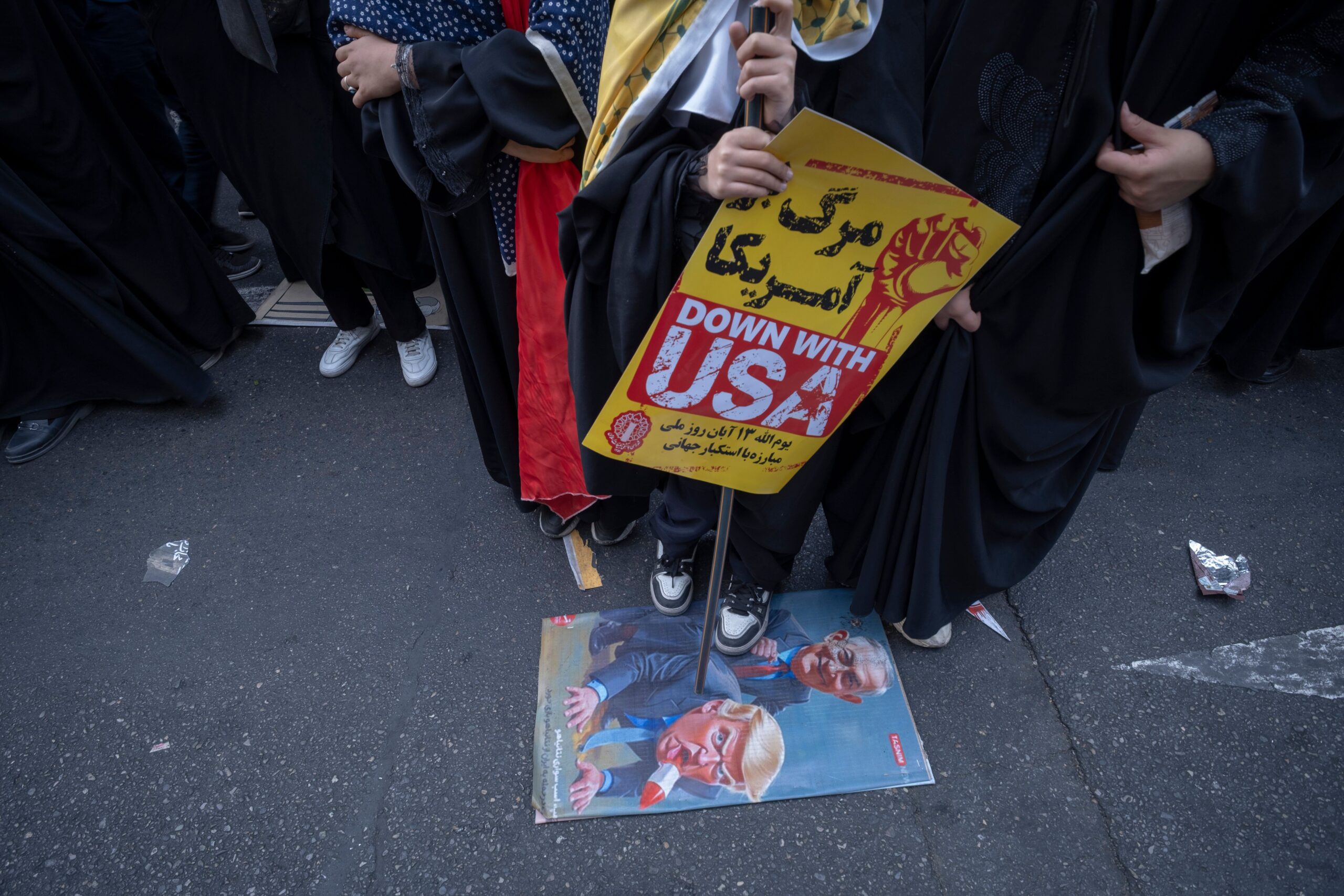
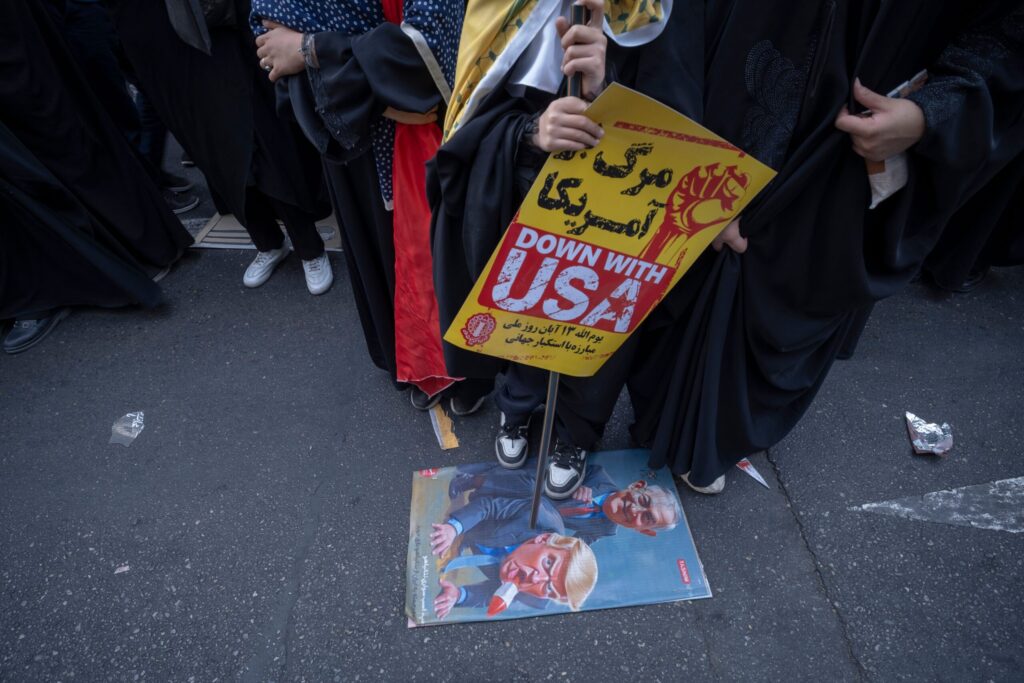
Donald Trump, whose career as a real estate mogul was marked by repeated casino bankruptcies, has once again embraced high-stakes gambits in his second presidential term. The war he initiated with Iran over the weekend, a conflict seemingly of personal choice, might represent the most significant gamble of his entire political career. The reported death of Iran’s supreme leader in the opening hours of hostilities only amplifies the peril for Trump, his war partner Israeli Prime Minister Benjamin Netanyahu, the entire Middle East, and the world at large.
The recent escalation, in many respects, appeared all but preordained. A substantial US military buildup has been underway for months, tracing back to May 8, 2018, when Trump unilaterally abandoned the Joint Comprehensive Plan of Action (JCPOA). This Iranian nuclear deal, meticulously negotiated by the Obama administration, was designed to restrict Iran’s path toward developing an atomic weapon. Similarly, Iran’s initial retaliatory strikes—missiles and counterattacks against other Gulf States, including Kuwait, Qatar, Bahrain, Israel, the United Arab Emirates, Saudi Arabia, and Jordan—had been widely anticipated and telegraphed.
However, the future trajectory of this conflict remains shrouded in uncertainty. Its duration, its ultimate reach, and the fate of Iran’s regime in the coming days, weeks, and months pose some of the most profound unknowns ever confronted in this famously volatile and explosive region. Modern history consistently demonstrates that upheaval in Iran can trigger a "butterfly effect," unleashing enormous, yet-to-be-understood consequences that could reverberate for decades. The United States, for instance, continues to grapple with the downstream ramifications of the last major Iranian upheaval nearly half a century ago, when the US-backed Shah, installed by a 1953 CIA coup, was overthrown in 1979 by Ruhollah Musavi Khomeini. His successor, Ali Hosseini Khamenei, led Iran until his reported death in the recent Israeli and American airstrikes.
Recalling the lead-up to the 2003 Iraq War—America’s first significant misadventure in the 21st-century Middle East—then-Secretary of Defense Donald Rumsfeld famously spoke of "known unknowns" and "unknown unknowns." Today, examining some of the "known unknowns" surrounding Donald Trump’s latest grand adventure in Iran helps clarify the immense stakes involved.
1. The Human Cost: American Lives Lost
Donald Trump’s global assertiveness over the past year appeared emboldened by two recent tactical military successes that were, for America, bloodless. These included an airstrike campaign last year on Iranian nuclear facilities, executed with stealth bombers in conjunction with earlier Israeli strikes, and the audacious raid weeks prior to apprehend Venezuelan leader Nicolás Maduro, which also occurred without a single US casualty. Yet, history is often a close-run affair. An unexpected glimpse into a narrowly averted alternate history emerged this week when Trump awarded the Medal of Honor to Army special operations pilot Chief Warrant Officer 5 Eric Slover. Slover was recognized for his courageous and decisive actions after being wounded four times by machine-gun fire while piloting the lead MH-47 Chinook helicopter during the Maduro raid. While the rushed award ceremony itself was criticized as a "made-for-TV moment" orchestrated by the Pentagon, it starkly revealed that, but for Slover’s bravery, dedication, and fortitude, the Maduro operation could have veered disastrously off course. A crash of the lead helicopter in the raid’s opening minutes might have transformed a "smashing, daring success" into a debacle akin to Jimmy Carter’s failed 1980 attempt to rescue Iranian hostages, Operation Eagle Claw, which killed eight US servicemen and severely damaged Carter’s presidency.
There is little indication that the new Iranian operation, dubbed "Operation Epic Fury"—a name seemingly more apt for a retaliatory vendetta than an unprovoked war-of-choice—will remain as bloodless or cost-free for the US in terms of materiel, personnel, or economic toll as Trump’s previous "Operation Midnight Hammer" and "Operation Absolute Resolve," both effectively single-strike operations. Indeed, on Sunday morning, US Central Command confirmed that three US service members had already died and five were injured in the ongoing Iran operation.
Part of Donald Trump’s strategy in striking Iran now likely stems from a calculation that Iran, weaker than it has been in a generation, is unlikely to retaliate with significant strength. Iran’s traditional arsenal for global proxy terror campaigns has certainly been depleted in recent years. Since October 7, Israel has actively dismantled Iranian proxy groups, including its daring attack on Hezbollah using explosive pagers. Furthermore, Donald Trump’s 2020 assassination of Iranian general Qasem Soleimani removed the long-standing mastermind of many Iranian terror operations. However, few strategists believe Iran’s capability to strike far beyond the Middle East is entirely absent. Intelligence officials continue to warn that Iran seeks to target Trump officials involved in the Soleimani operation, notably former Secretary of State Mike Pompeo, Pompeo aide Brian Hook, and former National Security Advisor John Bolton—all of whom had their security details controversially withdrawn by Trump. Iran has a long history as a substantial terror threat, with Trump himself referencing Iranian-backed campaigns like the 1980s bombing of a US Marine barracks in Beirut and, more recently, their role in killing and injuring thousands of US servicemen and women in Iraq. While Trump also made unsubstantiated claims about Iran’s involvement in the 2000 USS Cole bombing and US election interference, his speech acknowledged that "the lives of courageous American heroes may be lost," anticipating the inevitable costs. The US excels in the initial phases of military campaigns, leveraging unparalleled intelligence and technologically advanced forces. The critical question, however, remains: what happens when Iran has sufficient time to mount a comprehensive response?
2. Defining Victory: What Does Success Look Like for Trump?
Trump ascended to the Oval Office partly on a wave of national dissatisfaction with the "Forever Wars" in Iraq and Afghanistan. This was a message he proudly championed on the campaign trail; JD Vance, now Vice President, explicitly supported Trump in the 2024 elections with an op-ed titled "Trump’s Best Foreign Policy? Not Starting Any Wars," asserting Trump would be an exception to the 21st-century trend of presidents throwing America into "unwise wars and failed to win them." Trump himself declared in his 2024 victory speech, "I’m not going to start wars, I’m going to stop wars," and spent much of his second term campaigning for accolades like the entirely-invented FIFA Peace Prize, with the White House even trumpeting his efforts to "End Wars and Foster Peace" in a recent State of the Union address.
Yet, for the second time in as many months, Trump has launched a decapitation strike against a US adversary with seemingly little coherent plan—or even discernible interest—in the aftermath. Venezuela, after a brief appearance in the news late last year, has largely faded, leaving significant uncertainty about its future national leadership and American involvement. Following Khamenei’s death, Trump posted on Truth Social, expressing hope for the Iranian people to "take back their Country," suggesting that many within the IRGC, Military, and other security forces were seeking immunity and would "peacefully merge with the Iranian Patriots." He promised that the bombing "will continue, uninterrupted throughout the week or, as long as necessary to achieve our objective of PEACE THROUGHOUT THE MIDDLE EAST AND, INDEED, THE WORLD!"
Compared to the Bush administration’s post-Saddam Hussein planning, which, though criticized as thin and overly optimistic (Dick Cheney’s "we will, in fact, be greeted as liberators"), now appears Herculean next to the scant strategic preparation surrounding Trump’s solo push for war in Iran. He made no serious case to Congress for military action, and the White House has offered no clearly articulated goal or vision of victory beyond the amorphous concept of "regime change" and the apparent hope that Iran was merely a few well-placed JDAMs and Tomahawk missiles away from embracing democracy. While Trump has successfully executed high-profile, surgical tactical military actions, such as the 2019 killing of ISIS leader Abu Bakr al-Baghdadi, he might be betting that long-term planning holds little public interest, aligning with America’s short attention span. As John Bolton remarked, "He doesn’t do grand strategy… It’s a complete fantasy to think that there’s any coherence to it at all." Much hangs in the balance, as the world awaits whether Trump will declare success or simply lose interest. He has, notably, pledged no US ground troops, with Vice President JD Vance stating, "The idea that we’re going to be in a Middle Eastern war for years with no end in sight—there is no chance that will happen." But how much can the US achieve from the air alone to fundamentally alter the Iranian regime?
3. Conflicting Loyalties: Who Does Trump Truly Serve?
A significant "known unknown" in this conflict concerns President Trump’s own business interests, which are now literally coming under fire from Iran. The opaque nature of the Trump family’s finances makes precise accounting difficult, but it is widely understood that a substantial portion of his wealth is now intertwined with various Middle Eastern royal families. In the years following his first presidency, Trump and his family have deepened ties with several Gulf states: Saudi Crown Prince Mohammed bin Salman invested approximately $2 billion in Jared Kushner’s investment fund; Trump boasts a branded golf course in Dubai; and a company backed by a UAE royal investor acquired a 49 percent stake in Donald Trump’s family cryptocurrency company last year. Qatar, once labeled a "funder of terrorism" by Trump during his first term, has meticulously cultivated favor in his second term, including donating a plane to be used as Air Force One. Shortly thereafter, and in a surely coincidental turn of events, the president offered Qatar an unprecedented presidential defense guarantee.
All these countries, and their royal families, are now directly targeted or potentially vulnerable to Iranian missiles, drones, and terror strikes. It is not a conspiratorial question to ponder how Donald Trump, in weighing potential paths forward and determining "enough is enough," will be influenced by what serves US interests versus the geopolitical or financial pressures exerted by his business partners. The situation escalated dramatically when Dubai International Airport, a major global travel hub, was damaged by an Iranian strike on Saturday night. Trump has intermittently pledged support for Iranian protesters, but if continuing the war against the existing regime proves detrimental to his business interests, his commitment to the plan could easily waver.
4. The Weight of History: A Precedent of Peril
While "modern American" memory often begins with the disastrous long-term consequences of the wars in Iraq and Afghanistan, Iran has been America’s most complex and challenging friend and foe in the Middle East for far longer. Arguably, no other country has presented more geopolitical trouble for US presidents, leading to domestic political challenges, than Iran—a nation many forget was once one of America’s most crucial economic and military partners.
The entanglement began with Eisenhower, who, seeking to protect British oil interests, authorized Operation Ajax, the 1953 coup that deposed Iran’s prime minister and installed Mohammad Reza Pahlavi. As Shah, the powerful "King of Kings, Light of the Aryans, and Shadow of God on Earth," Pahlavi became a massive purchaser of American arms and a vital anchor of stability for the US in the Middle East. Darker notes soon emerged. Richard Nixon’s presidency was significantly disrupted by oil crises shrewdly manipulated by the Shah; Gerald Ford, in attempting to break the "Oil Shock," set in motion events that led to the regime’s collapse. Jimmy Carter ultimately lost his presidency over his handling of the Iranian hostage crisis that followed the overthrow of the unpopular leader. Ronald Reagan rode into the White House on a wave of goodwill following the release of those hostages—a release partly facilitated, it turns out, because associates of his campaign may have bargained with Iran to delay their freedom to maximize his political benefit. Yet, Reagan’s administration then spent much of the 1980s embroiled in illegal arms trafficking with Iran, which exploded into the Iran-Contra scandal. His administration also struggled with the fallout of the Iran-Iraq War, including the tragic 1988 shootdown of Iran Air Flight 655 by the USS Vincennes, killing 290 people—an incident far better remembered in Tehran than in the US.
Indeed, most Americans today are too young to recall the years when Iran rivaled only the Soviet Union as America’s primary geopolitical adversary. For nearly a decade in the 1980s, the US engaged in a serious and costly shadow war with Iran in and around the Persian Gulf. David Crist’s definitive history, The Twilight War, details regular gun battles between the US Navy and Iranian "mosquito boats," and covert mining of the Persian Gulf by Iranian dhows as spillover from the Iran-Iraq War resulted in over 500 ships attacked—a tonnage lost or damaged equivalent to roughly half the shipping lost to German U-Boats in the Battle of the Atlantic. The naval confrontation was just one facet of the deadly struggle with the post-revolution regime. In the 1980s and ’90s, Iran orchestrated the killings of at least 80 people worldwide. US officials also implicated Iran in the deadly 1996 bombing of Khobar Towers in Saudi Arabia, which killed nineteen American servicemen. This case became a significant political flashpoint for both the Clinton administration and the early months of George W. Bush’s presidency, with Jim Comey leading the indictment of 14 individuals just before the statute of limitations expired. In subsequent years, Iran supplied the insurgency in Iraq with explosives that killed and maimed thousands of US military personnel; in late 2006 and early 2007, US troops detained a dozen Iranian intelligence officers in Iraq, including Brigadier General Mohsen Chizari, the regime’s head of Iraq operations, accusing them of attacking US personnel.
More recently, Iran has been a consistent adversary in cyberspace. While lacking the sophistication of Russia or China, "Iran is good at finding ways to maximize the impact of their capabilities," according to Jeff Greene, former executive assistant director of cybersecurity at CISA. Iran famously executed a series of distributed-denial-of-service attacks on Wall Street institutions that rattled financial markets, and its 2012 attacks on Saudi Aramco and Qatar’s Rasgas were among the earliest destructive infrastructure cyberattacks. Today, Iran is undoubtedly weighing which of these tools, networks, and operatives it might employ in a response. Given its history of terror campaigns and cyberattacks, there is no reason to assume Iran’s retaliatory options are confined solely to missiles—or even to the Middle East itself.
5. The Elusive Endgame: How Does This Conflict Conclude?
There is an apocryphal story, often attributed to a 1970s conversation between Henry Kissinger and a Chinese leader (variously cited as Mao Tse-tung or Zhou Enlai), where, asked about the legacy of the French Revolution, the leader quipped, "Too soon to tell." While likely fictional, the anecdote underscores a profound truth, particularly pertinent to societies as ancient as the 2,500-year-old Persian empire: history has a long tail.
As much as Trump (and indeed, the world) might hope for democracy to blossom in Iran this spring, the CIA’s official assessment in February indicated that if Khamenei were killed, he would likely be replaced by hardline figures from the Islamic Revolutionary Guard Corps. The fact that Iran’s retaliatory strikes against other Middle Eastern targets persisted throughout Saturday, even after the deaths of many senior regime officials—including, purportedly, the defense minister—belies any immediate hope that the government is on the brink of collapse.
The post-World War II history of Iran has undeniably pivoted on three pivotal moments and their intersection with American foreign policy: the 1953 CIA coup, the 1979 revolution that removed the Shah, and now the 2026 US attacks that have reportedly killed its supreme leader. In his recent bestselling book King of Kings, detailing the fall of the Shah, longtime foreign correspondent Scott Anderson observed of 1979: "If one were to make a list of that small handful of revolutions that spurred change on a truly global scale in the modern era, that caused a paradigm shift in the way the world works, to the American, French, and Russian Revolutions might be added the Iranian."
It is difficult not to perceive that we are currently living through a moment of equally profound importance, in ways we cannot yet fully fathom or imagine. Given the far-reaching consequences of Iran’s past turmoils, any premature celebration or declarations of success would be profoundly unwise. Defense Secretary Pete Hegseth has repeatedly boasted that he views the military and Trump administration’s foreign policy as sending a message to America’s adversaries: "F-A-F-O," playing off the vulgar colloquialism. Currently, it is the US executing the "F-A" portion in the skies over Iran, and the long, complex arc of Iranian history strongly suggests that we are a long, long way from the "F-O" part, where the ultimate consequences become clear.