 11
11 1
1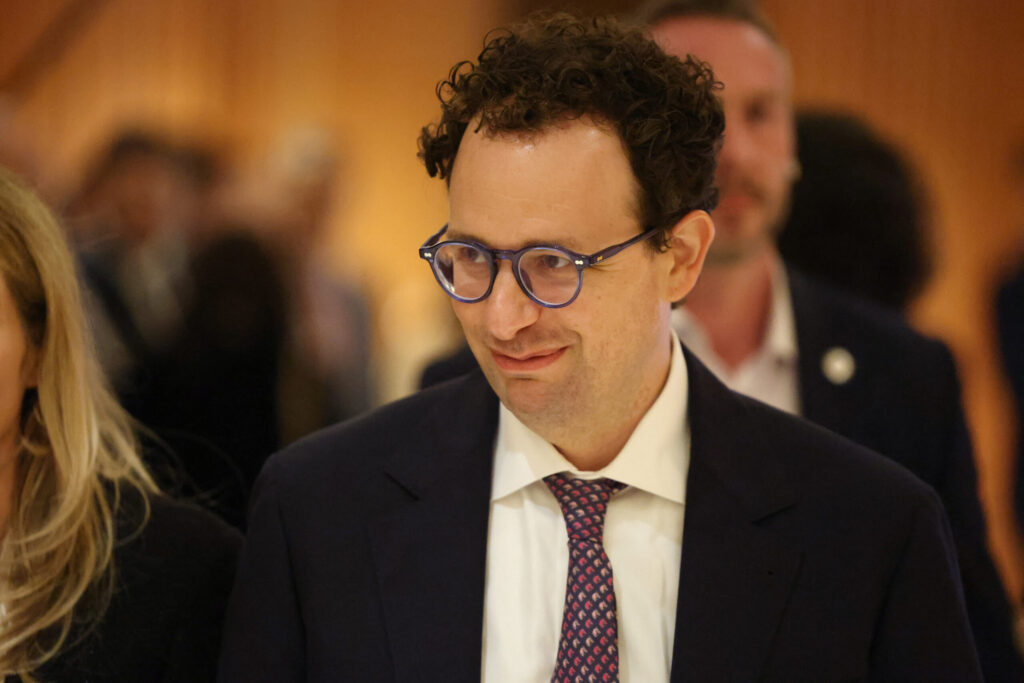 2
2 3
3
The current market environment, characterized by volatility, may be prompting retail investors to gravitate towards what they perceive as safer, income-generating assets. However, financial experts are cautioning against this inclination, arguing that an exclusive focus on income can leave significant potential gains on the table and lead to unintended investment risks. Nick Ryder, Chief Investment Officer at Kathmere Capital Management, an asset management firm overseeing $3.5 billion, has been a vocal critic of this strategy, advocating instead for a "total return-oriented approach" across all asset classes.
Ryder articulated his concerns during an appearance on CNBC’s "ETF Edge," stating that an income-focused strategy is "too often" adopted by investors and ultimately "leaves a lot on the table." He emphasized that this applies to the entirety of an investment portfolio, encompassing not just stocks but also bonds and other financial instruments. His firm’s general advice to clients is to prioritize total return, which encompasses both capital appreciation and income generation, rather than solely focusing on the latter.
The concept of "yield-chasing" is a particular area of concern for Ryder, especially within the fixed-income market. He explained that this can manifest in several ways. Investors might be tempted to extend the duration of their bond holdings, effectively taking on more interest rate risk in pursuit of higher yields. This means their investments will be more sensitive to changes in interest rates, potentially leading to larger losses if rates rise. Furthermore, yield-chasing can involve migrating from investment-grade bonds, which are generally considered safer but offer lower yields, to high-yield bonds, also known as "junk bonds." These bonds offer higher interest payments to compensate investors for the increased risk of default. Ryder pointed out that high-yield bonds carry "dramatically different risk and return expectations" compared to their investment-grade counterparts, and investors may not fully appreciate these distinctions when solely driven by the desire for higher income.
Ryder’s core argument is that income should not be the foundational element of long-term investment portfolios. He suggests that investors are better served by first defining their financial goals and assessing their risk tolerance. Once these fundamental aspects are established, income can then be incorporated into the portfolio. This sequential approach acknowledges that market downturns and pullbacks are an inherent part of long-term investing. An income-first strategy, conversely, can "quietly push portfolios into unintended bets" as investors reach for higher yields, potentially exposing them to risks they are neither aware of nor comfortable with.

Adding to the optimistic outlook, Ryder expressed confidence in the broader macroeconomic backdrop. He characterized the economy as "pretty darn resilient" and highlighted the sustained strength of corporate profitability. This resilient economic environment, in his view, supports a total return approach, as it suggests opportunities for both capital appreciation and consistent income generation exist within a well-diversified portfolio.
Echoing Ryder’s sentiment, Christian Magoon, CEO of Amplify ETFs, also urged investors to look beyond the distribution number when making investment decisions. During the same "ETF Edge" interview, Magoon stressed the importance of balancing attractive yield with the potential for upside or long-term capital appreciation. He warned that simply chasing the "maximum possible yield" can lead investors into what he termed a "yield trap." A yield trap is a situation where a high dividend yield appears attractive but is unsustainable, often due to underlying financial weakness in the company or asset. When the yield is cut or the asset price plummets, investors who were solely focused on the high distribution can suffer significant capital losses.
Magoon’s perspective aligns with Ryder’s by advocating for a more holistic view of investment performance. He believes that "being smart about yield means balancing attractive yield with upside or long-term capital appreciation." This implies a strategic selection of income-generating assets that also possess strong fundamentals and growth potential. The goal is not to avoid income altogether, but rather to ensure that the pursuit of income does not come at the expense of long-term wealth creation and capital preservation.
The underlying message from both experts is a call for a more disciplined and comprehensive investment approach, particularly in times of market uncertainty. Retail investors, often susceptible to emotional decision-making during volatile periods, are advised to resist the allure of seemingly safe, high-income investments if those investments come with elevated, unacknowledged risks. Instead, a focus on total return, informed by individual financial goals and risk tolerance, is presented as the more prudent path to achieving sustainable long-term investment success. This strategy acknowledges the cyclical nature of markets and prioritizes a balanced approach that seeks to capture growth opportunities while managing risk effectively. The resilience of the economy and corporate earnings, as noted by Ryder, provides a supportive backdrop for this more comprehensive investment philosophy.