 11
11 1
1 2
2 3
3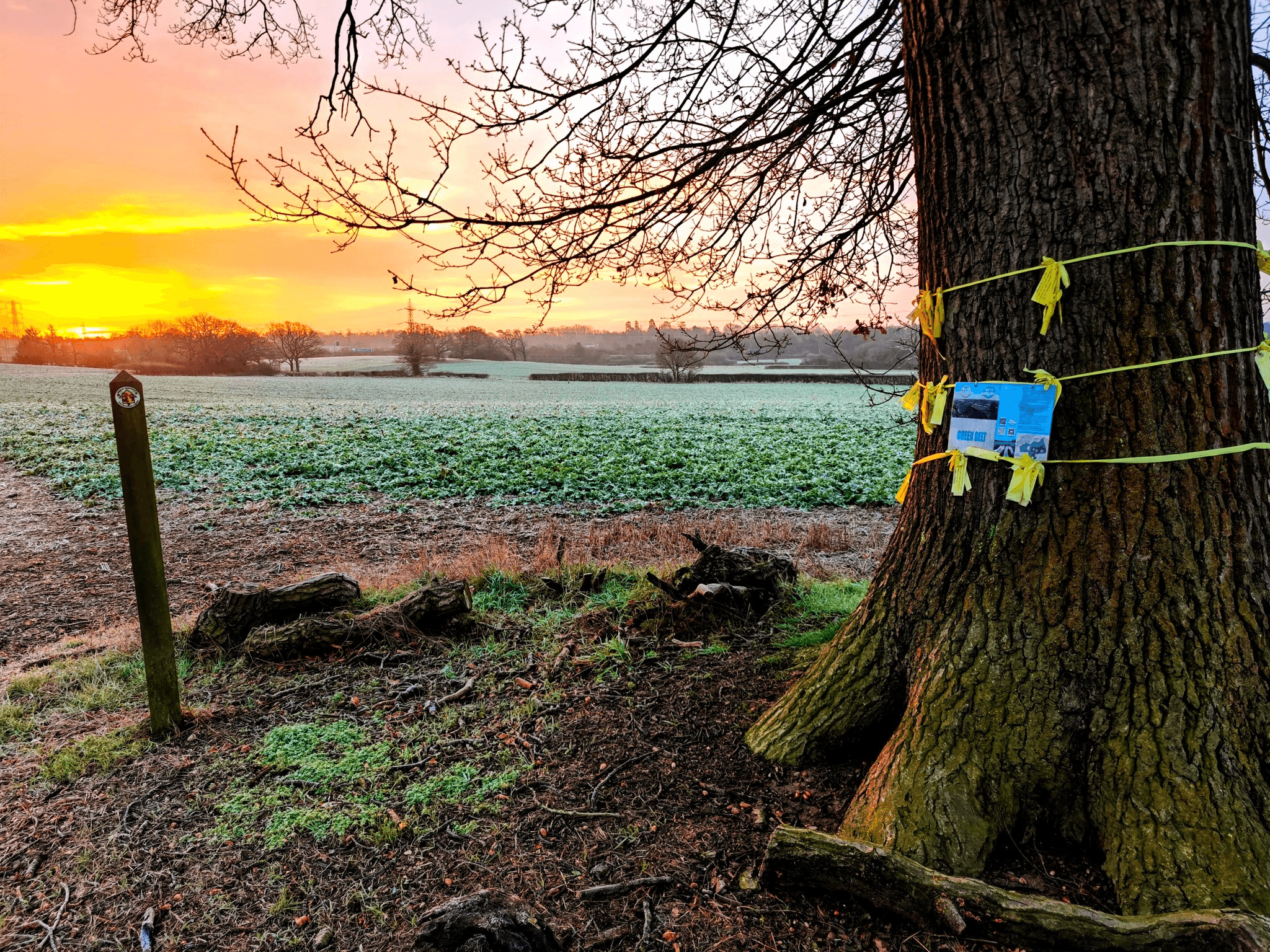
A tranquil stretch of 85 acres of rolling farmland, segmented by hedgerows and graced by a lone oak tree, separates the town of Potters Bar from the village of South Mimms, just a short drive from London. This seemingly idyllic landscape, long cherished as a public footpath and an invaluable green space, has unexpectedly transformed into a flashpoint of protest against the relentless expansion of artificial intelligence infrastructure. A poster tied to the ancient oak tree starkly declares: "NO TO DATA CENTRE."
The conflict began in September 2024 when a property developer lodged an application for permission to construct an industrial-scale data center on this very farmland—a facility slated to become one of the largest in Europe. News of the proposal quickly galvanized local residents, who swiftly formed a Facebook group to coordinate their opposition, attracting over 1,000 members determined to block the project.
Despite the significant community backlash, the local government of Hertsmere Borough Council largely dismissed the group’s objections. In January 2025, planning permission was officially granted, paving the way for the controversial development. The following October, multinational data center operator Equinix acquired the land, confirming its intent to break ground on the massive facility this year. This acquisition marked a £3.9 billion investment in what Equinix described as critical national infrastructure, a boost to the UK’s economy.
On a bleak Thursday afternoon in January, Ros Naylor, one of the Facebook group’s administrators, gathered with six other local residents at a gate leading onto the farmland. They articulated their multifaceted objections, emphasizing the profound loss of green space. For them, this land is more than just fields; it is a vital escape route from urban confines to the countryside, acting as a crucial buffer against the visible highway and fuel stop on the horizon. "The beauty of walking in this area is coming through this space," Naylor explained, underscoring its importance for mental health and wellbeing.
The local struggle in Potters Bar is not isolated. Across the UK, similar large-scale data centers are being planned and built in locations such as Northumberland, Lincolnshire, and other parts of the country. This surge is driven by the UK government’s aggressive push to meet the "voracious demand" for data centers, which are essential for training advanced AI models and running sophisticated AI applications. However, for communities living in close proximity to these proposed sites, the abstract economic benefits of AI or new smartphone capabilities offer scant consolation for what they perceive as an irreversible disruption to their countryside way of life.
Bonfire of Red Tape
Since the mid-20th century, a defining feature of London’s periphery has been its green belt—a continuous patchwork of farms, forests, meadows, and parks designed to prevent urban sprawl and the merging of distinct towns. Under established UK law, construction on green belt land is permitted only in "very special circumstances" to safeguard the countryside.
However, a significant shift in policy occurred after the current government took power in 2024. A new land classification, the "grey belt," was introduced, specifically designating underperforming parcels of green belt where construction could be more readily approved. Concurrently, the government declared data centers to be "critical national infrastructure." These dual policy changes have effectively cleared the path for a rapid increase in data center planning applications across the UK, with reports indicating a more than 60 percent rise in 2025.
Globally, the world’s largest AI laboratories, engaged in a race to develop models capable of surpassing human intelligence, are projected to spend trillions of dollars on infrastructure. This unprecedented investment is fueling a global boom in data center construction, and everywhere these facilities are proposed, developers are encountering organized resistance from impacted communities.
In approving the Potters Bar data center, the local planning authority concluded that the farmland met the new definition of "grey belt." Furthermore, their decision was heavily influenced by the government’s strategic support for the data center industry. The officers determined that the substantial benefits from infrastructure development and economic growth outweighed the perceived loss of green space. Jeremy Newmark, leader of Hertsmere Borough Council, defended the decision, stating, "People have this slightly romantic idea that all green belt land comprises pristine, rolling green fields. The reality is that this site, along with many others, is anything but that. It’s a patch of very low-performing green belt land."
The protest group vehemently disputes the reclassification of the farmland. They point to a recent decision by the local council to veto a housing development on a neighboring field, expressly to preserve green belt and agricultural land. "Turn around, cross the road, come to this field—and it’s grey belt," remarked Eamonn Lynch, a local resident, highlighting what they see as an arbitrary and contradictory application of planning policy.
Protesters also feel that the planning process itself has been flawed and that their voices have been sidelined. During the initial public consultation, the council notified residents in 775 nearby properties. Simon Rhodes, another resident, took it upon himself to go door-to-door, collecting hundreds of objections which he submitted to the planning authority. By the end of the consultation period, objections from locals outnumbered expressions of support by almost two-to-one, yet the council proceeded to grant planning permission regardless.
In their determined efforts to overturn the decision, the protest group has lodged multiple letters of objection, appealed to a third-party ombudsman and the UK’s Office of Environmental Protection, and even filed a complaint against Councillor Newmark personally, accusing him of acting as a mouthpiece for the property developer. So far, these efforts have proven unsuccessful. The council ruled that the planning process was entirely proper, and a standards committee cleared Newmark of any wrongdoing. Newmark maintains, "I completely reject the idea that the consultation process was flawed or that this was in any way rushed through." He added that the blocked housing development nearby is irrelevant, as each planning application is considered in isolation.
"Get With the Program"
In response to the persistent complaints, the local government has actively promoted the anticipated benefits of the new data center to the local economy and labor market. Equinix estimates an investment of over $5 billion in the development, projecting the creation of 2,500 construction jobs and 200 permanent roles once operational. The council further estimates that the data center will generate approximately $27 million in annual property tax, half of which will be retained by the local government and directed towards frontline public services.
"For anybody to suggest that an investment at that level, in a place like this, will not have a major impact on our local economy is seriously misguided," Newmark asserted. He highlighted the potential for exponential growth, noting, "There is ample evidence that data centers attract other high-tech businesses to cluster nearby. The effect is potentially exponential."
While Equinix operates 14 data centers in the UK, this facility in Potters Bar would be its first on a rural site within the country. Andrew Higgins, global head of masterplanning and sustainability at Equinix, explained the company’s attraction to the plot: its strategic proximity to major population hubs and existing Equinix facilities helps reduce data latency, and the area boasts a robust local power infrastructure crucial for such an energy-intensive operation. Higgins confirmed that the company plans to lease space in the facility to various clients, many of whom will be running demanding AI workloads. "If we want to continue to have the UK being a world player, absolutely data centers have to be built," he stated.
Equinix has also attempted to address environmental concerns by committing to retain half of the site as green space. To enhance biodiversity, the company plans to introduce ponds, wetlands, meadows, and new tree plantings. Higgins expressed empathy for the local community, saying, "Sincerely, I can empathize with people who live in a rural community and are used to that landscape. I hope that we can demonstrate there is a path to responsible development." He also noted that he has never encountered a situation where planning permission for an Equinix site has been subsequently withdrawn.
Newmark’s message to the protesters is unequivocal: "Ultimately, I believe it’s a very small number of admittedly very vocal people who take a dogmatic view that we exist in a binary where you can have either green belt or growth. My advice to them would be to get with the program."
For Equinix to commence construction, it must navigate a final stage in the planning process, securing permission for the specific particulars of its site plan. Critically, to maintain the validity of its planning permission, construction must begin within three years of final approval. Recognizing this timeframe, part of the protest group’s strategy is to mount a sustained "filibuster," objecting at every possible opportunity. Michael Batty, an emeritus professor of planning at University College London, acknowledges the potential impact of such tactics, stating, "I think the pressure group, depending how well-organized it is, can make a big difference. The whole idea of public objection is writ large in the planning system in Britain."
A Dog in the Fight
That January afternoon, after the other residents had departed, Janet Longley, a semi-retired teacher who has called the area home since the 1980s, walked a lap of the farmland with her boxer dog, Lola. Ankle-deep mud clung to their boots as they paused beneath the solitary oak tree.
Longley, whose husband works in IT, possesses a clear-eyed understanding of the potential for data centers to contribute to the national economy and the undeniable value of the digital services they enable. "I don’t like the idea of being a NIMBY, because we need these things," she conceded, adding, "I use the internet all the time."
Nonetheless, Longley harbors a deep resentment that the green space where she has walked her dogs for so many years is now dismissed by the council as dispensable. She cannot help but wish this massive infrastructure project could be built somewhere else.
"Beauty is in the eye of the beholder," Longley remarked, gesturing across the field. "It is actually beautiful. Just maybe not so much today." Her words encapsulate the bittersweet reality of a community caught between the preservation of cherished local landscapes and the relentless march of technological progress.