 11
11 1
1 2
2 3
3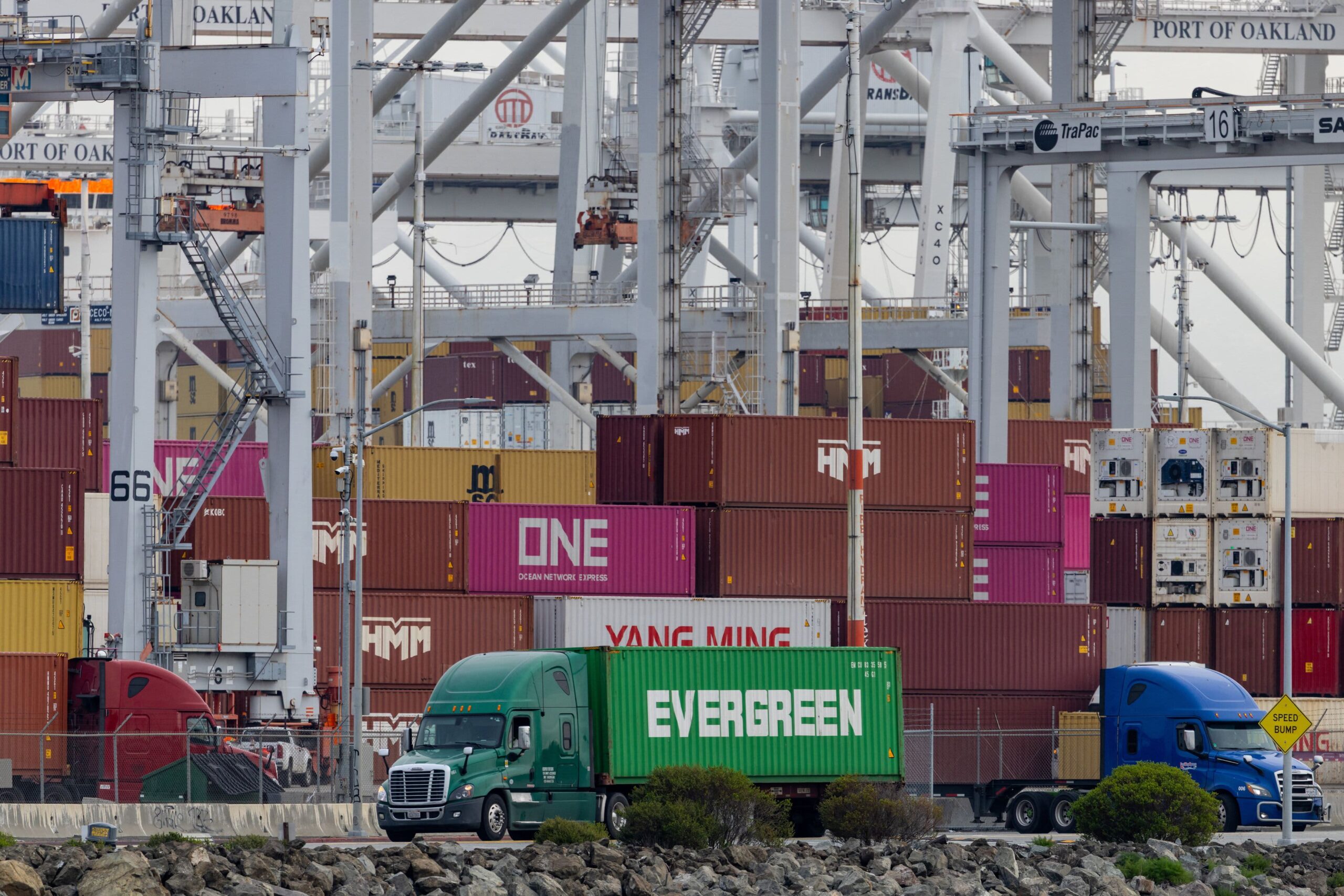
The Supreme Court delivered a significant blow to President Donald Trump’s trade agenda on Friday, ruling in a 6-3 decision that he had exceeded his constitutional authority by imposing sweeping tariffs under the International Emergency Economic Powers Act (IEEPA). The ruling, which declared the President lacked the legal authority to implement these tariffs, has sent ripples through global trade relations and is projected to negatively impact the U.S. economy, according to economists speaking with CNBC.
The immediate aftermath of the Supreme Court’s decision saw President Trump quickly move to enact new tariffs, imposing levies of up to 15% on a range of U.S. trading partners. This aggressive response has further escalated global trade tensions, drawing sharp criticism from key allies. European Union leaders expressed dismay, arguing that the new U.S. policy shift would destabilize existing trade agreements, including those finalized with the EU and the U.K. last year. In response to the escalating uncertainty, the EU postponed a crucial vote on its trade deal with the U.S. on Monday, signaling growing frustration with the administration’s erratic trade policies.
This backlash from foreign governments underscores a deep-seated concern over the unpredictable nature of President Trump’s trade approach. Experts warn that this could lead to a recalibration of international trade dynamics, with foreign governments potentially scaling back their trade engagement with the United States. Furthermore, businesses, facing an increasingly uncertain global economic landscape, may choose to curtail expansion plans, reduce investments, and slow down hiring, ultimately hobbling the U.S. economy.
"It shifts how trade is done with the largest economy in the world, and that has economic consequences," Mike Reid, head of U.S. economics at Royal Bank of Canada, told CNBC, referencing both the Supreme Court’s ruling and the subsequent imposition of new tariffs.
The ongoing trade war drama is expected to foster a climate of caution among both businesses and foreign governments, according to Mark Zandi, chief economist at Moody’s Analytics. He anticipates that this will result in "nothing but downside" for the U.S. economy. "Businesses don’t know" what the future holds, Zandi explained to CNBC. "They’re going to invest less, they’re going to hire less, they’re going to be less aggressive in their expansions," thereby limiting U.S. economic growth.
Amidst this rising uncertainty, foreign governments are likely to adopt a similar cautious approach, leading them to "continue to pull away from the U.S.," Zandi stated. He characterized the situation as one where foreign leaders must be "pulling their hair out over all of this." Zandi further elaborated, suggesting that perceptions of the U.S. are increasingly shifting towards viewing it as a "poorly managed economy," a perception he believes is "objectively speaking, right." He described the current economic situation as "a bit of a mess that feels like it’s getting messier."
This evolving perception could prompt efforts to divert trade away from the United States and towards alternative trading partners, including China. Data from Chinese customs revealed that China’s exports grew by 6.6% in U.S. dollar terms in December of the previous year compared to the same month in 2025. This figure surpassed analyst expectations and contributed to China’s annual trade surplus reaching a record high. Simultaneously, imports into China increased at their fastest pace in three months, according to the same data.
In response to the Supreme Court’s decision, the Trump administration has indicated its intention to continue implementing its trade policy by leveraging various sections of the Tariff Act of 1974. U.S. Trade Representative Jamieson Greer stated that the administration plans to utilize these alternative legal avenues. President Trump has specifically cited Section 122 of the Tariff Act to justify the new tariffs enacted over the weekend. However, this section imposes a limitation, restricting the effectiveness of these tariffs to 150 days, meaning they would expire by mid-July unless Congress approves their extension.
To bolster its new Section 122 tariffs, the administration is also likely to employ Sections 232 and 301 of the Tariff Act. This strategy suggests that the U.S. could continue to impose tariffs on its foreign trading partners for the next few years, at least.
Despite these pronouncements, some analysts remain less concerned about an immediate negative impact. Veronica Clark, an economist at Citigroup, suggested in a note to clients that the implementation of the new trade taxes "implies little change in the effective tariff rate or our inflation forecasts in the near term." She added, "Eventual Section 301/232 tariffs could have an impact on certain goods prices in the future, but details are still highly uncertain." Clark further explained that while a 10% Section 122 tariff would have likely lowered the effective tariff rate by 3-4 percentage points, a 15% tariff should keep the effective tariff rate "essentially unchanged (if anything, lower by ~1pp or so)."
While the full extent of the impact of these new tariffs remains a subject of uncertainty, Zandi emphasized that certain trends are becoming clear. "The U.S. is pulling away from the world, and the rest of the world is now pulling away from the U.S.," he observed. "Deglobalization is a weight on the economy, and ultimately, the end state is a weakened economy."
The situation at the port of Oakland, California, on February 23, 2026, with shipping containers present, serves as a visual backdrop to the ongoing trade tensions and the implications of the Supreme Court’s ruling. The image, captured by Carlos Barria for Reuters, underscores the tangible presence of international commerce and the potential disruptions that trade policy shifts can bring.