 11
11 1
1 2
2 3
3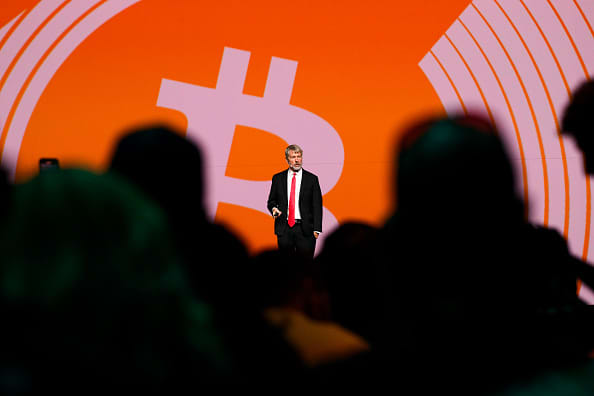
Strategy CEO Michael Saylor has strongly dismissed concerns regarding the company’s credit risk, even if the price of bitcoin were to experience a significant decline. In a recent appearance on CNBC’s "Squawk Box," Saylor articulated a resolute commitment to continuously acquiring the cryptocurrency for Strategy on a quarterly basis, regardless of market fluctuations.
"If bitcoin falls 90% for the next four years, we’ll refinance the debt," Saylor stated confidently. "We’ll just roll it forward." When questioned about the likelihood of banks continuing to extend credit to Strategy, a firm heavily invested in digital assets, should bitcoin’s value plummet, Saylor expressed optimism. He reasoned that "the volatility of bitcoin is such that it’s always going to be a value," implying that its inherent nature ensures its enduring worth.
The cryptocurrency market has recently witnessed a notable downturn. Bitcoin, which was trading at approximately $68,970.45, experienced a 9% decrease over the preceding five days. On Thursday, the token saw a sharper decline of 15%, falling to $60,062.00, its lowest point in roughly 16 months. At its lowest point during this period, bitcoin had depreciated by more than 50% from its all-time high.
Strategy’s financial structure includes over $8 billion in total debt on its balance sheet. A significant portion of this debt stems from the issuance of convertible notes, which were specifically utilized to finance the company’s substantial bitcoin acquisitions.
Despite the prevailing market conditions and the inherent volatility of cryptocurrencies, Saylor reiterated his firm’s unwavering stance on its digital asset holdings. "I expect we’ll be buying bitcoin every quarter forever," he declared, dismissing any suggestions that Strategy would consider divesting its bitcoin reserves.

Strategy currently holds a significant amount of bitcoin, with its website indicating ownership of 714,644 bitcoins, valued at approximately $49 billion at the time of reporting. This substantial holding positions Strategy as the largest corporate owner of the digital asset globally.
Saylor also addressed the company’s liquidity, noting that Strategy maintains sufficient cash reserves on its balance sheet to cover dividend payments for approximately two and a half years.
The company’s stock price has also been affected by the broader market sentiment. Strategy experienced a decline of about 2% on Tuesday, coinciding with bitcoin’s dip below the $70,000 mark. Over the past three months, Strategy’s stock has seen a significant downturn, tumbling more than 40%.
The company’s strategy of leveraging debt to acquire bitcoin has been a subject of discussion, particularly in light of the cryptocurrency’s price volatility. However, Saylor’s consistent messaging underscores a long-term conviction in bitcoin as a valuable asset and a core component of Strategy’s corporate treasury. His statements suggest a proactive approach to managing potential financial headwinds, including the possibility of refinancing debt should market conditions necessitate it.
The inherent volatility of bitcoin, as highlighted by Saylor, is a double-edged sword. While it presents risks, it also offers opportunities for strategic maneuvering, such as refinancing existing debt. The company’s substantial bitcoin holdings, coupled with its stated intention to continue accumulating the asset, signal a high-conviction bet on the future value of bitcoin. This strategy, while bold, is underpinned by a clear understanding of the cryptocurrency’s price dynamics and a preparedness to adapt to market shifts.
Strategy’s position as the largest corporate holder of bitcoin means its financial performance is intrinsically linked to the cryptocurrency’s market trajectory. The company’s ability to navigate potential downturns, as exemplified by Saylor’s comments on debt refinancing, will be crucial in maintaining investor confidence. The long-term outlook for Strategy appears to be one of sustained accumulation and a steadfast belief in bitcoin’s enduring value proposition, even in the face of significant price corrections.