 11
11 1
1 2
2 3
3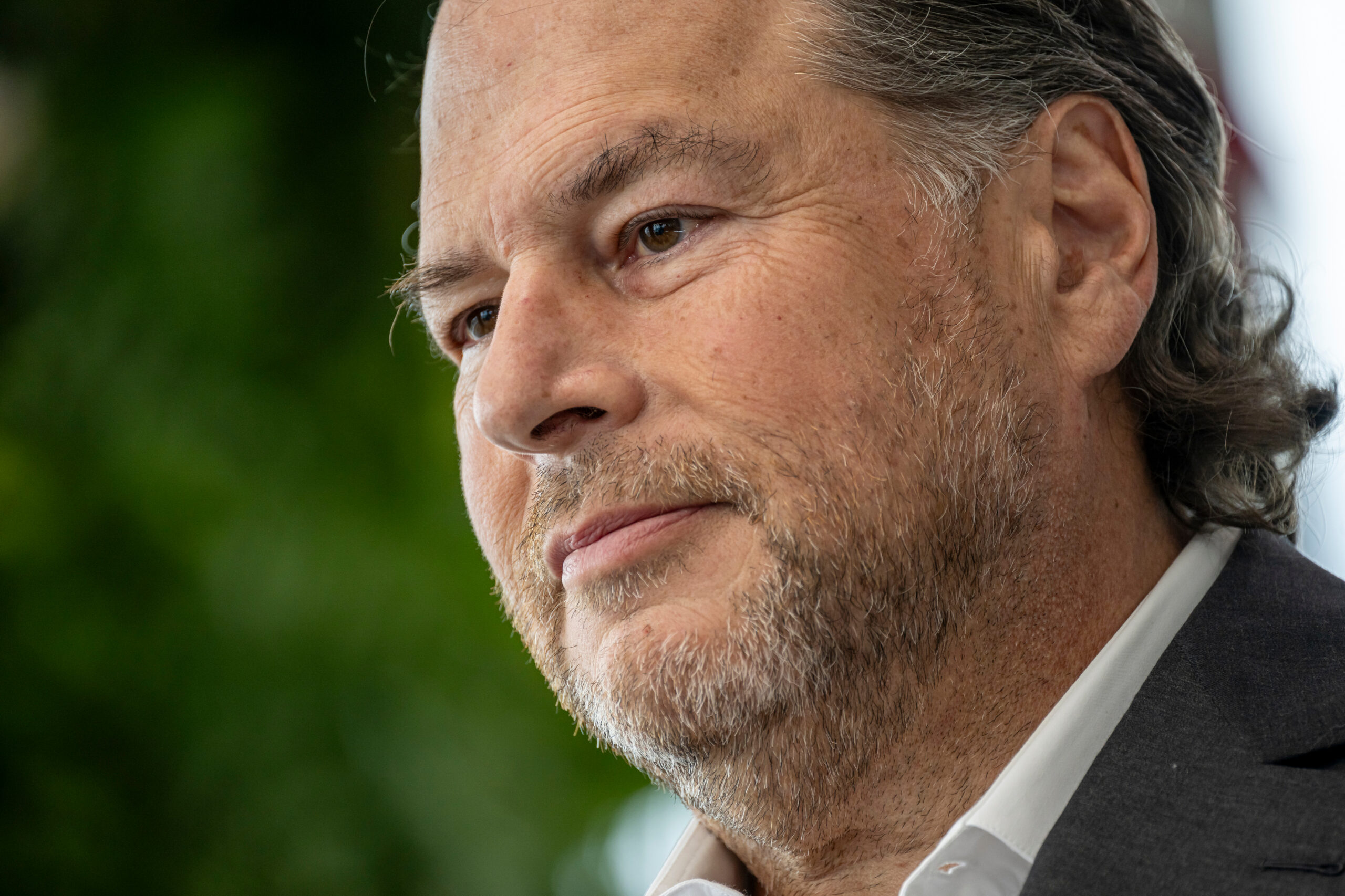
Salesforce pulled out all the stops to convince investors that the burgeoning artificial intelligence (AI) revolution would not spell the demise of its established Software-as-a-Service (SaaS) business model, as the company announced its fourth-quarter earnings on Wednesday. The enterprise software giant presented a comprehensive strategy to counter prevailing market anxieties, showcasing solid financial performance, aggressive shareholder returns, a revamped communication approach, and a distinct architectural vision for the future of AI in the enterprise.
The company reported a robust financial quarter, with revenues reaching $10.7 billion, marking a significant 13% increase year-over-year. This strong quarterly performance contributed to an impressive annual revenue total of $41.5 billion, representing a 10% rise over the previous fiscal year. Both figures were notably bolstered by Salesforce’s strategic $8 billion acquisition of data management company Informatica in May of the prior year. This acquisition was instrumental in expanding Salesforce’s data integration capabilities, allowing it to offer a more comprehensive suite of services and creating new cross-selling opportunities across its vast customer base, thereby directly contributing to the revenue uplift.
Beyond the top-line growth, Salesforce also reported a substantial net income of $7.46 billion. Looking ahead, the company offered strong guidance for the upcoming fiscal year, projecting revenues between $45.8 billion and $46.2 billion. This forecast signifies an anticipated increase of 10% to 11%, signaling continued confidence in its growth trajectory. Furthermore, Salesforce highlighted its "remaining performance obligation" (RPO), a crucial metric that exceeded $72 billion. RPO represents revenue under contract that has not yet been delivered or recognized as earned revenue, providing investors with significant visibility into the company’s future revenue streams and underscoring the long-term commitment of its customer base.
Despite these impressive financial metrics, the prevailing market sentiment surrounding SaaS stocks, with Salesforce often seen as the industry’s poster child, has been one of significant apprehension. Investors have expressed growing fears that the rapid rise of sophisticated AI agents could fundamentally undermine the traditional per-employee-seat business models that have driven the success of SaaS companies. The concern is that these AI agents, capable of automating complex tasks and streamlining workflows, could reduce the need for human employees and, consequently, the number of software licenses required by enterprises, rendering existing business models obsolete. This widespread anxiety has been colloquially dubbed the "SaaSpocalypse."
The concept of a "SaaSpocalypse" hung so heavily in the air during the earnings call that CEO Marc Benioff directly addressed the term at least six times throughout his presentation. Benioff, known for his charismatic and often unconventional communication style, acknowledged the market’s unease, stating, "You’ve heard about the SaaSpocalypse? And it isn’t our first. We’ve had a few of them." He later countered the doomsaying with a playful yet pointed metaphor, adding, "If there is a SaaSpocalypse, it may be eaten by the Sasquatch because there are a lot of companies using a lot of SaaS because it just got better with agents." This statement encapsulated Salesforce’s core argument: that AI agents, rather than displacing SaaS, would actually enhance its value and utility for businesses, leading to increased adoption and deeper integration.
In a concerted effort to convince the world of its continued health and adaptability in the AI era, Salesforce threw everything and the kitchen sink into this earnings report and its presentation. The company announced a nearly 6% increase in its quarterly dividend, raising it to $0.44 per share. This move is a strong signal to investors, demonstrating financial stability and a commitment to returning capital, often interpreted as a vote of confidence in future earnings. Adding to this, Salesforce unveiled a massive new $50 billion share buyback program. Share buybacks are a perennial favorite among shareholders as they serve multiple purposes: they create a consistent buyer for the company’s stock in the open market, reduce the total number of outstanding shares, which can boost earnings per share (EPS), and often signal management’s belief that the company’s stock is undervalued.
Beyond financial maneuvers, Salesforce also revamped the earnings call itself, transforming it into a hybrid event that was part podcast, part infomercial, and part traditional Q&A session with Wall Street analysts. This strategic departure from the standard format allowed Benioff and his team to control the narrative more effectively and directly address investor concerns with compelling evidence. Instead of merely running through financial numbers, Benioff personally interviewed three prominent Salesforce customers on camera. These testimonials were designed to showcase the tangible benefits and enthusiastic adoption of Salesforce’s new agentic AI options. The featured customers included the CEO of home appliance company SharkNinja, the CEO of Wyndham Hotels and Resorts, and, to emphatically underscore the point about SaaS’s enduring relevance, the CEO of SaaStr, a leading software industry conference and media company. While the interviews were truncated in the news summary, their collective message was clear: all three executives lauded Salesforce’s AI agent products, highlighting their positive impact on their respective businesses.
To further articulate the value proposition of its AI offerings, Salesforce introduced a new proprietary metric: Agentic Work Units (AWU). This innovation aims to provide a more meaningful measure of AI productivity in the enterprise context. The company explained that the standard unit of AI processing volume, "tokens," while quantitative, often falls short in conveying actual business value. For instance, Salesforce reported logging 19 trillion tokens last quarter, a figure that, while seemingly large, is considered relatively modest in the broader AI world and doesn’t inherently reflect useful outcomes. Salesforce president and CMO Patrick Stokes elaborated on this distinction during the call, stating, "You can ask it a question and it can write you a poem, but that’s not really all that valuable in the enterprise world." Therefore, AWU is specifically designed to measure when an AI agent successfully completes a verifiable piece of work, such as writing to a record, updating a customer profile, or resolving a service inquiry, thereby demonstrating concrete value in an enterprise setting.
Crucially, Salesforce also presented its distinct architectural vision for the coming world of AI agents. This vision positions SaaS software, like its own platform, as owning most of the technology stack. In this framework, the AI model makers at the bottom are depicted as unseen, interchangeable, and commoditized work engines. This architectural blueprint was a direct counter to a significant contributing factor to a "SaaSpocalypse" sell-off earlier in the month. That market downturn was triggered after OpenAI, a leading AI research and deployment company, released its enterprise agent, Frontier. OpenAI’s architectural vision, in stark contrast to Salesforce’s, showed OpenAI owning most of the stack, with systems-of-record SaaS providers—the databases and business-software platforms where companies store their core data—relegated to the bottom as unseen engines. This fundamental disagreement over who "owns" the AI stack represents a critical battleground for the future of enterprise software, and Salesforce’s explicit counter-narrative aimed to reassure investors of its central and indispensable role.
As a final, symbolic touch intended to influence investors and project an image of dominance in the AI landscape, CEO Marc Benioff appeared on the call dressed in a black leather jacket. This sartorial choice strikingly echoed the signature look of Nvidia’s CEO, Jensen Huang, a figure widely recognized as "crushing it" in the AI world due to Nvidia’s unparalleled success in manufacturing the specialized chips essential for AI development. Benioff’s attire was a subtle yet powerful statement, aligning Salesforce with the perceived leaders and winners of the AI revolution, signaling that the company is not just adapting but thriving and leading in this new technological paradigm.
Looking ahead, Salesforce’s strategy and vision are expected to be further elaborated at events such as the TechCrunch event scheduled for June 9, 2026, in Boston, MA. Such platforms will likely serve as future opportunities for the company to reinforce its commitment to AI integration, showcase new agentic products, and continue to shape the narrative around its leadership in the evolving enterprise software landscape.